
Facilitating Regional Labor Mobility in Serbia: Between Berlin Process and Open Balkans

Call for Expression of Interest to set up a Roster of qualified experts and service providers
July 4, 2025
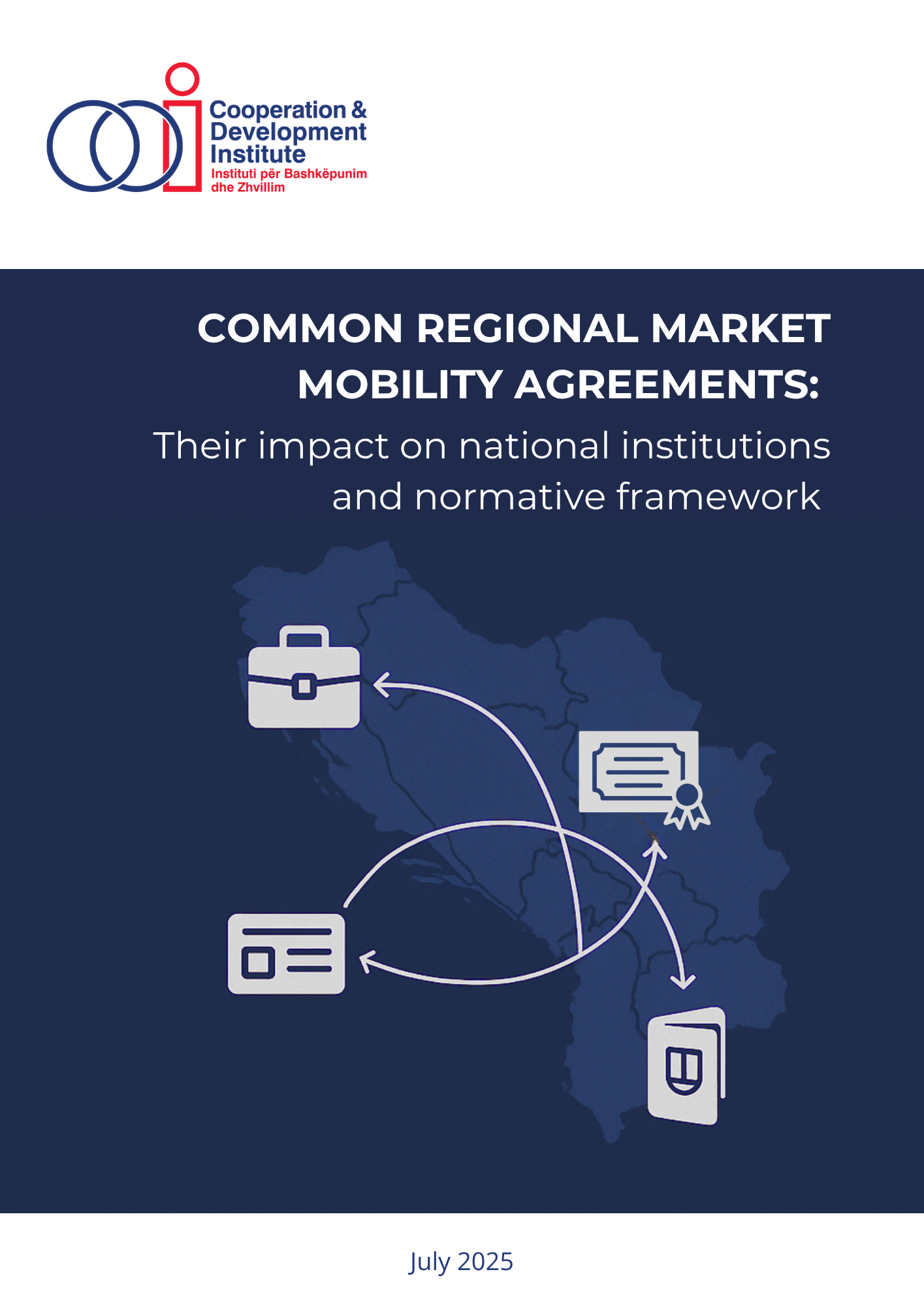
CRM Mobility Agreements: Their impact on national institutions and normative framework
July 18, 2025
2025

FACILITATING REGIONAL LABOR MOBILITY IN SERBIA:

Between Berlin Process and Open Balkans

Report

As the Western Balkans intensify efforts toward deeper integration and EU alignment, labour mobility stands out as a key challenge. This report examines Serbia’s simultaneous engagement in two regional frameworks: the Open Balkan Initiative (OBI) and the Common Regional Market (CRM) under the Berlin Process.

While both aim to ease cross-border movement for workers, they operate on separate tracks—leading to overlapping mandates, administrative duplication, and unequal access across the WB6.

Serbia has made notable progress by ratifying regional agreements, reforming labour laws, and digitising access to its labour market. However, implementation lags behind. Uptake of tools like the Open Balkan ID remains low, and core safeguards—such as social security coordination and equal treatment guarantees—are still missing or underdeveloped.

The report calls for a unified, inclusive, and EU-aligned mobility framework—open to all six Western Balkan economies. Such an approach would strengthen Serbia’s position as a regional anchor, promote fair and effective mobility, and support its EU accession ambitions.