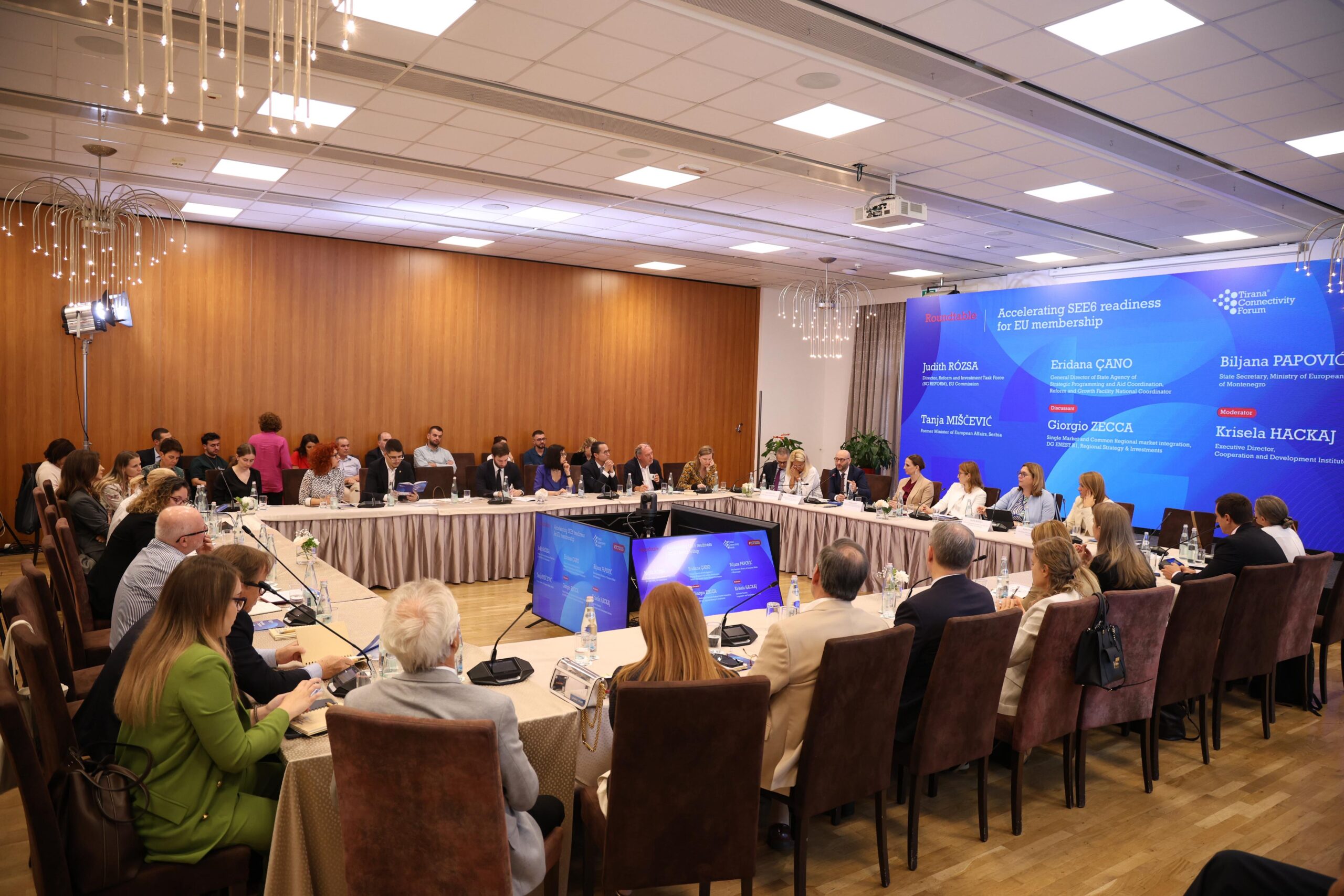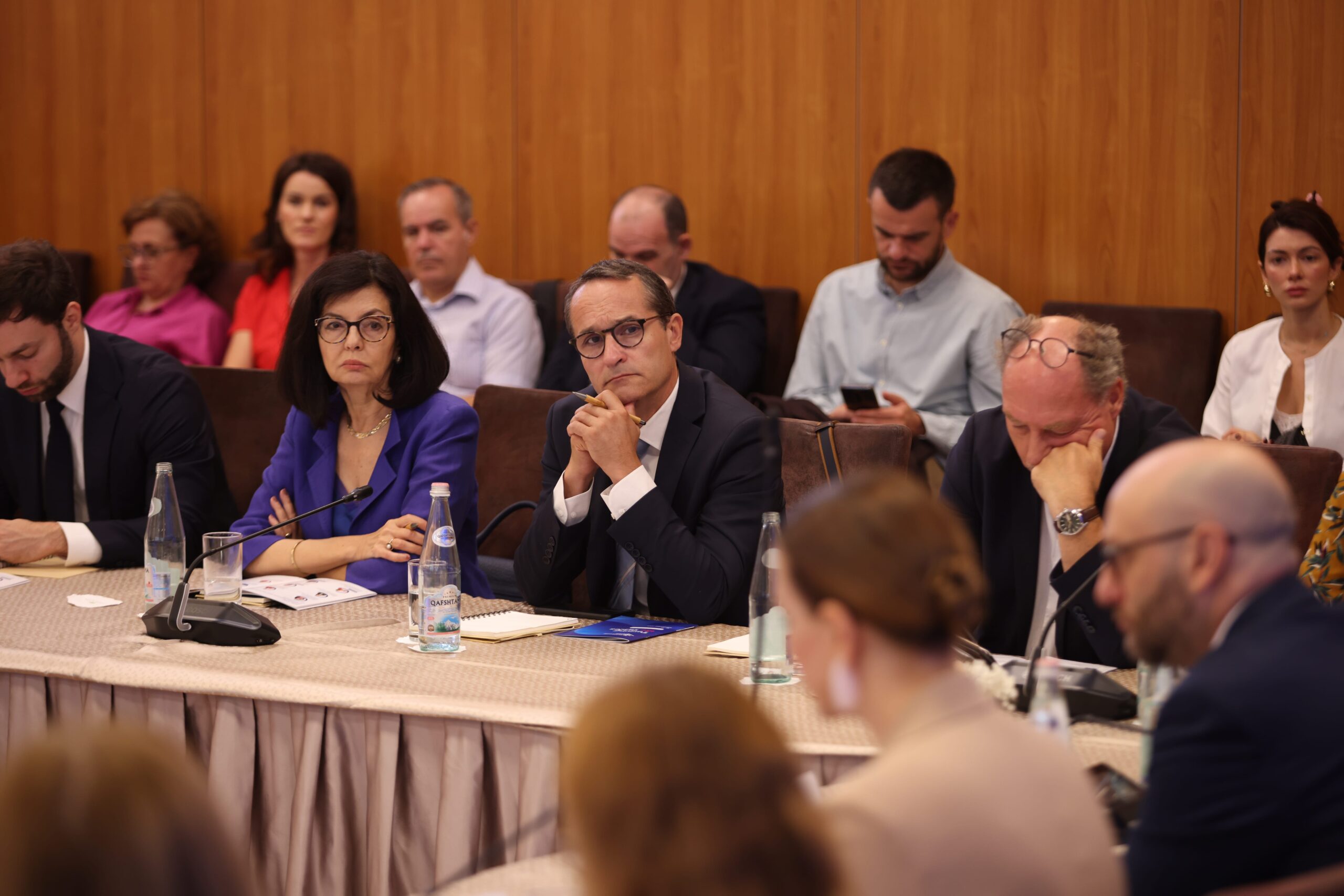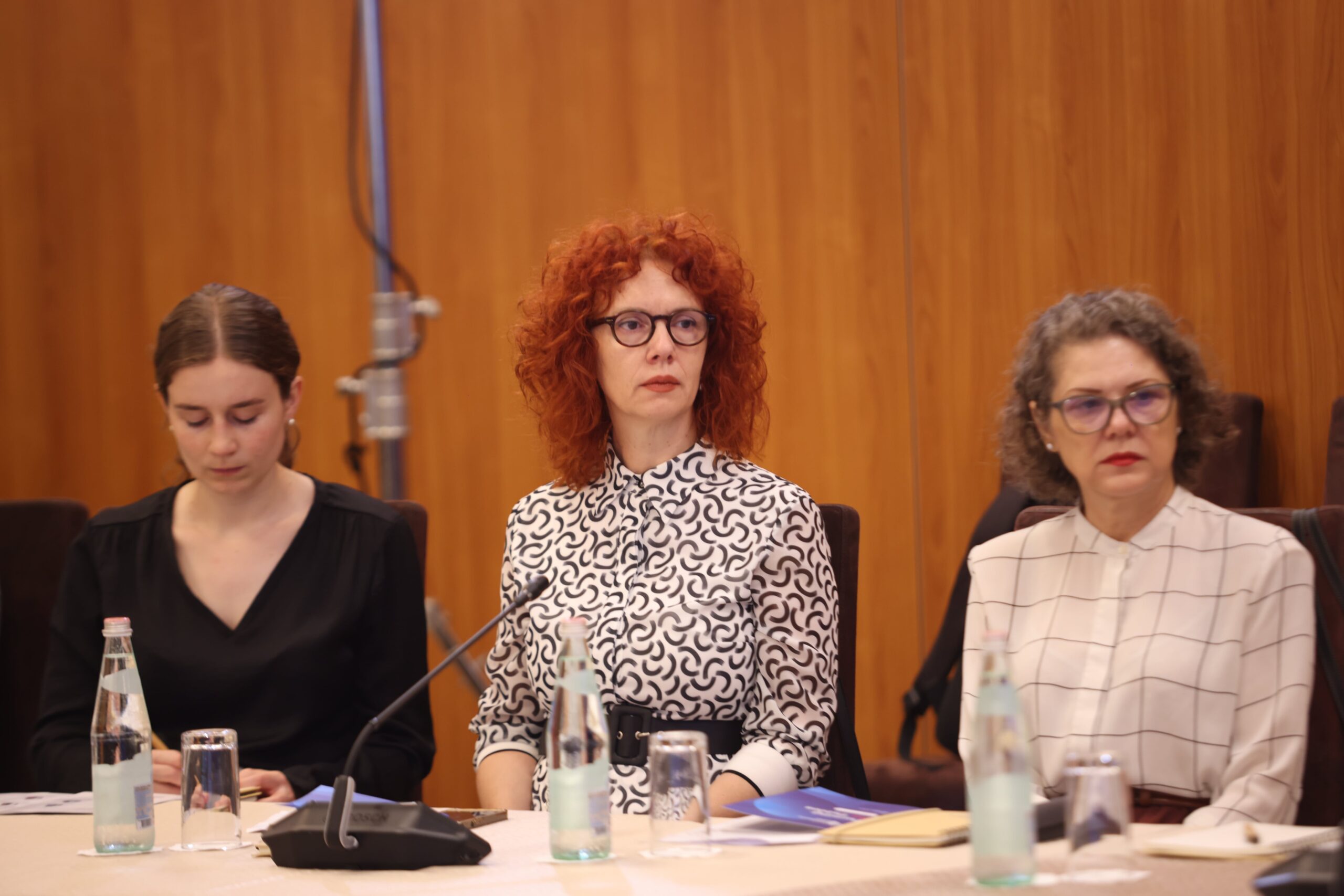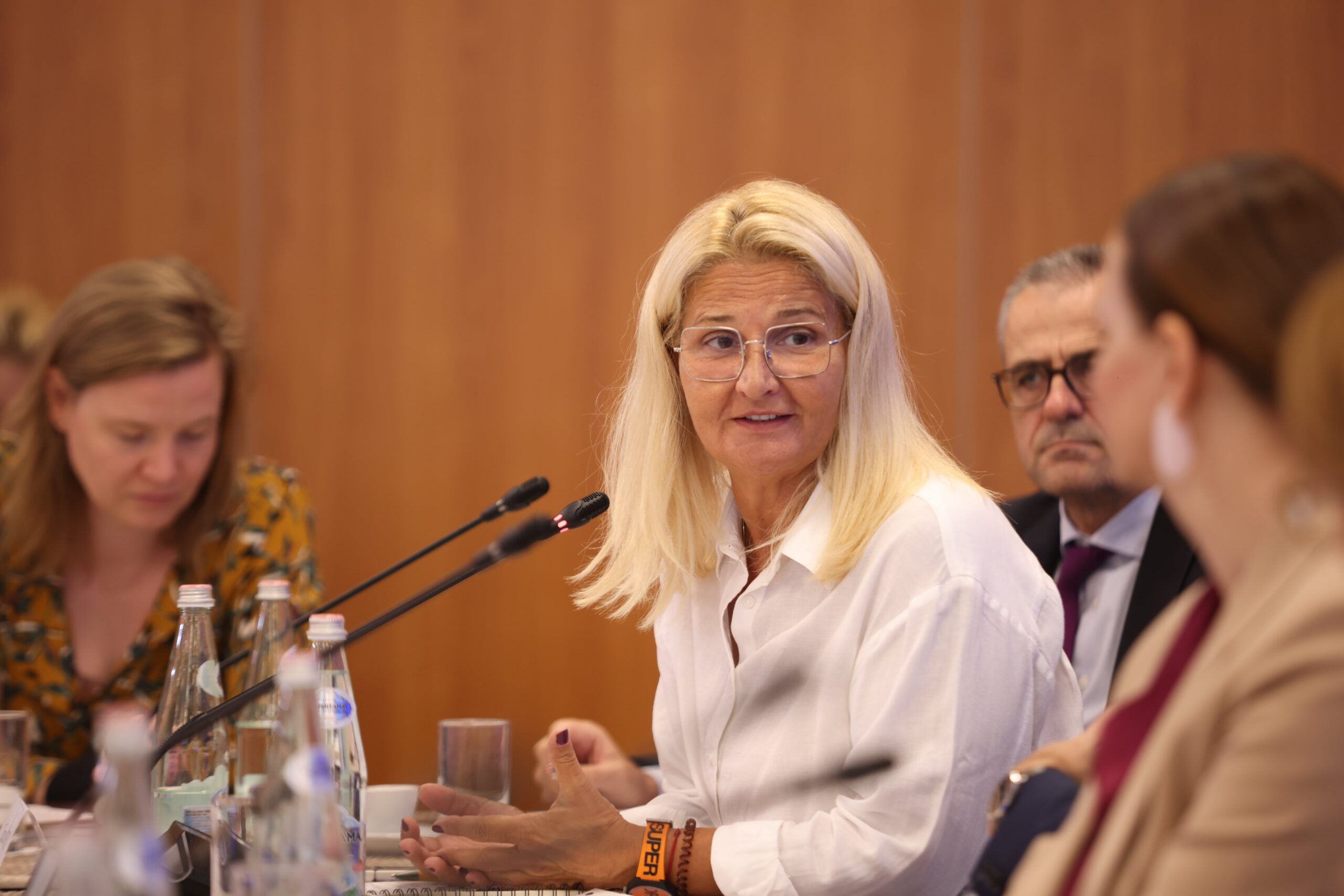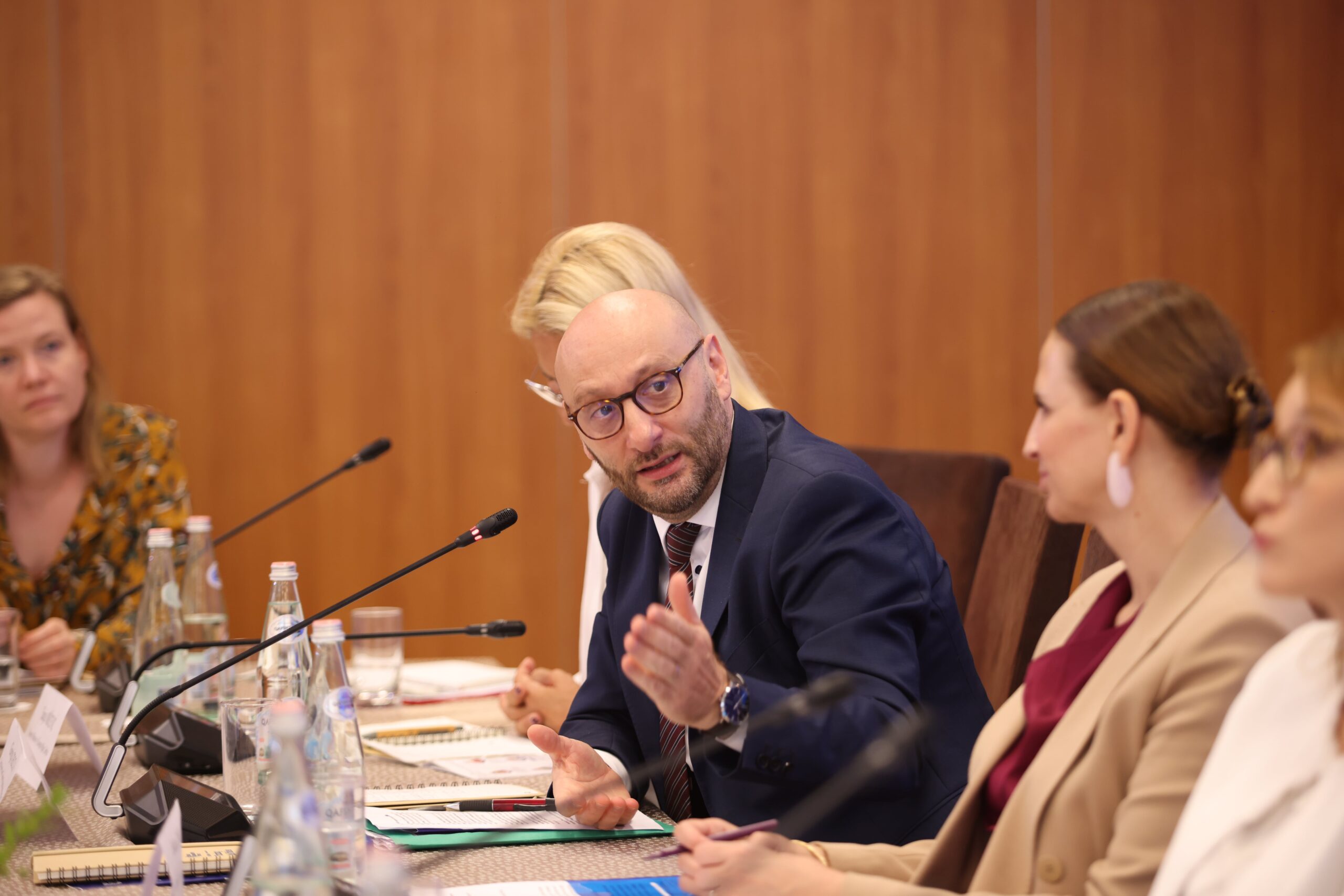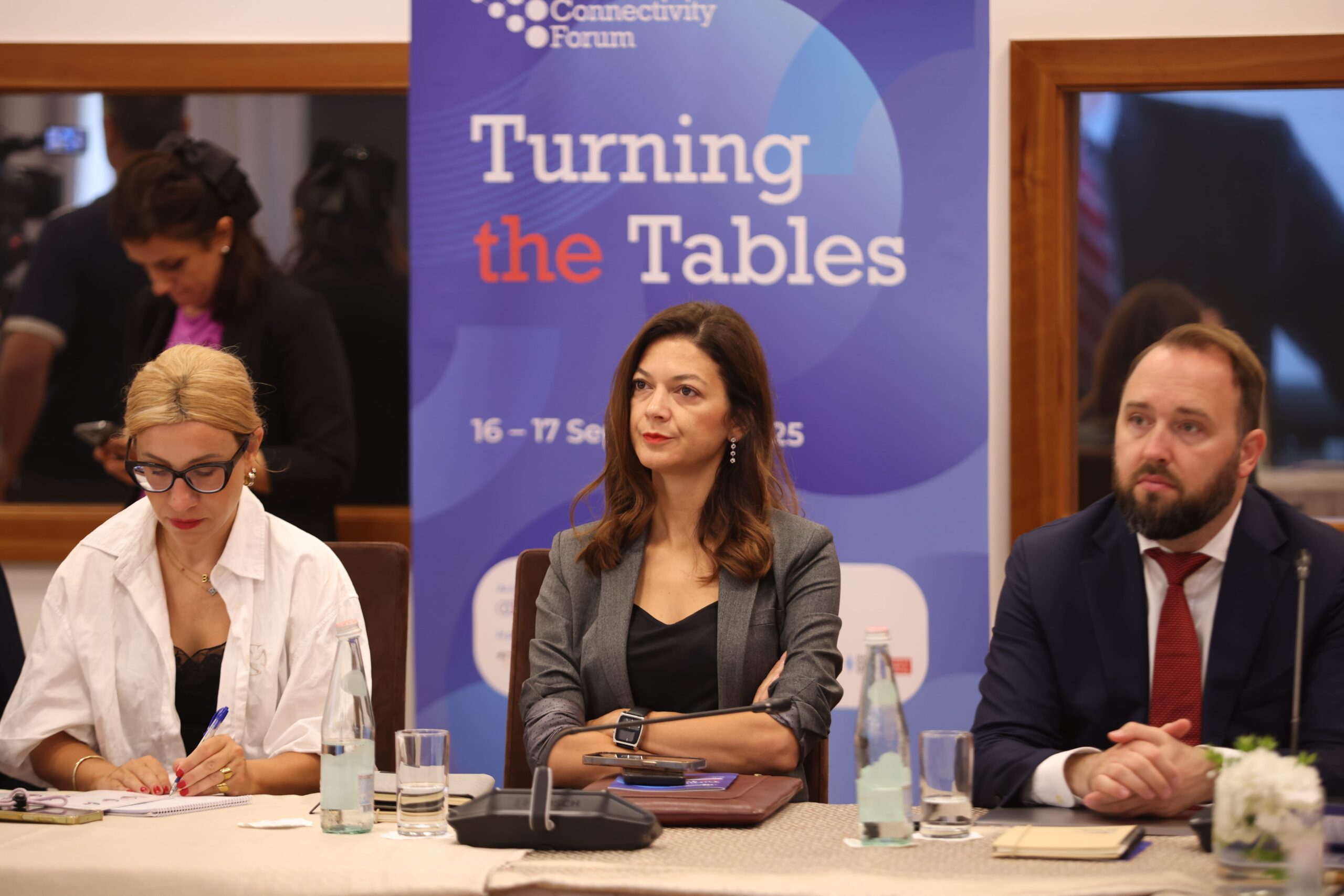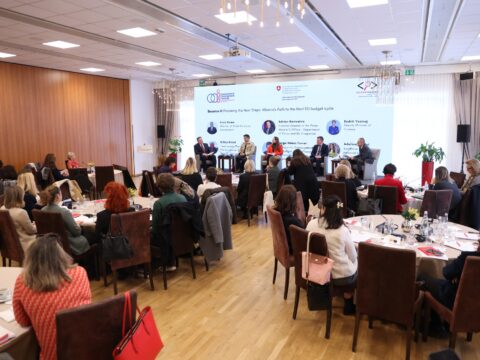


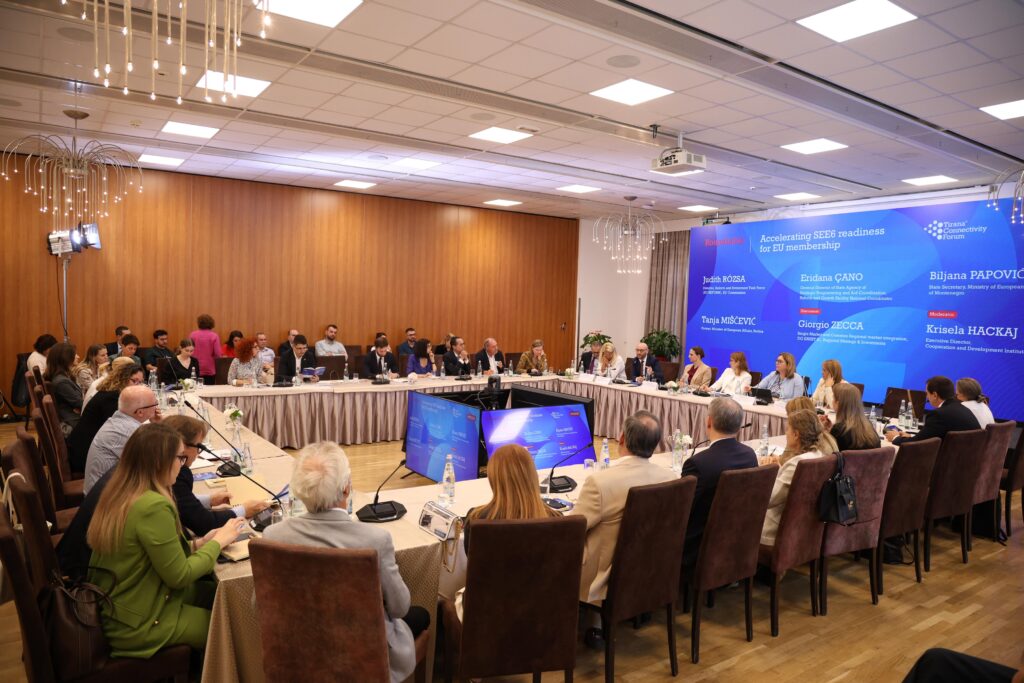
Tirana, 17 September 2025 | At the TCF2025 roundtable “Accelerating South East Europe 6 readiness for EU membership” panelists agreed that the Reform and Growth Facility (RGF) is more than a funding tool: it is a rehearsal for EU membership, compelling Western Balkan governments to deliver measurable reforms that citizens can feel in their daily lives.
Opening the roundtable, CDI Executive Director Krisela Hackaj underlined that performance-based instruments are reshaping the enlargement landscape. “Today we are not just talking about conditionality – we are practicing membership obligations through concrete, verifiable results,” she said.
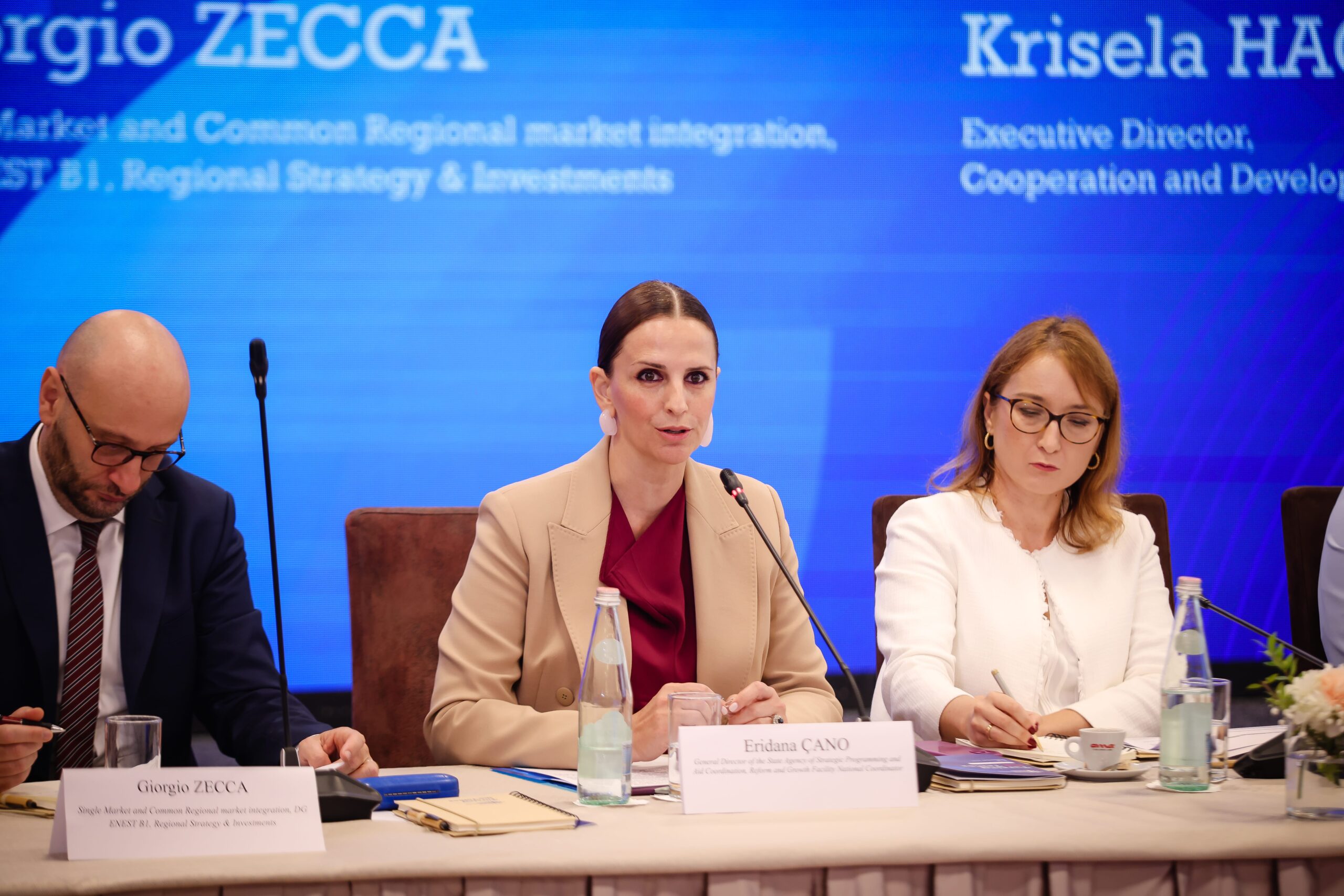
From Albania’s perspective, Eridana Cano, RGF National Coordinator, stressed that the facility is not only a test but a transformative process that is already visible. She pointed to reforms that cut red tape for businesses, improved governance of state-owned enterprises, introduced transparent energy pricing and strengthened judicial accountability. “The facility is not abstract – it is already changing daily life for Albanian citizens,” Cano said, noting that each reform step must be fully achieved, documented and verified, reinforcing both accountability and ownership.
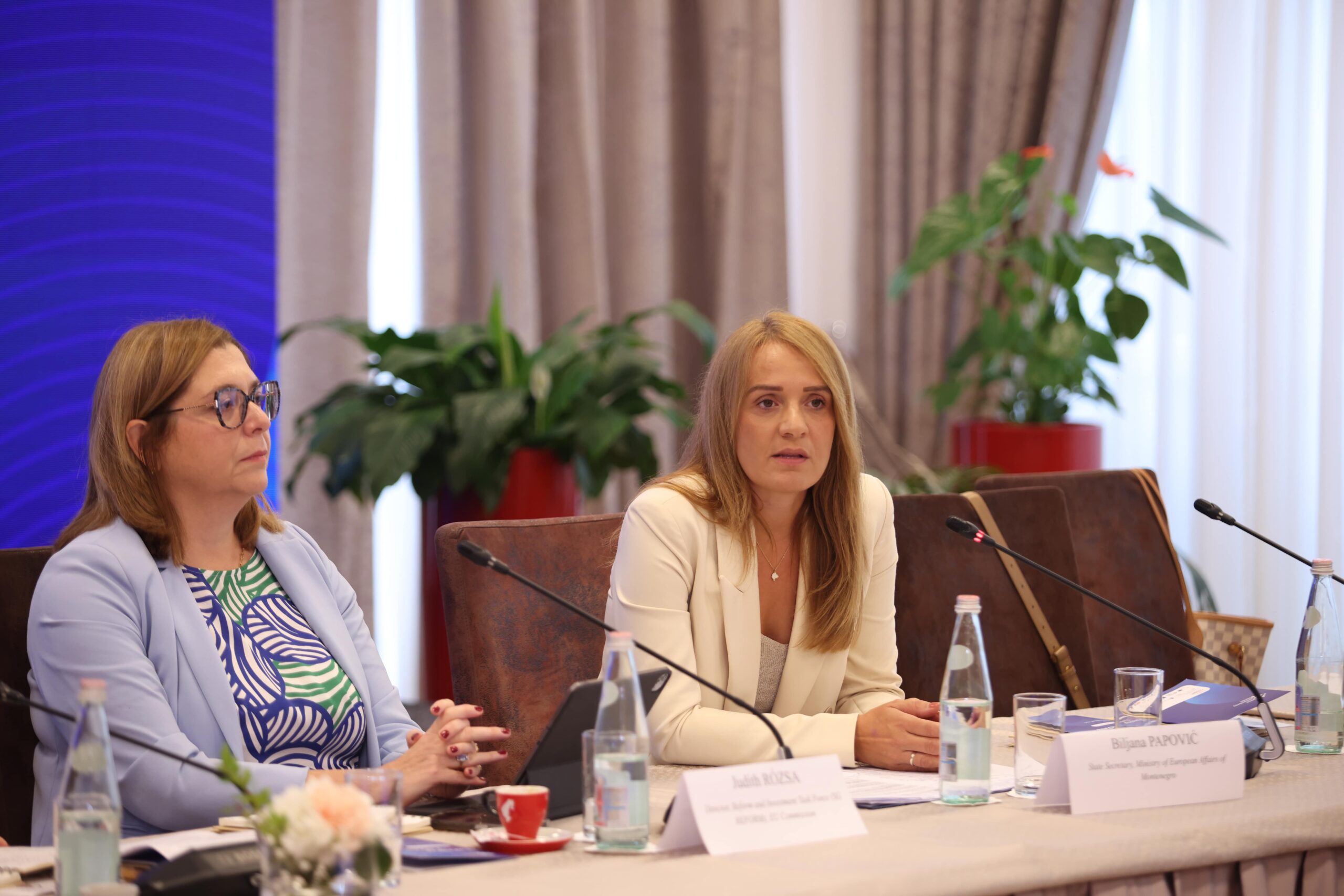
Montenegro’s Biljana Papović, State Secretary for European Affairs, described the RGF and the accession negotiations as “two sides of the same coin.” She highlighted the growing synergy between reform progress and citizen trust, adding that while the mechanism is technically complex, it is essential to communicate its impact in simple terms—better schools, cleaner energy, and stronger rule of law. “This, – she argued, – is crucial for sustaining public consensus on EU integration, which in Montenegro remains above 80 percent”.
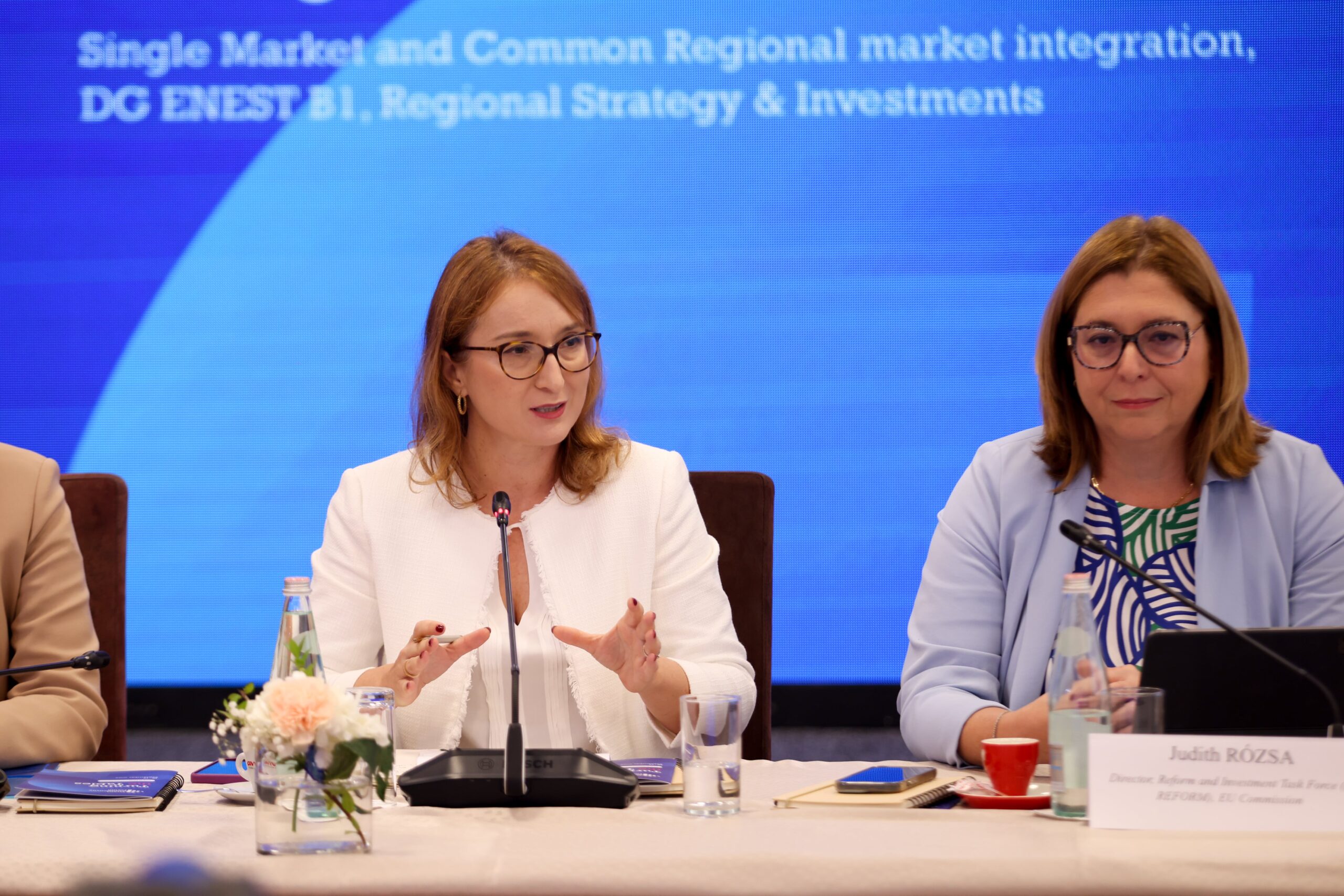
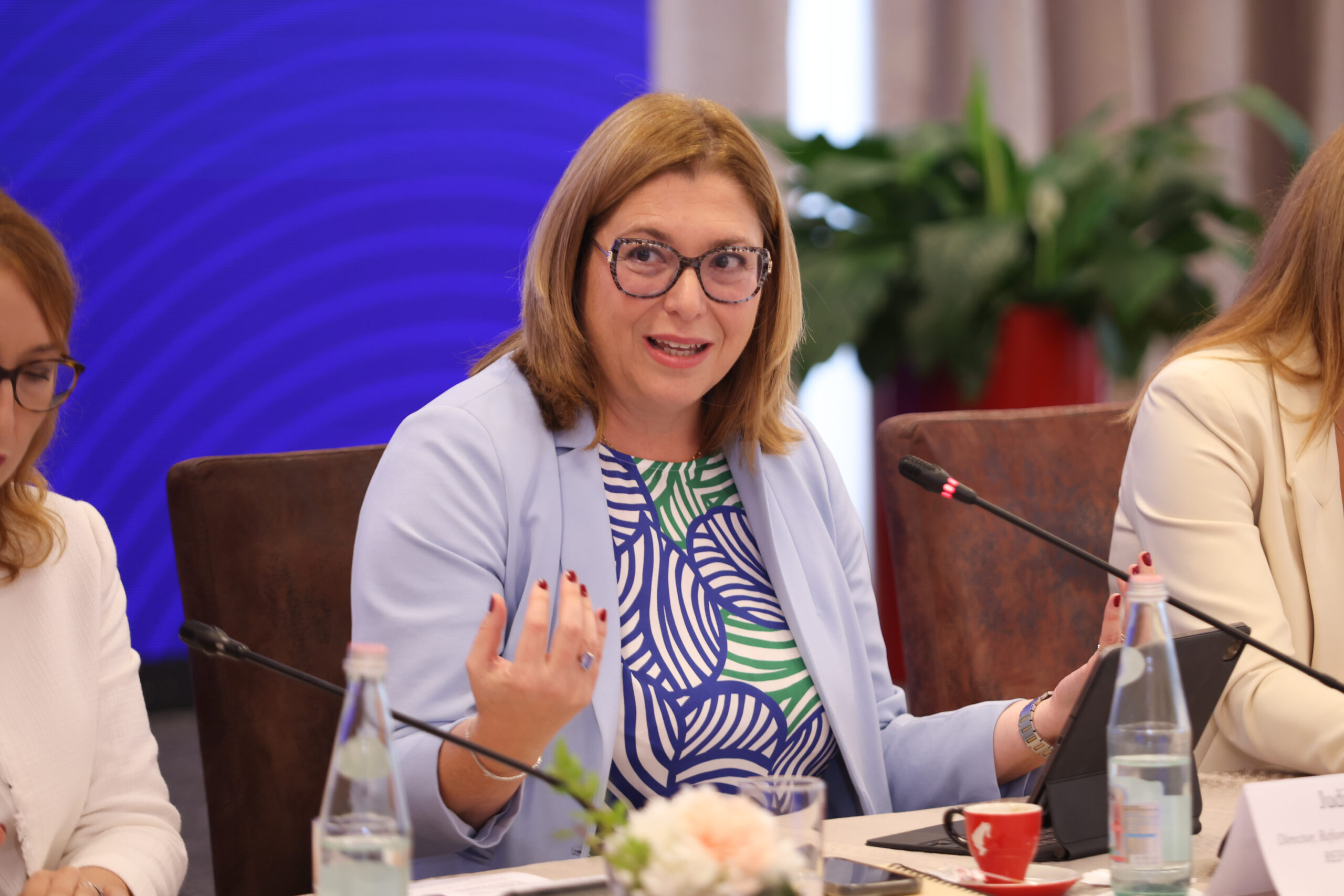
On behalf of the European Commission, Judith Rózsa, Director of the Reform and Investment Task Force, drew direct parallels with the EU’s own Recovery and Resilience Facility, reminding participants that the “accession journey is also a reform journey and it does not end with membership.” She acknowledged the political costs and administrative demands of reforms, and underscored that the performance-based model is now the new standard for EU support, urging governments to front-load difficult reforms and invest in their public administrations.
Giorgio Zecca from DG ENEST reinforced this message, framing the RGF as a proving ground to “build the administrative muscle now for tomorrow’s membership obligations.” He urged governments and the EU to move beyond narratives of payments and disbursements towards a more positive communication that highlights courageous reforms underway.
Closing the session, Tanja Miščević, former Minister of European Affairs of Serbia, reminded participants that reforms are not temporary hurdles but permanent obligations. “The Growth Plan helps us learn today what we will need to deliver tomorrow as EU members,” she concluded.
The discussion revealed that the Western Balkans are actively using the RGF to strengthen governance and economic resilience, transforming EU aspirations into tangible results. They are proactively testing reforms and building resilience through the RGF.