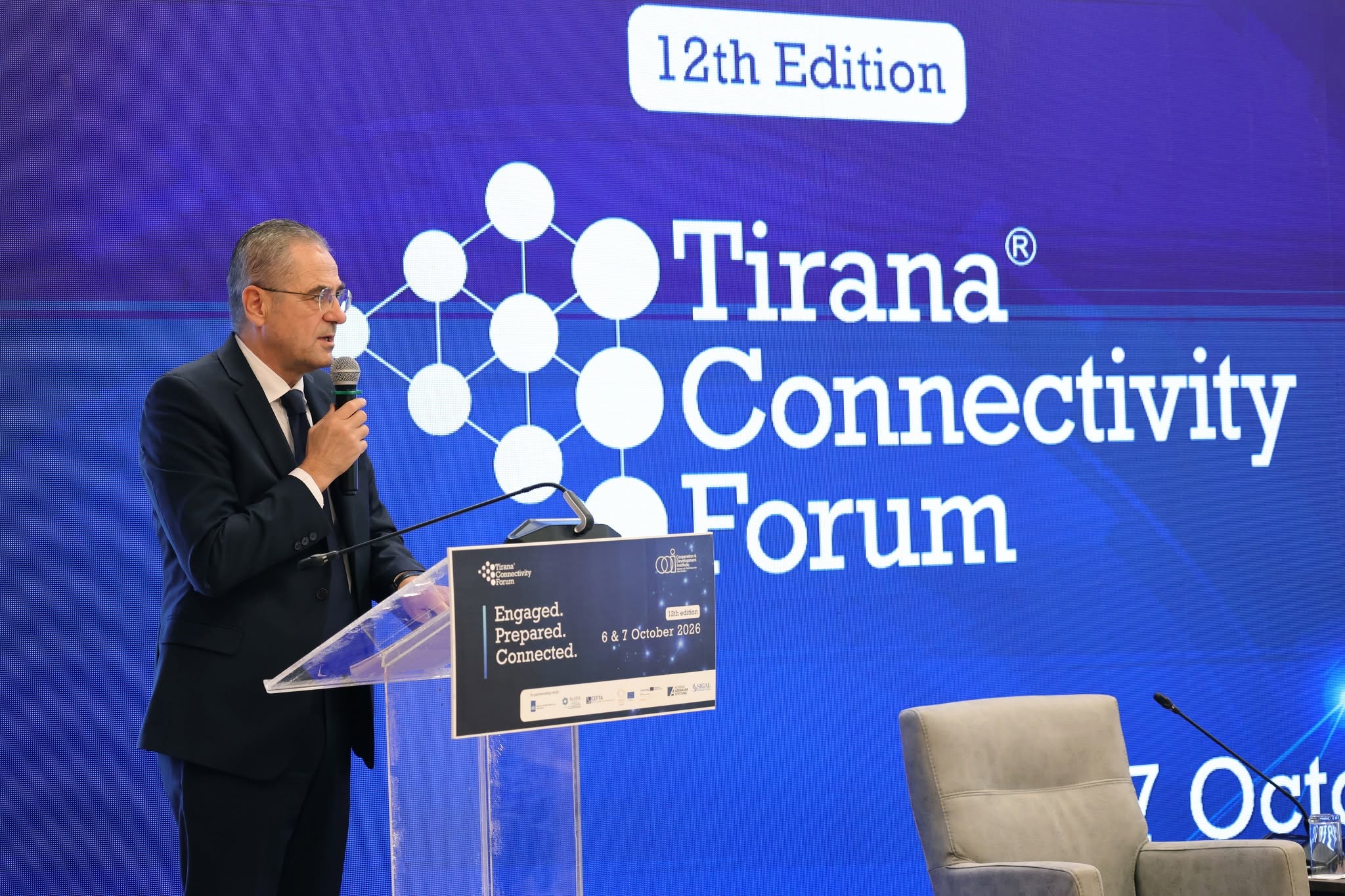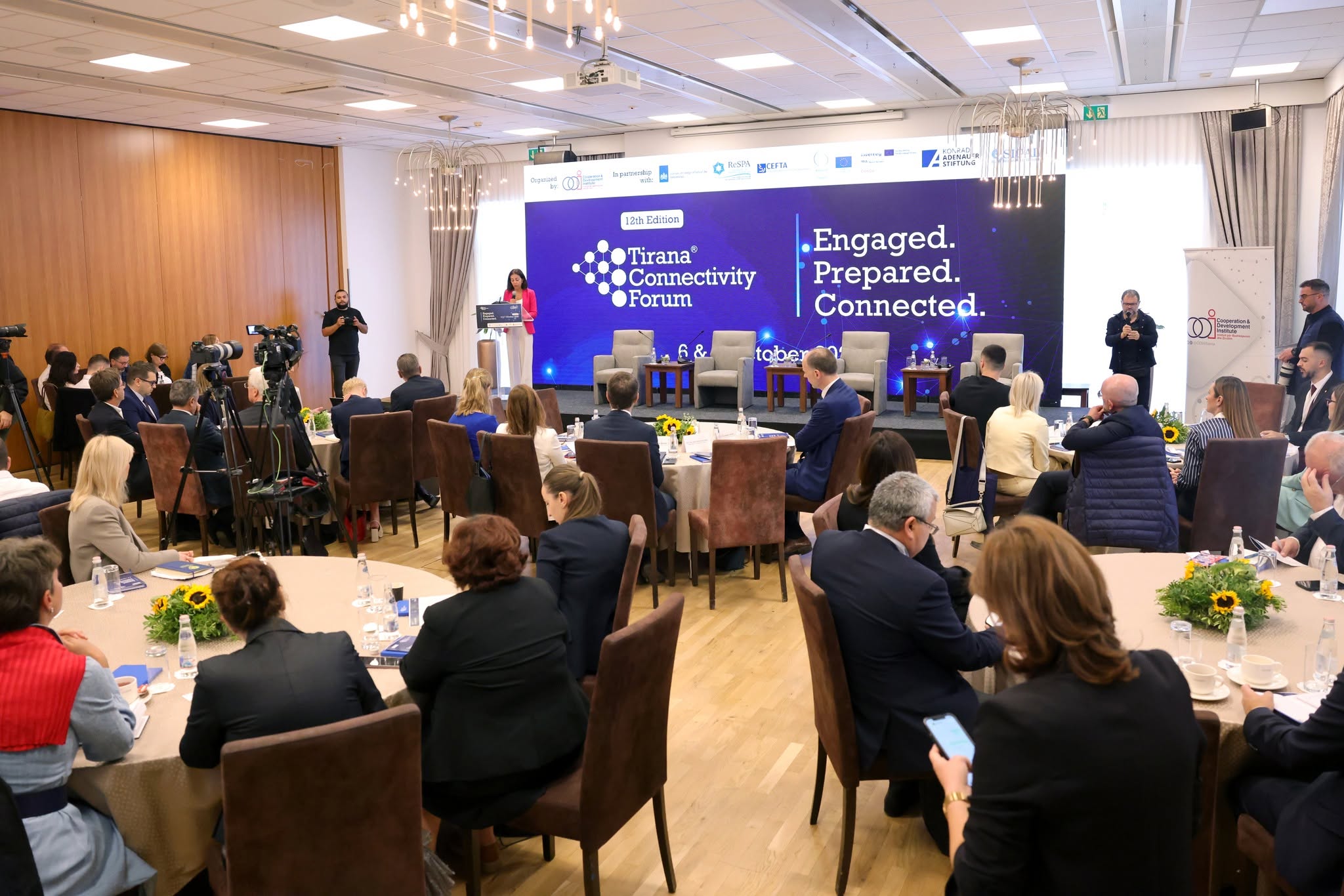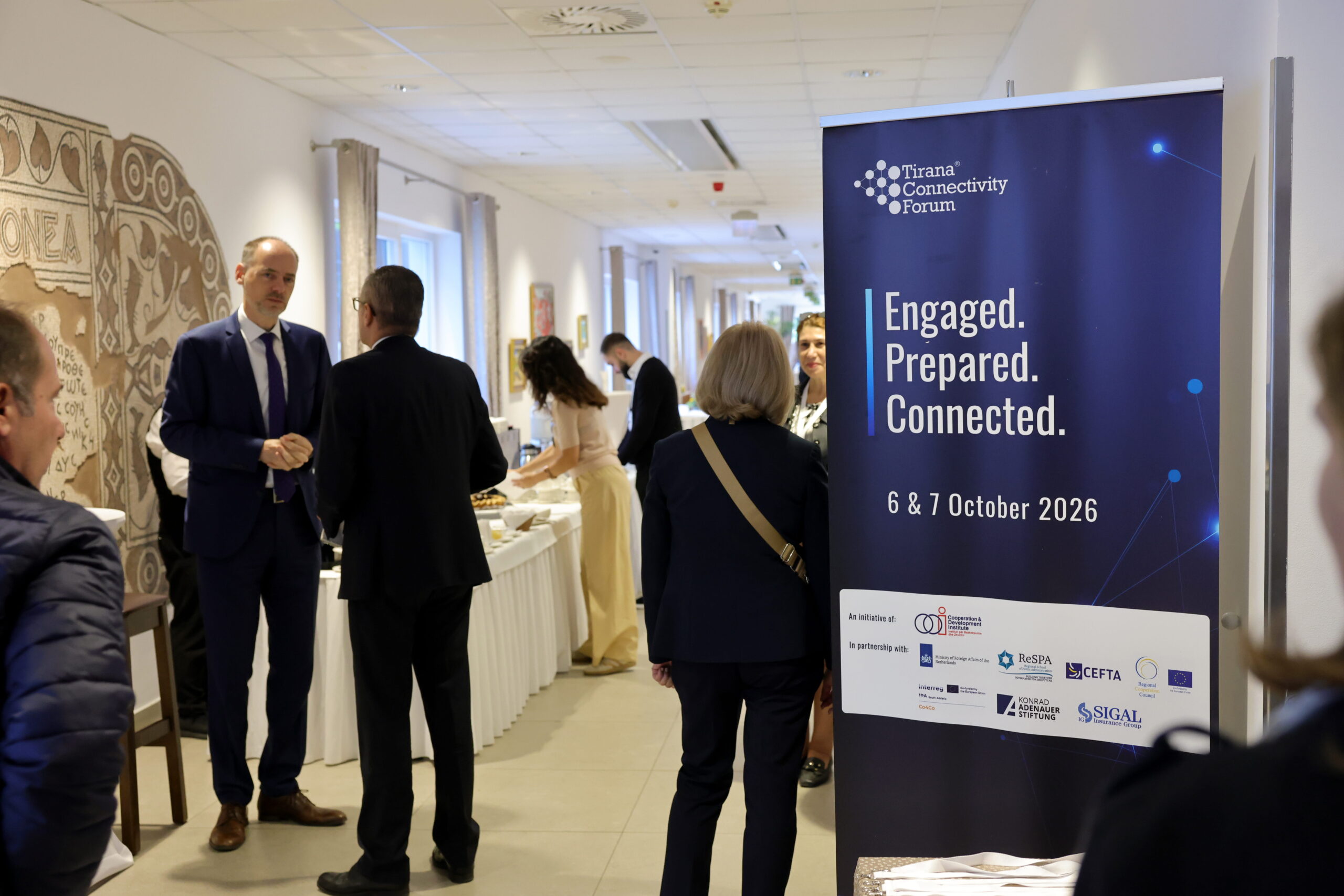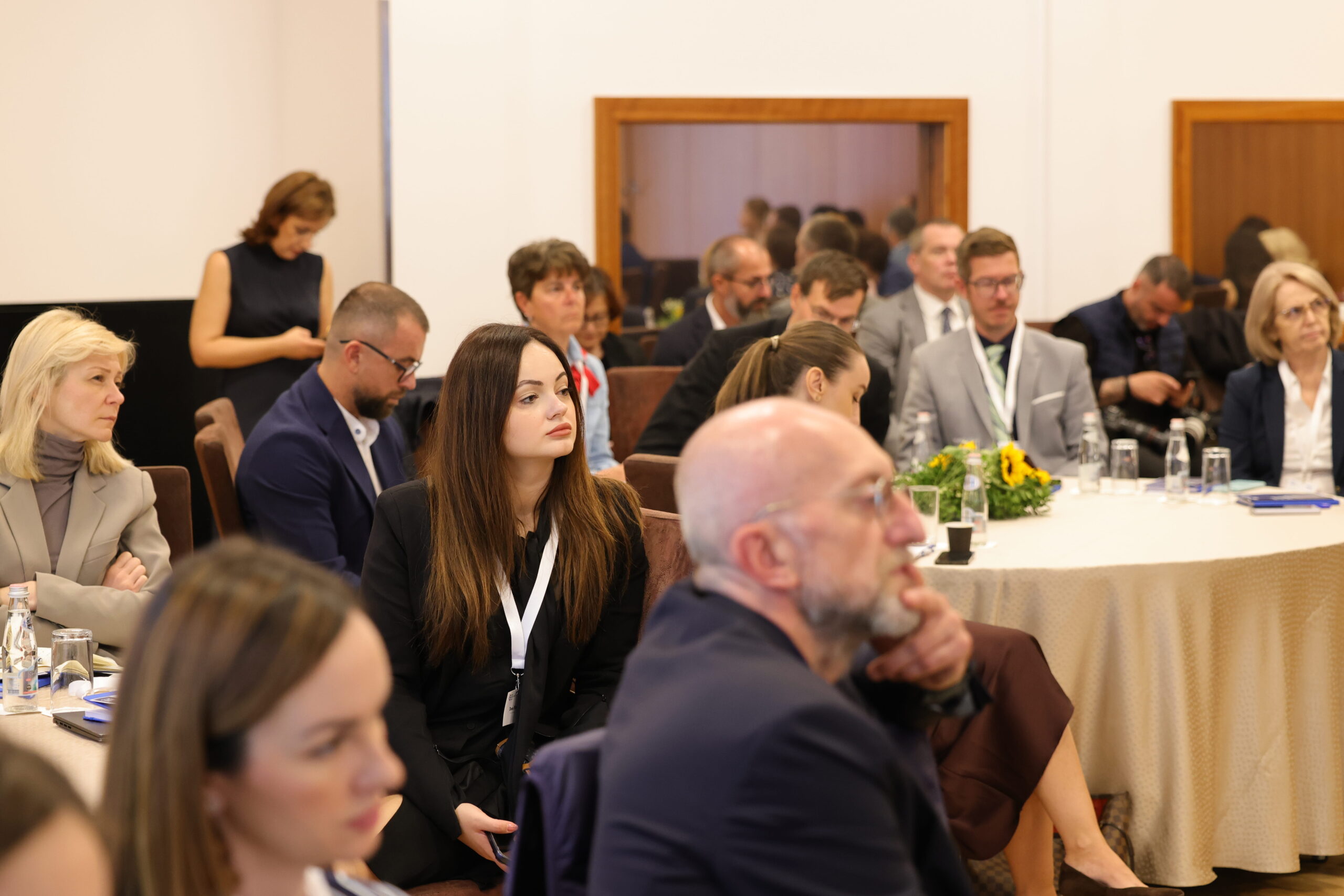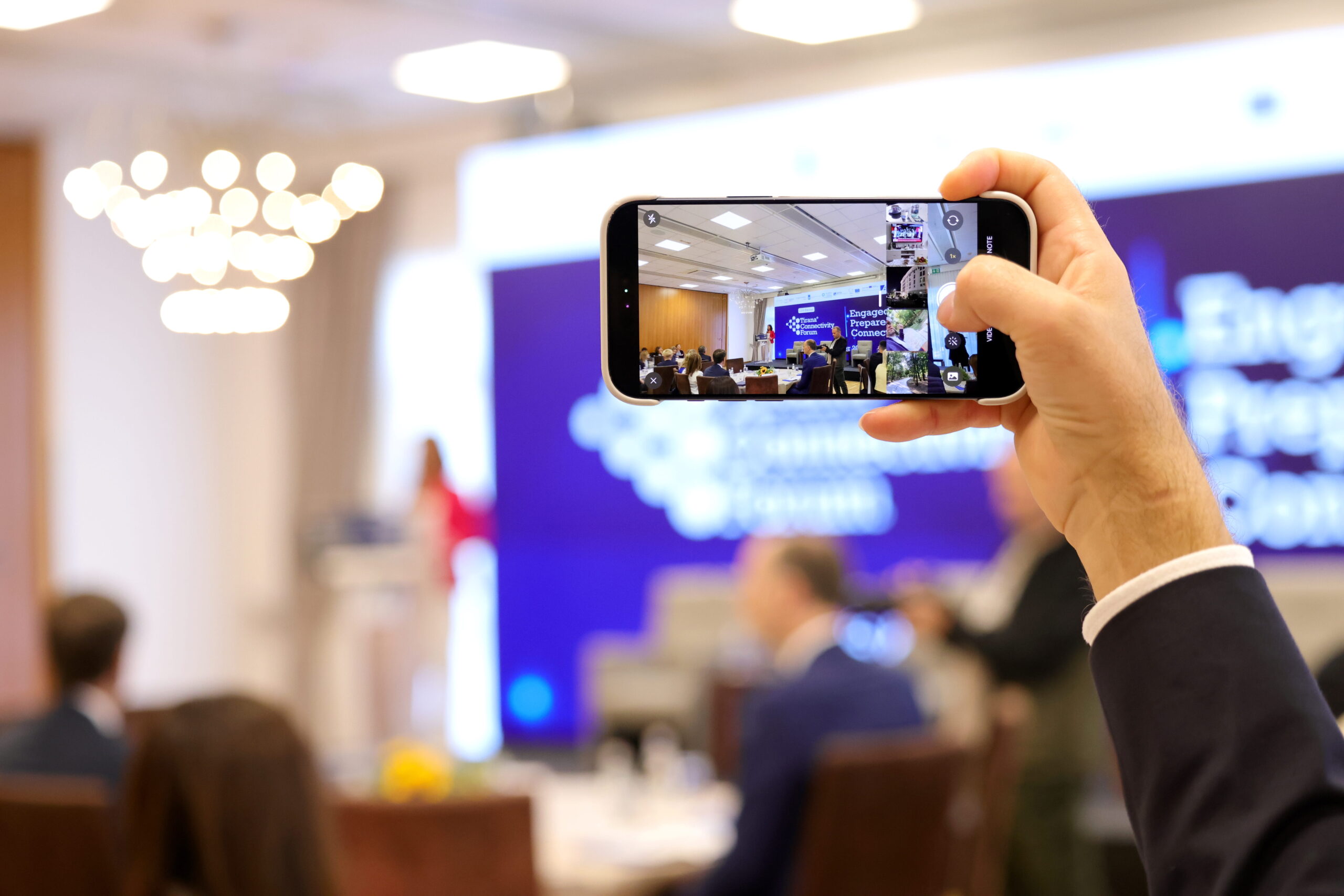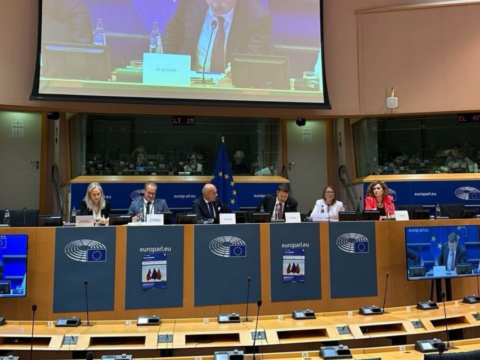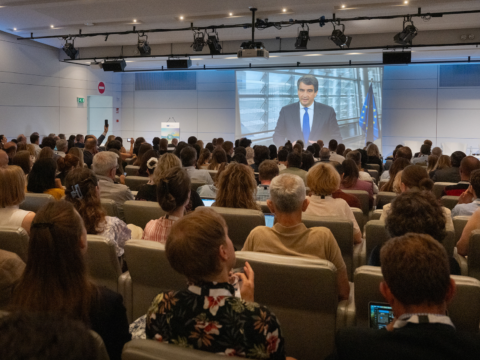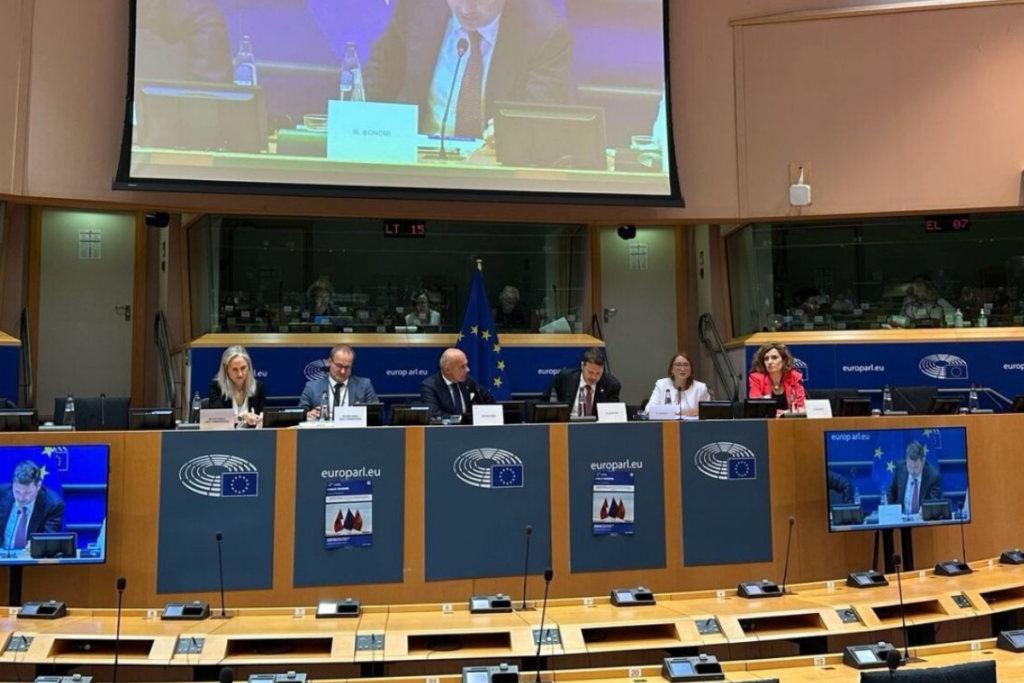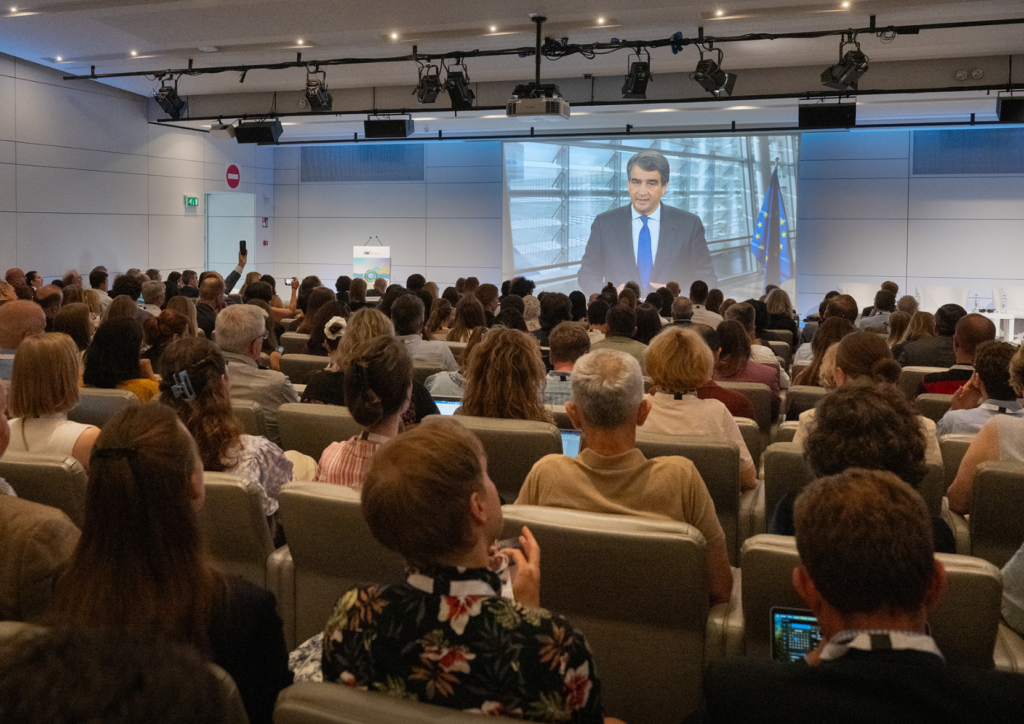

Tirana, 6 October 2026 | Keeping the accession pace, Albania is moving from preparation to delivery, while the EU must ensure that it is ready for the upcoming Enlargement round. Faster reforms, targeted support, multi-actor engagement and practical steps are making EU impact tangible before full membership. The focus is on implementation, preparedness and communication of Enlargement contribution to the EU. These were the central message at the opening of the 12th Tirana Connectivity Forum, held on 6–7 October.
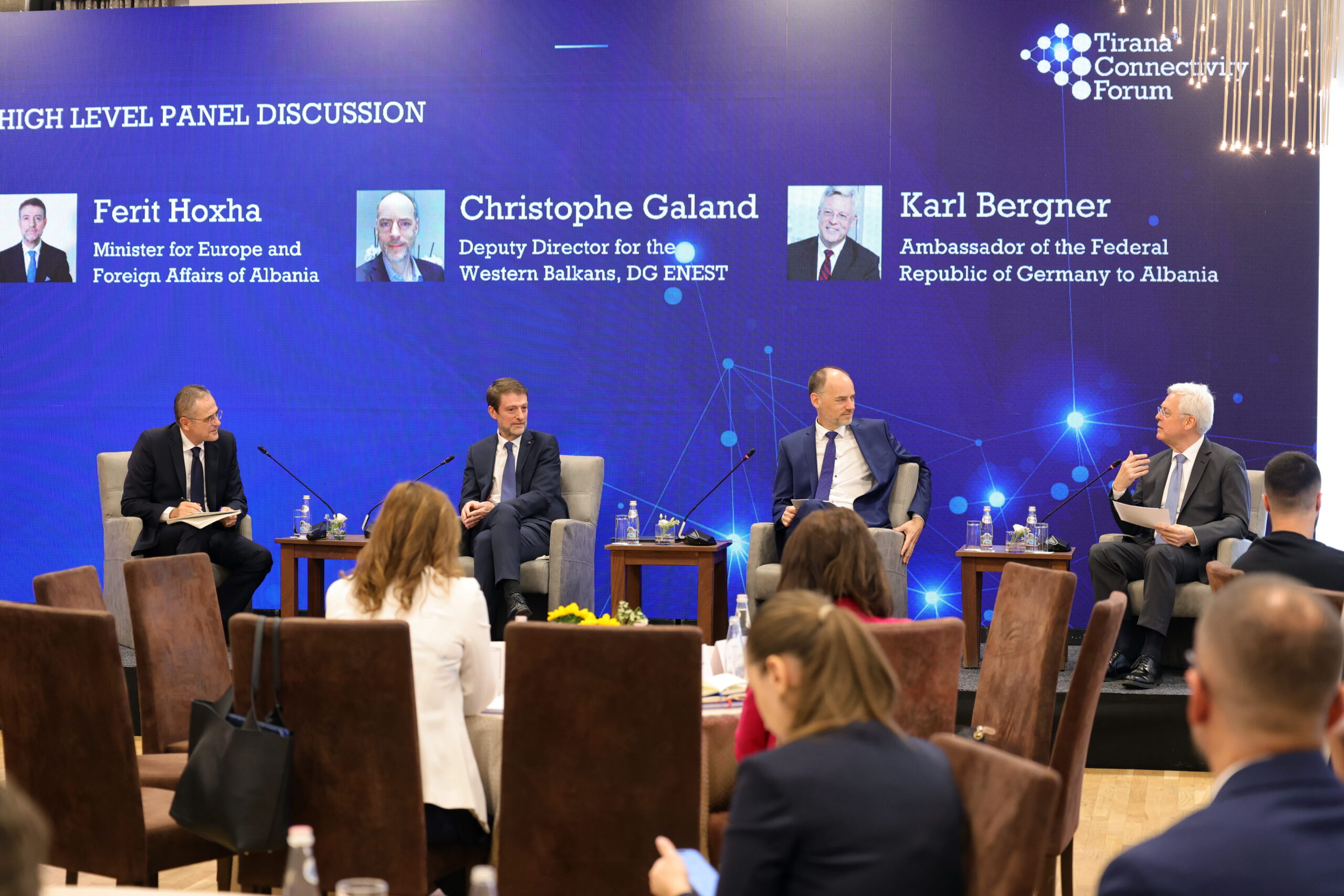
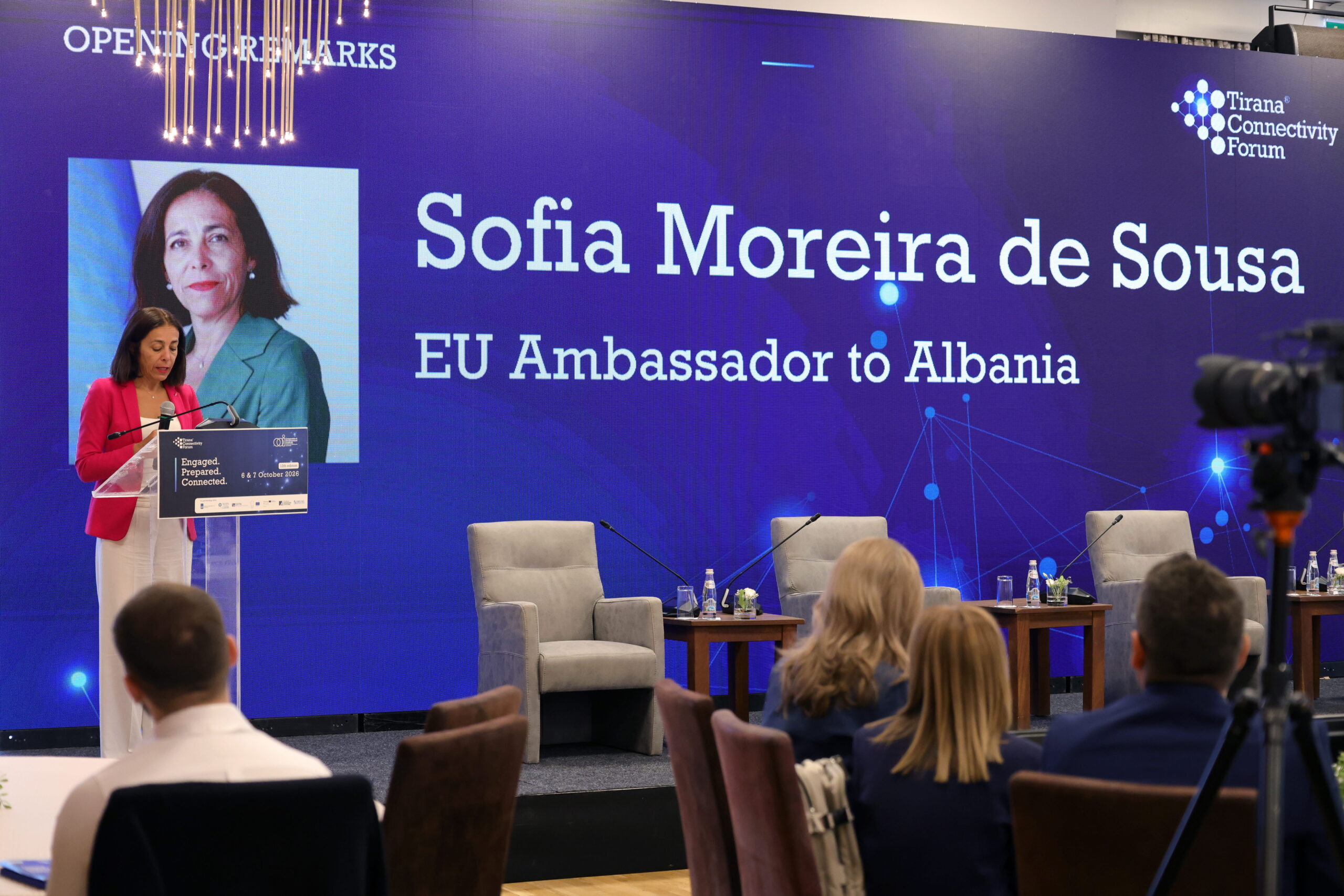
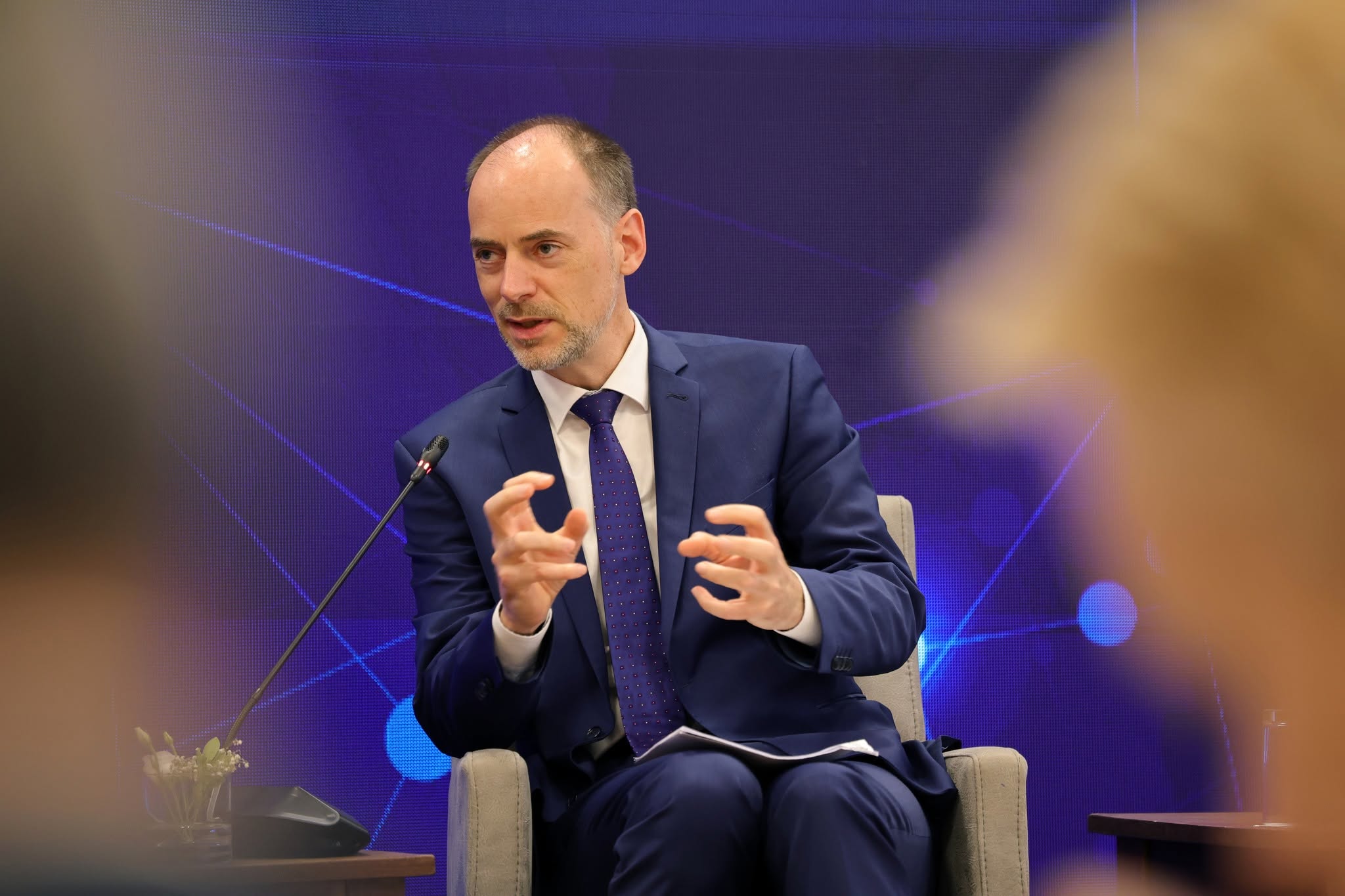
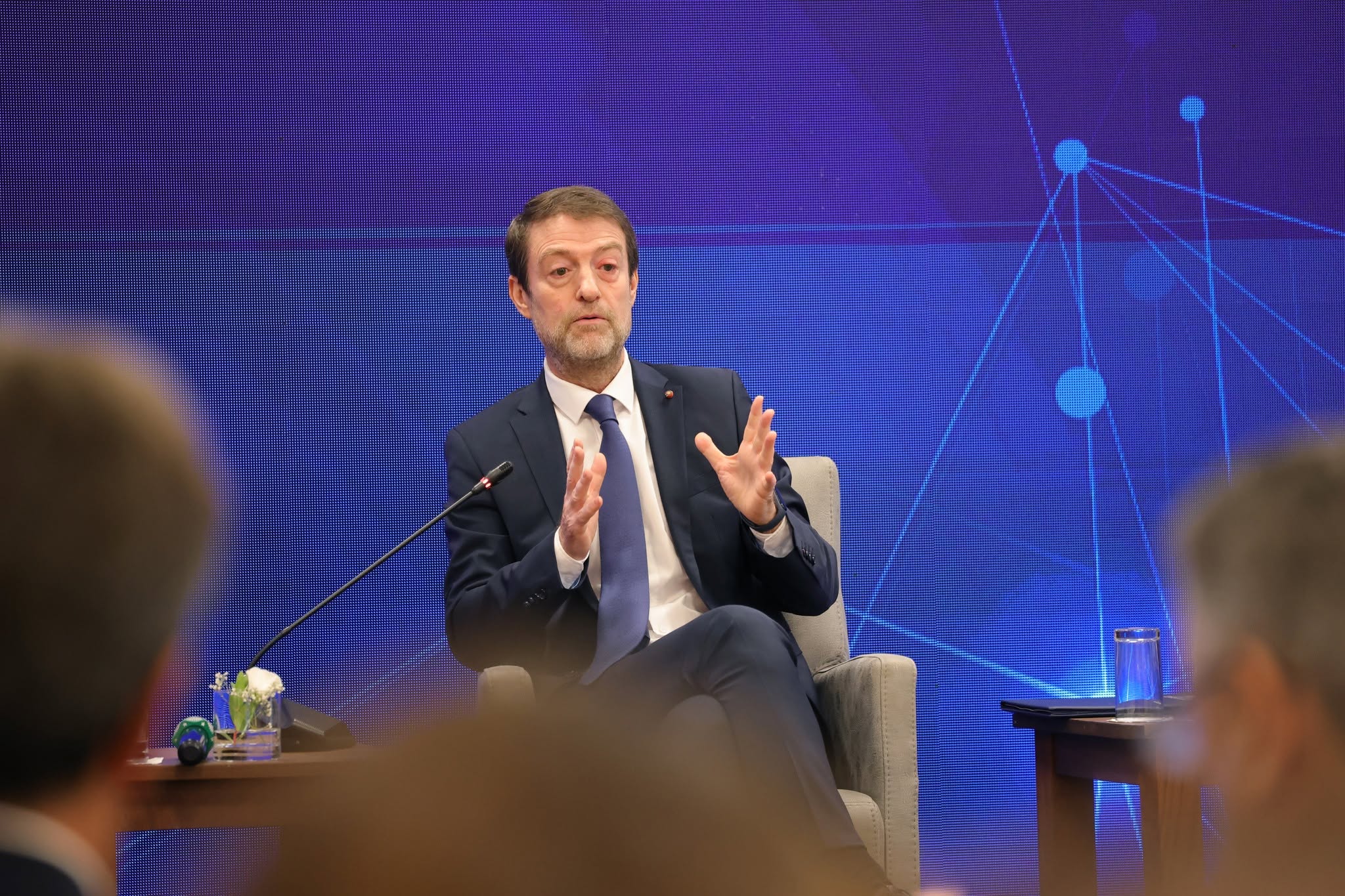
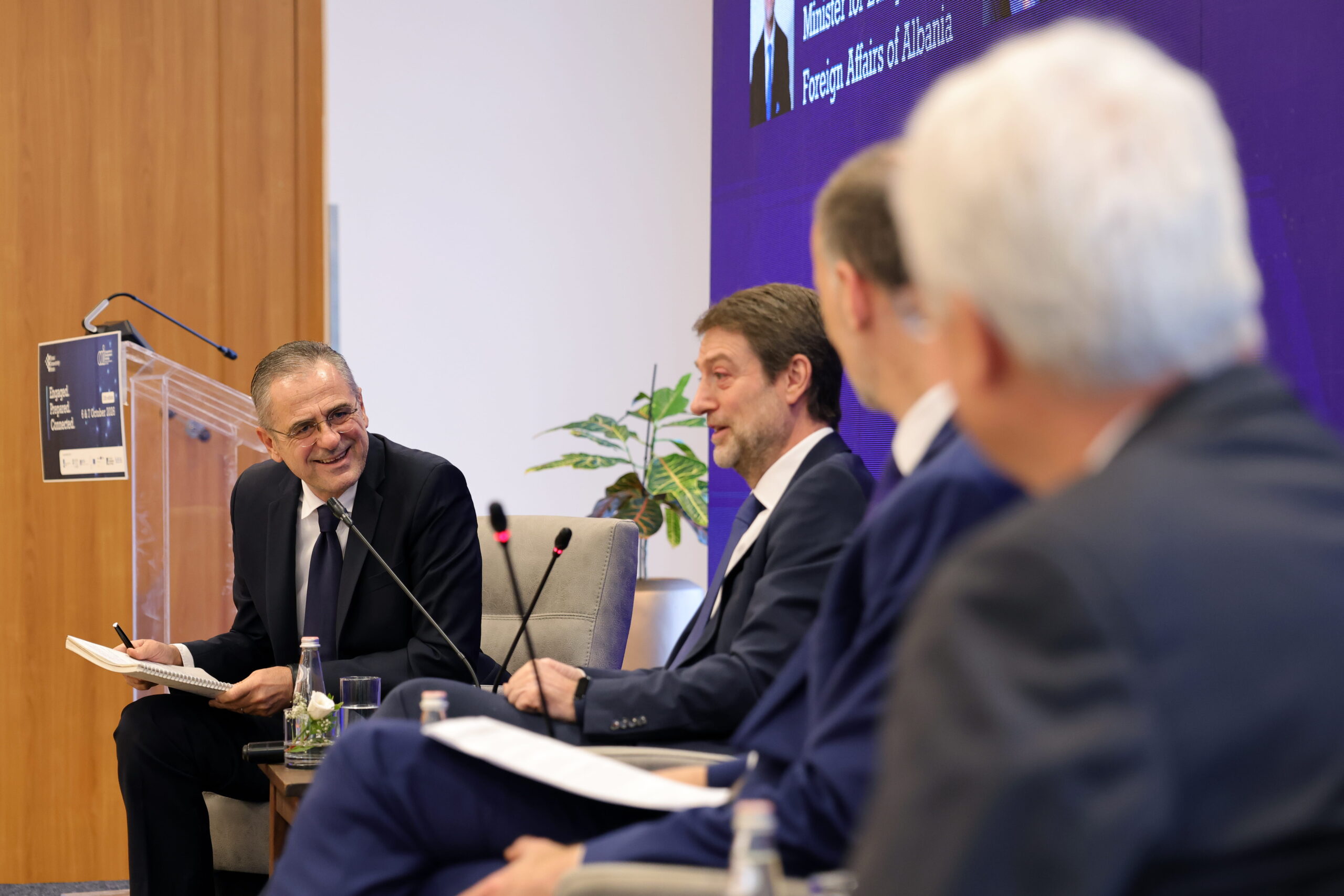
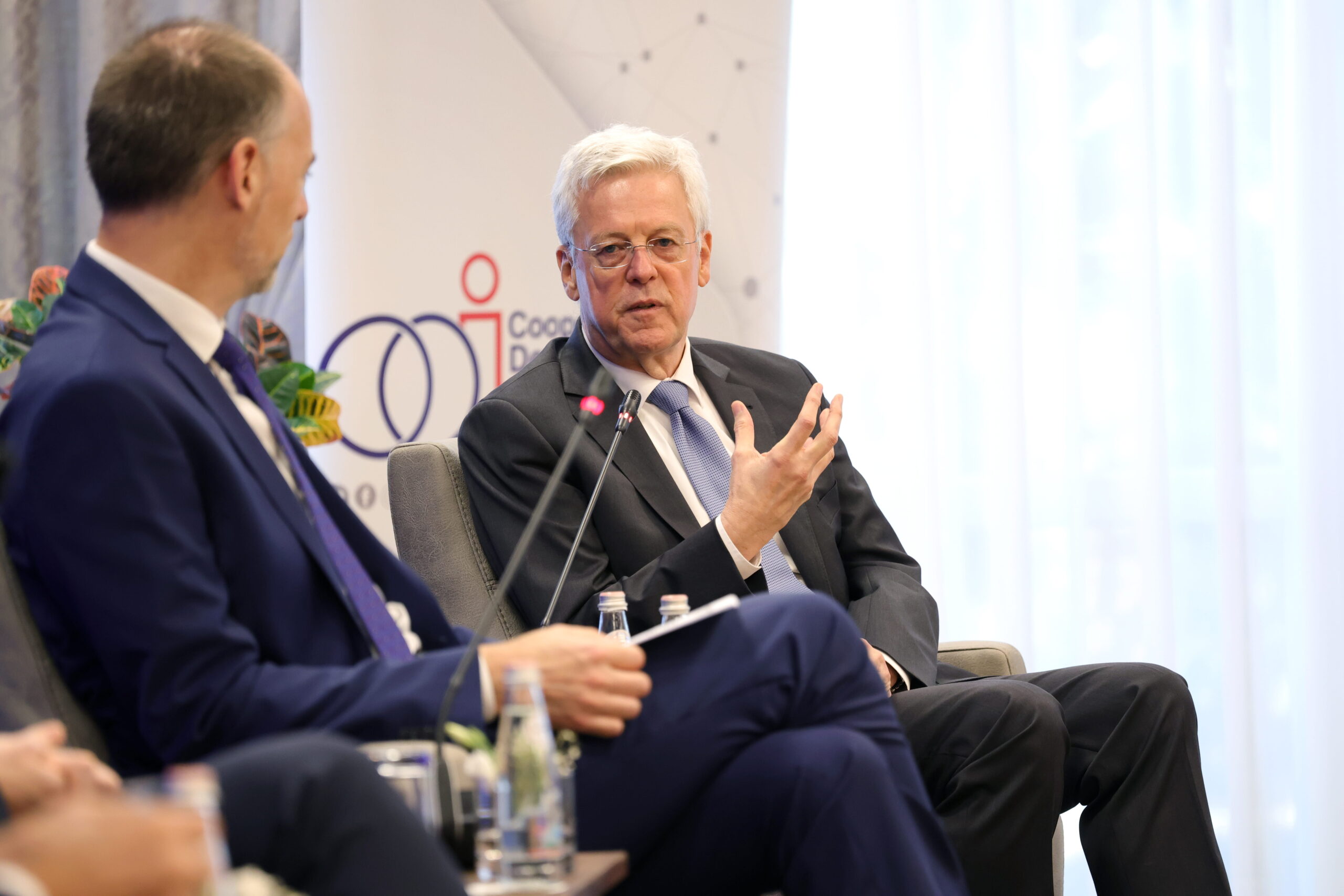
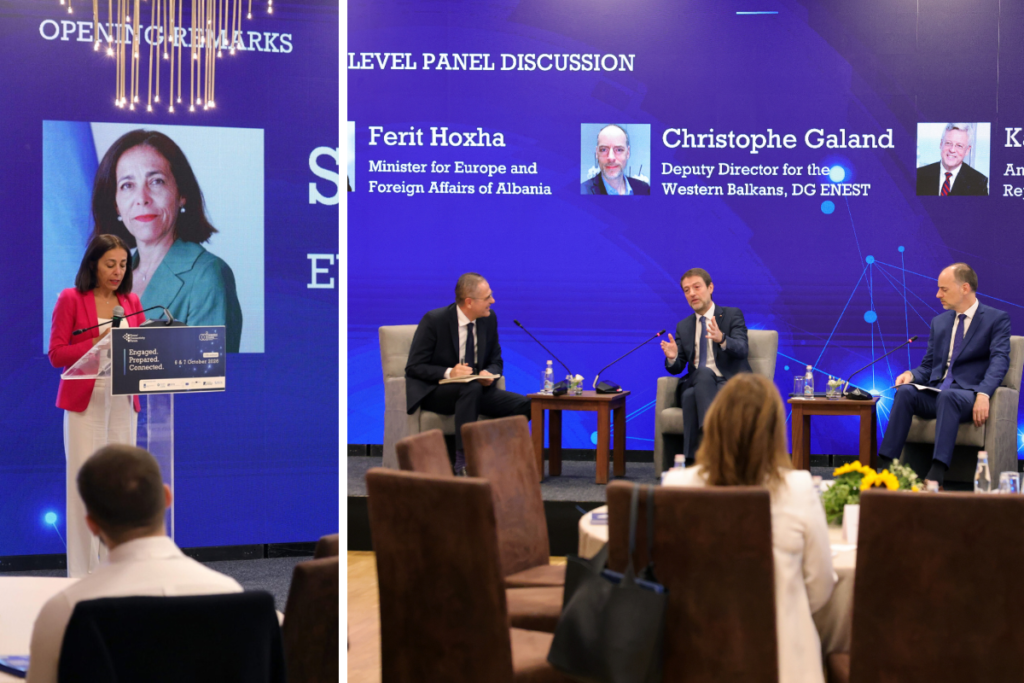
The Forum opened with remarks by H.E. Sofia Moreira de Sousa, EU Ambassador to Albania, followed by a high-level discussion with Ferit Hoxha, Minister for Europe and Foreign Affairs of Albania; Christophe Galand, Deputy Director for the Western Balkans at DG ENEST; and Karl Bergner, Ambassador of Germany to Albania.
The discussion coincided with the European Commission’s presentation the same day of its new pre-enlargement policy package. The package proposes measures to prepare the EU for future enlargement and to support the gradual, merit-based integration of candidate countries before full membership. It also foresees indicative roadmaps for the most advanced negotiating countries, including Albania.
From adoption to delivery
In her opening remarks, Ambassador Moreira de Sousa stressed that Albania and the Western Balkans have entered a new phase of the EU integration process – a phase of delivery. “The EU will continue its strong political, technical and financial support to all six Western Balkan partners to help them advance key political, institutional, social and economic reforms that are necessary to progress on their path towards the EU,” said Ambassador Moreira de Sousa. “Reform-based delivery is key for preparing the country for the new EU instruments and policies”, the Ambassador continued, ending by underlining that connectivity is about more than roads, bridges and energy networks. It also encompasses digital links, regional security, resilience, trade, mobility and sustainable partnerships.
Albania’s 2027 objective
Minister Ferit Hoxha underlined Albania’s accession next phase should be guided by a clear roadmap and a shared commitment between Albania, the European Commission and EU Member States. He reaffirmed country’s objective of concluding its accession negotiations by 2027, while stressing that the process will deliver reforms that are implemented and verifiable results.
“We are moving forward chapter by chapter, criterion by criterion, reform by reform, with the objective of concluding the accession negotiations by end of 2027. Because reforms are not conditions imposed from outside; they are investments in a stronger, more democratic and more prosperous Albania,” said Minister Hoxha.
Minister Hoxha also supported gradual integration as a means for candidate countries to access EU before formal accession. In the gradual integration framework, “access before accession” provides to the acceding countries a structured path towards full membership. This approach offers stronger incentives for reform, build administrative capacity and make the benefits of European integration more visible to citizens and businesses.
Christophe Galand stressed that the accession process is demanding and remains merit-based. He highlighted the need for simpler EU financing instruments and a better balance between conditionality and predictability, particularly for major infrastructure projects requiring long-term planning. Performance-based support, including the Reform and Growth Facility for the Western Balkans, will continue to link EU funding to concrete reforms and investments.
Ambassador Karl Bergner further detailed the concept of gradual integration as based on three principles: conditionality, reversibility and directionality. “Gradual integration should be a structured offer for all candidates. It is not a substitute for eventual full membership, but a way towards it. ” said Ambassador Bergner.
He added that the EU must also prepare for enlargement by improving decision-making, strengthening institutional capacity and ensuring that the Union can function effectively with more members.
Connectivity as a test of readiness
The panel described transport, energy and digital connectivity as practical tests of Candidate Country enlargement readiness. Better transport links should improve cross-border mobility and trade. Digital connectivity should provide faster and more interoperable public services. Energy connectivity should support renewable energy, market integration and resilience.
The speakers also reaffirmed the importance of regional cooperation and the Berlin Process as complements to the EU accession process. The recognition of qualifications, customs facilitation, regional roaming and participation in EU programmes show how cross-border cooperation embedded in EU enlargement track, can improve people’s daily lives before formal membership.
The discussion concluded that enlargement is a shared responsibility. Albania and the other Western Balkan partners must deliver reforms and strengthen their institutions. The EU and its Member States must, in parallel, prepare their own policies, institutions and decision-making processes for a larger Union.
The shared objective is to replace the waiting-room approach with a process of measurable progress: reforms delivered, benefits felt and access granted whenever possible before accession—while full EU membership remains the final goal.