Free movement of people drives good neighborly relations, regional cooperation, trade and labor market development in the Western Balkans.
Efforts to improve mobility began with CEFTA in 2006, where peoples’ mobility emerged as a by-product of the opening of service sector. In 2013, the Regional Cooperation Council elevated the issue to the policy-making level by incorporating it into the South East Europe Strategy 2020. The Berlin Process (BP) added the missing political will, leading to the adoption of a Multi-Annual Action Plan for a Regional Economic Area, which positioned labor mobility as a key pillar. By adopting an inclusive approach, BP enabled the six Western Balkans countries to sign five regional mobility agreements and nine free trade agreements. Meanwhile, the Open Balkans Initiative (OBI) introduced additional regulatory layers, shaping labor mobility policies among its three signatory states – Serbia, North Macedonia and Albania.
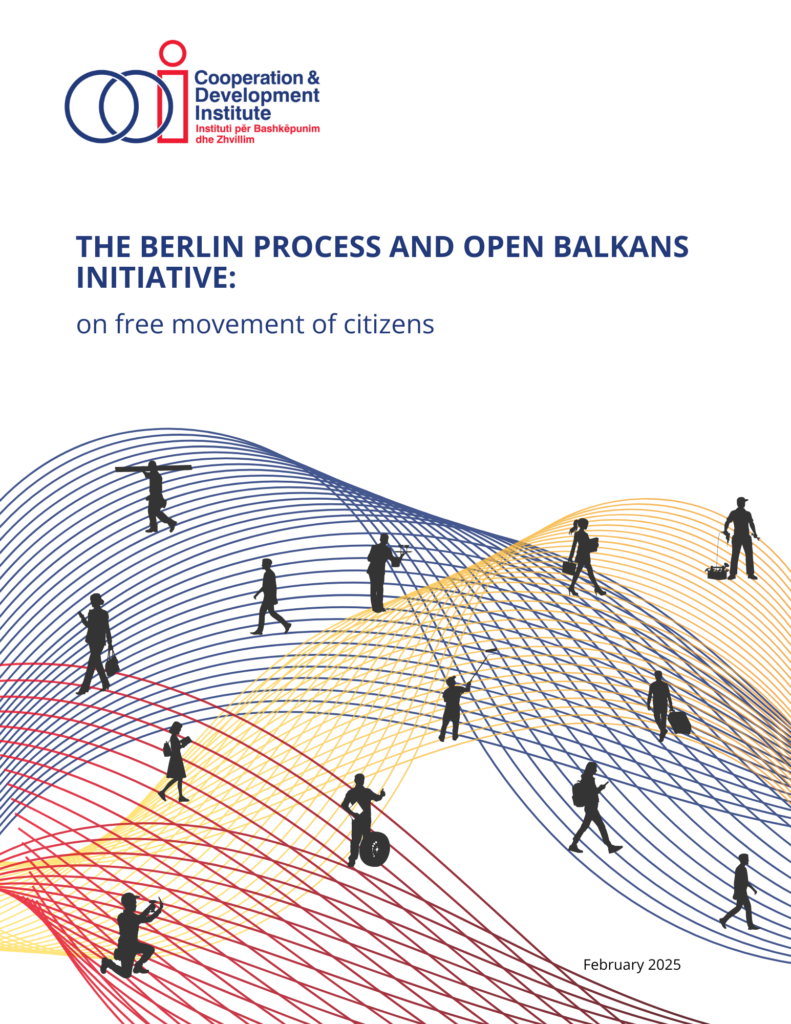
This publication explores the state of affairs and the impact of BP and OBI on free movement of people within the Southeast Europe 6 (SEE6) region, evaluating their effectiveness in breaking down barriers for workers, professionals, and students. Beyond the difference in inclusivity, while both initiatives aim to enhance peoples’ mobility, they diverge in governance structures, implementation mechanisms, and in their respective alignment with EU acquis.
Nevertheless, both initiatives show limits during the implementation phase. While OBI’s very legal existence is at doubt, BP must follow up its success in deblocking regional cooperation at political level, by extending its scope to include monitoring and implementation aspects.
This publication is the first part of a broader analysis of regional cooperation in SEE6, focusing on overarching trends and challenges. Future editions will provide country-specific insights, examining how those mobility agreements are implemented in Albania, North Macedonia, and Serbia and its tangible effects on citizen mobility.