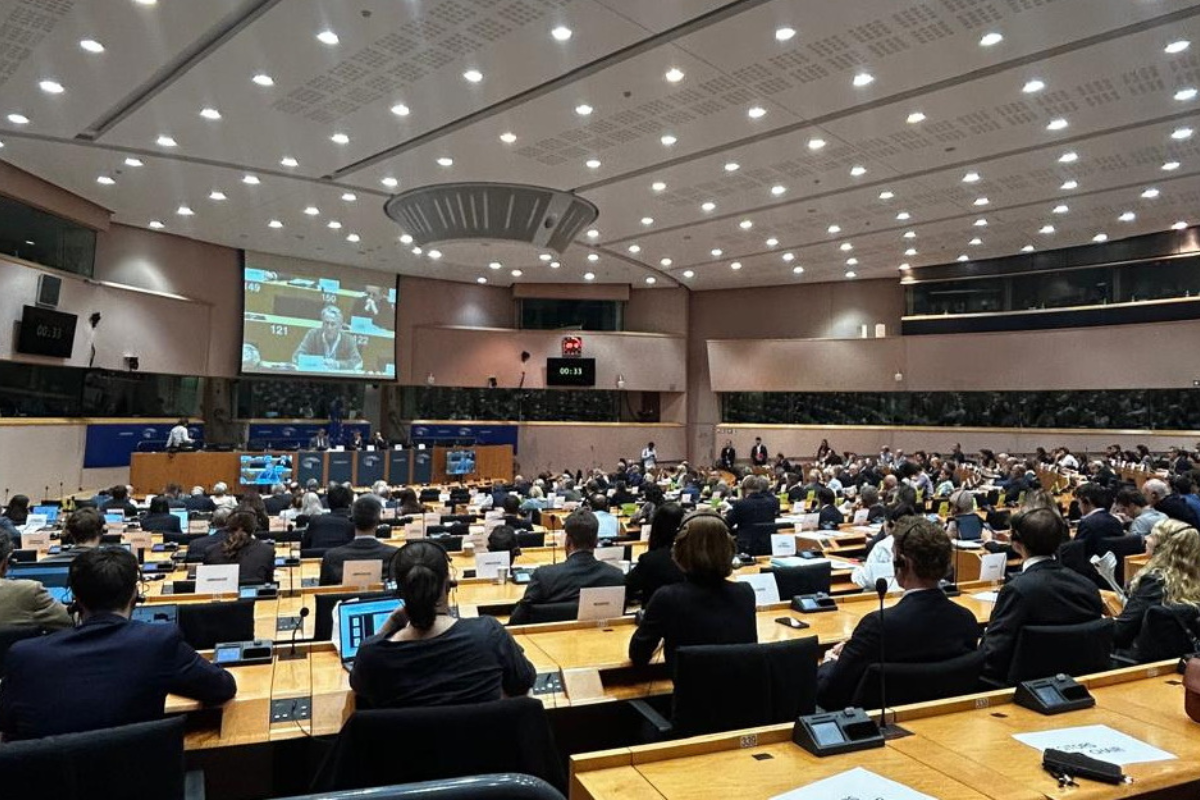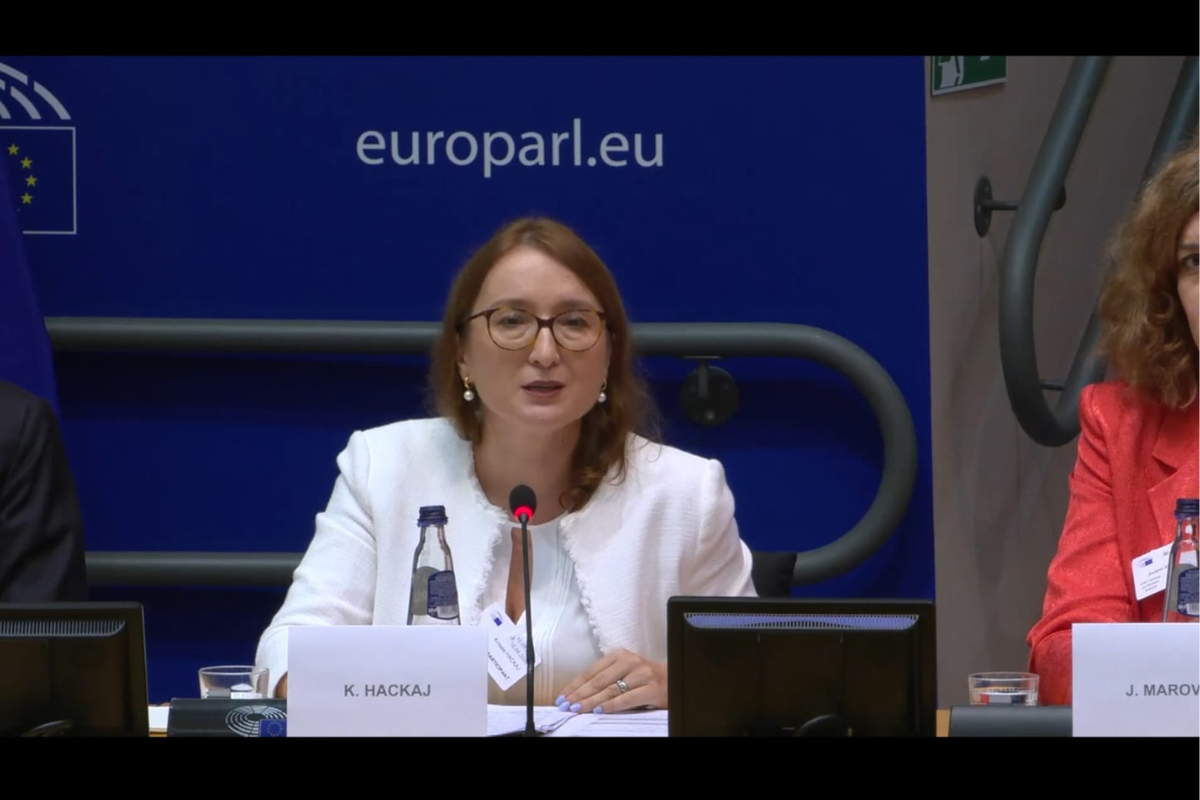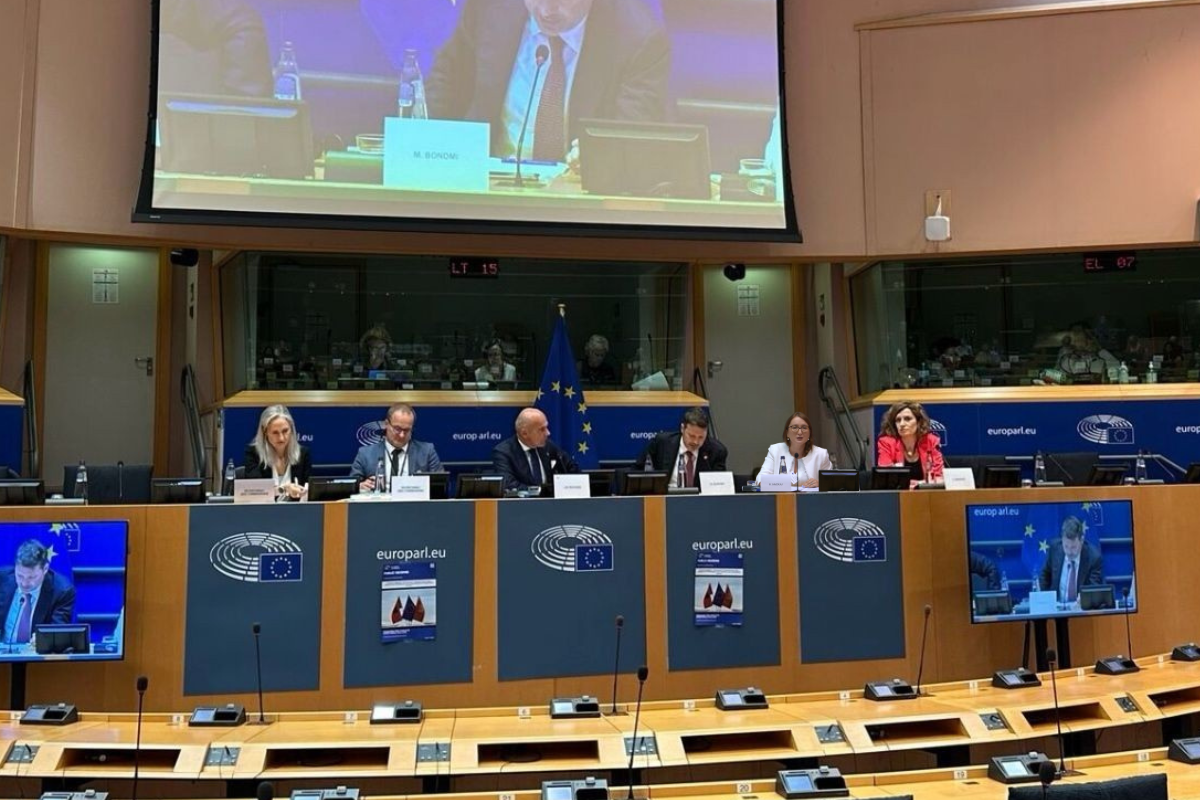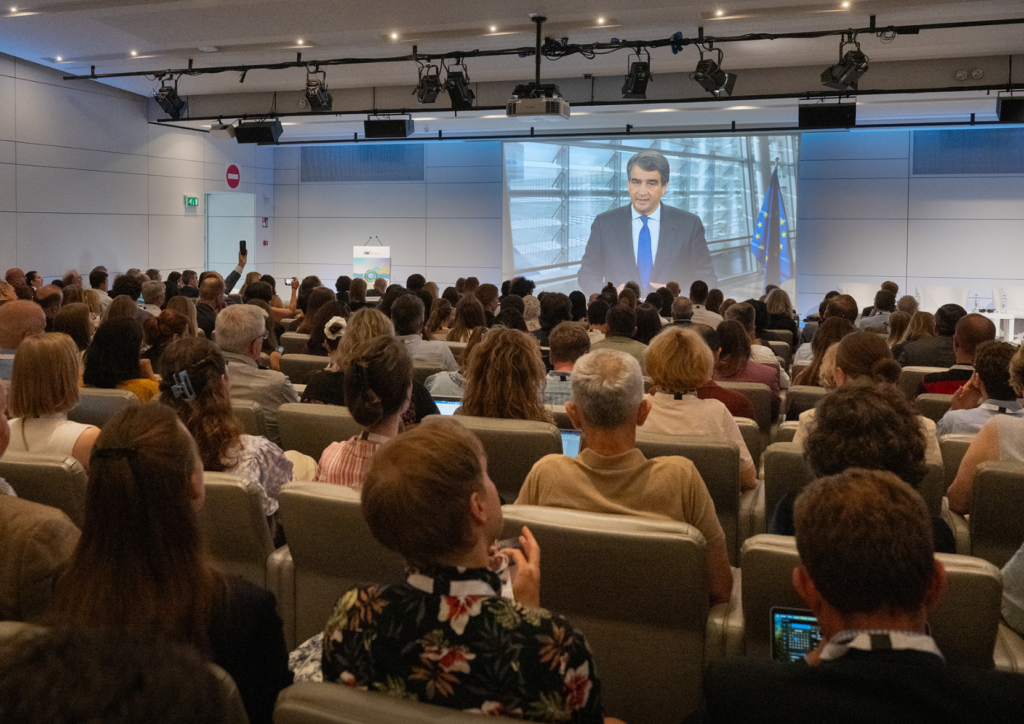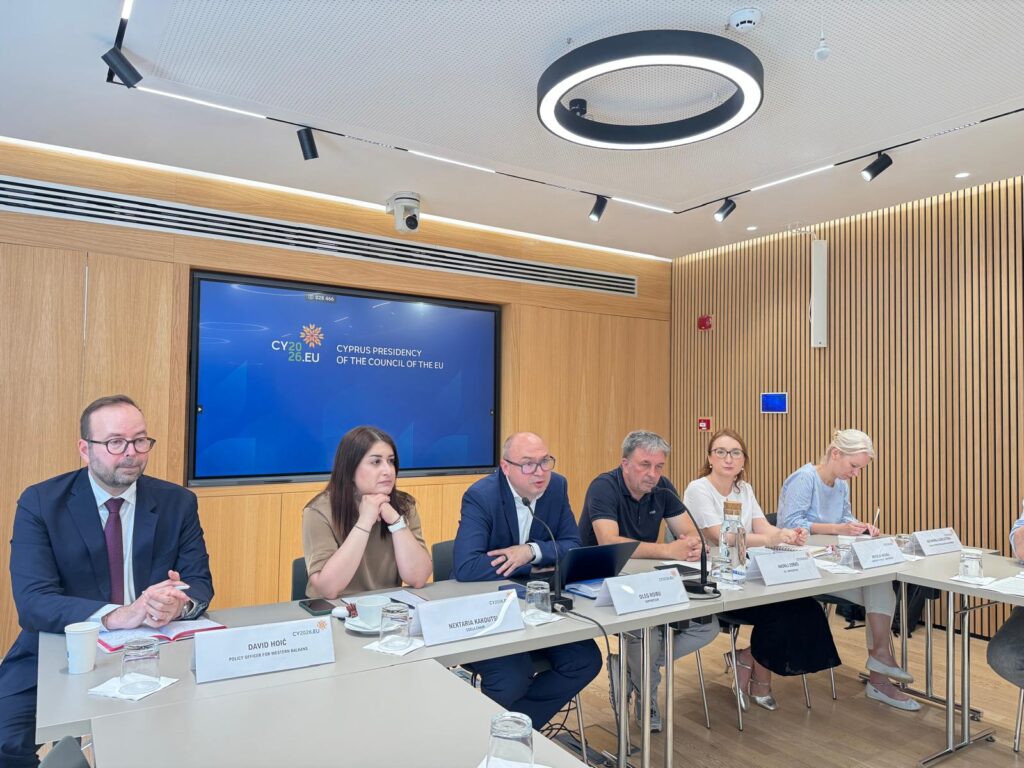

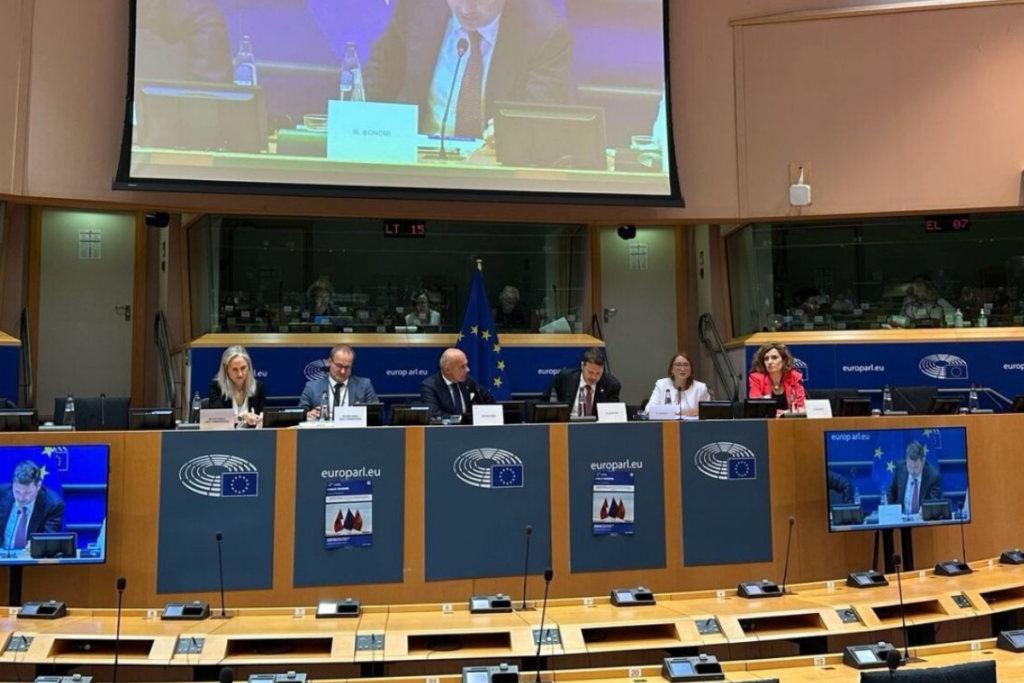
Brussels, 10 September 2026 | CDI Executive Director Krisela Hackaj joined the European Parliament’s AFET public hearing on “Western Balkans’ Frontrunners: Lessons Learnt from Albania and Montenegro and Sustaining the Enlargement Process.” As Montenegro and Albania advance towards EU membership, Enlargement momentum must be matched by Membership readiness – resilient institutions, credible reform implementation and tangible results for citizens.
Hackaj highlighted three key messages:
- Support resilient institutions capable of implementing EU rules and withstanding political interference, state capture and undue influence. Hackaj described 2026 as one of the most dynamic years for EU enlargement since the 2003 Thessaloniki Summit, with Montenegro entering the final phase of accession negotiations and Albania advancing at unprecedented speed. For Albania in particular, EU membership remains key to developing domestic institutions and reforming the state. The next – and perhaps more difficult task is to ensure that these institutions remain independent, inclusive, professionally governed and resilient against political interference, corruption and undue outside influence. Accession progress cannot be measured only through laws adopted, benchmarks met, or the number of chapters opened and provisionally closed. The accession process needs to deliver the quality of governance, democratic accountability and standards that citizens associate with EU membership.
- Operationalising gradual integration, while preserving the merit-based principle – allowing candidates with verified acquis alignment and effective implementation to progressively access relevant EU policies, instruments and institutional structures. Hackaj called for gradual integration to be given a clear operational definition soon by the EU, while fully preserving the merit-based principle of enlargement. A credible framework should clarify which sectors can be opened to earlier integration, under what conditions and safeguards, what citizens, businesses and institutions can concretely access before membership, and what cost.
- Using the 2028–2034 MFF as a strategic accession tool, including a predictable, merit-based financial approach that supports reform delivery and prepares for the transition from pre-accession funding to full EU membership. Albania’s objective of joining the EU by 2030 places potential accession squarely within the lifetime of the 2028-2034 MFF, making Albania’s membership financially relevant to the design of the next EU budget. Hackaj therefore called on the European Commission to start preparing a Financial Package for Albania, based on the merit-based principle and conditional on maintaining the pace of negotiations and reform delivery. It should clearly set out the financial and budgetary implications of accession, including the transition from Global Europe to EU internal policies and budget headings, and Albania’s future contribution to the EU budget.
An ambitious pre-enlargement policy review, anchored in the next MFF, can turn the EU budget into a strategic instrument of accession. Beyond the overall amounts, what matters is how pre-accession support is redesigned – particularly the current imbalance between loans and grants – and how their different governance, oversight and conditionality arrangements are improved. A better-balanced and more accession-oriented model would create stronger incentives for reform, build institutional capacity and ensure a smoother transition from pre-accession assistance to full participation in EU policies and instruments.