

Tirana, 7 October 2026 | Albania’s EU accession and its further embedment in EU connectivity agenda are increasingly intertwined. Transport, energy and digital links facilitate and support access to Single Market and FDI attraction; support alignment with EU norms and standards; directly contribute in relevant negotiation chapters; push convergence with the EU; fluidify regional cooperation; and prepare institutions for membership readiness.
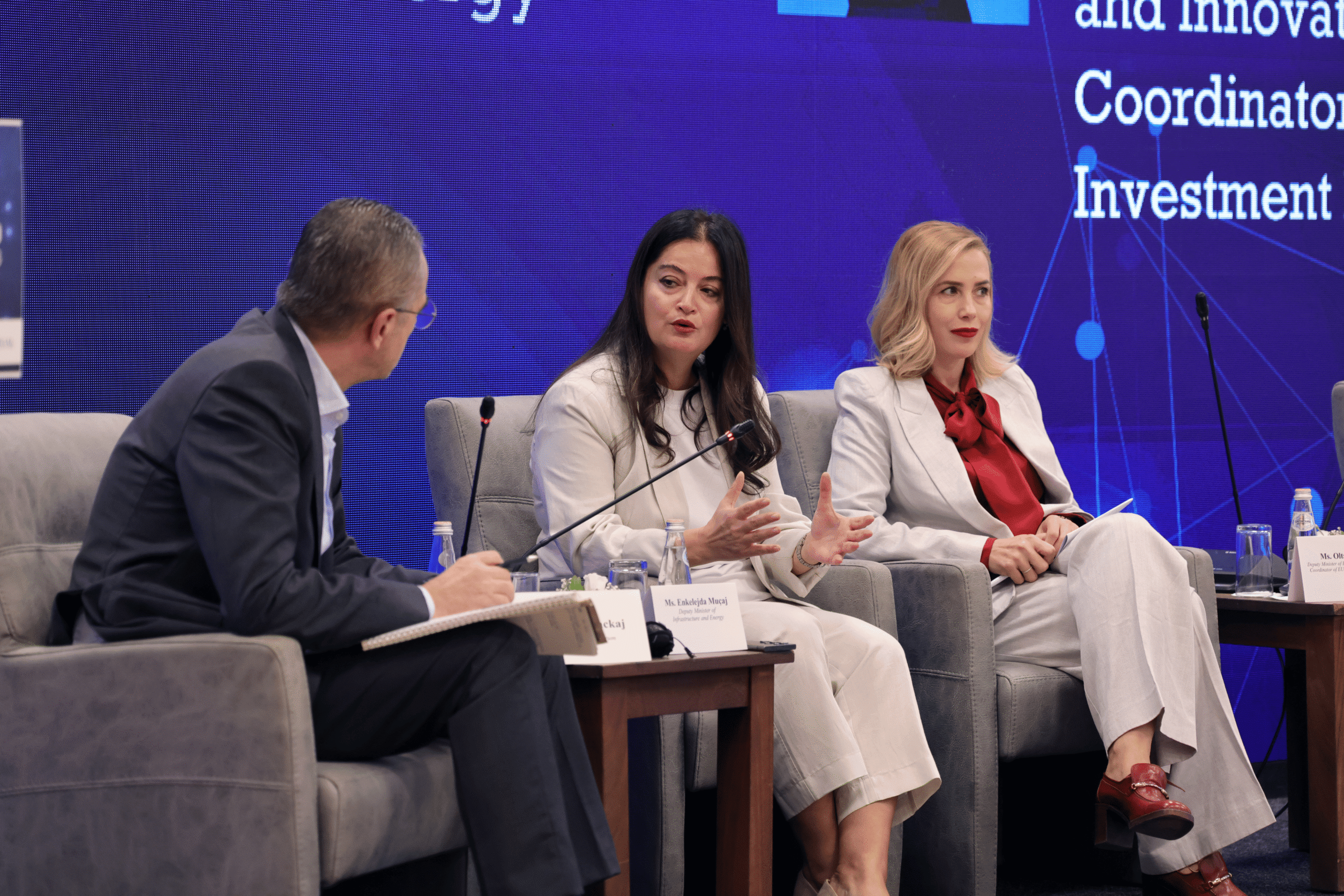
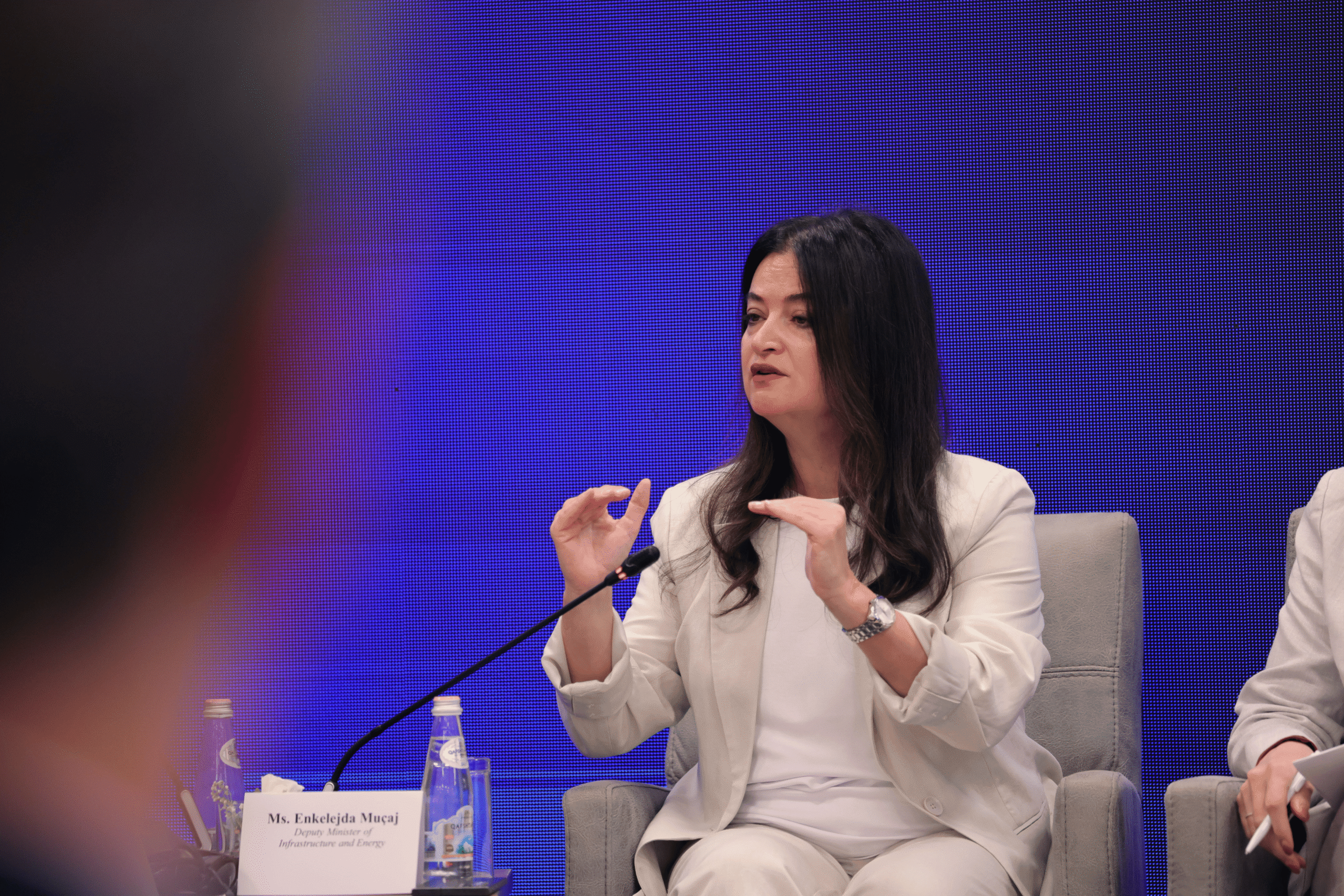
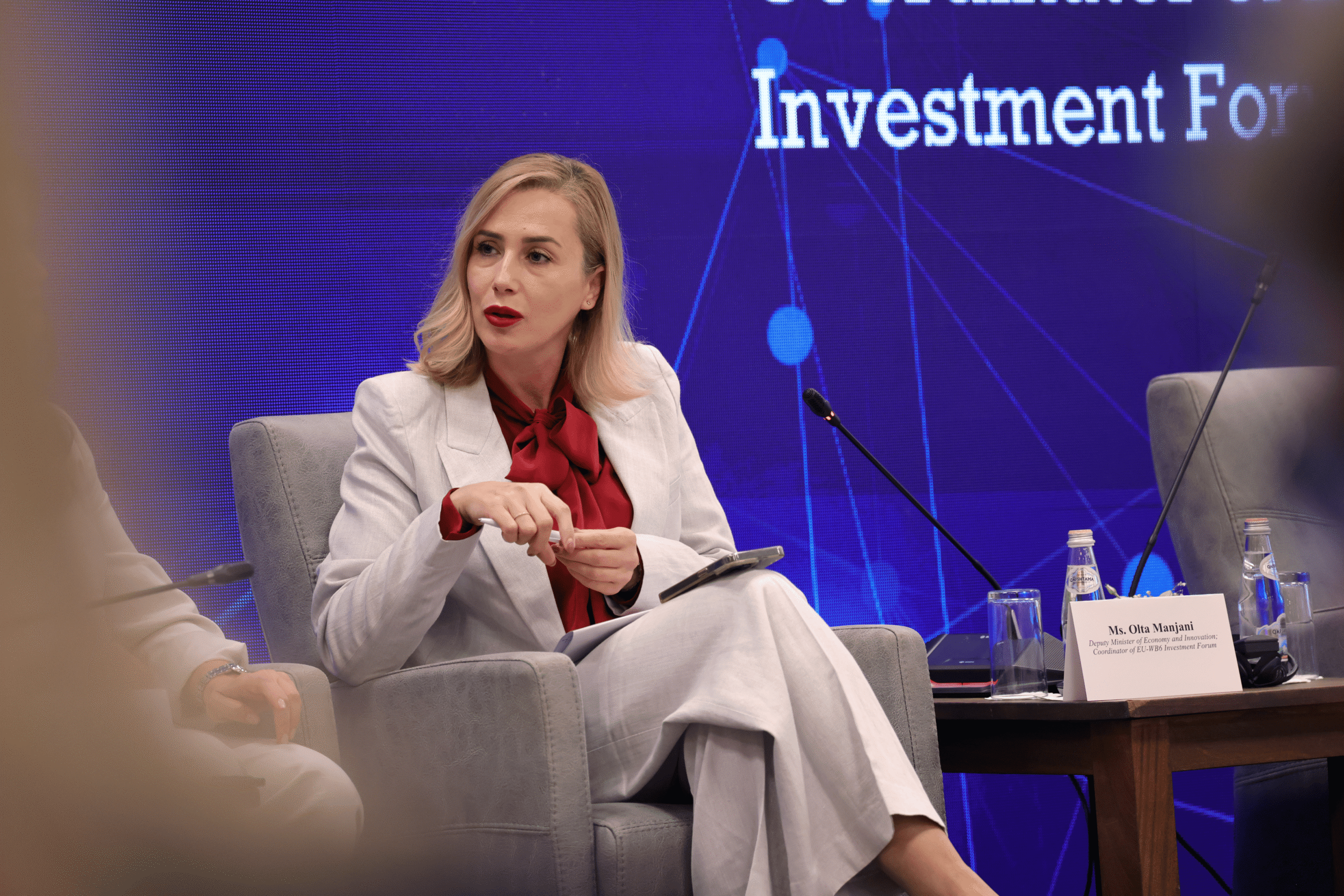
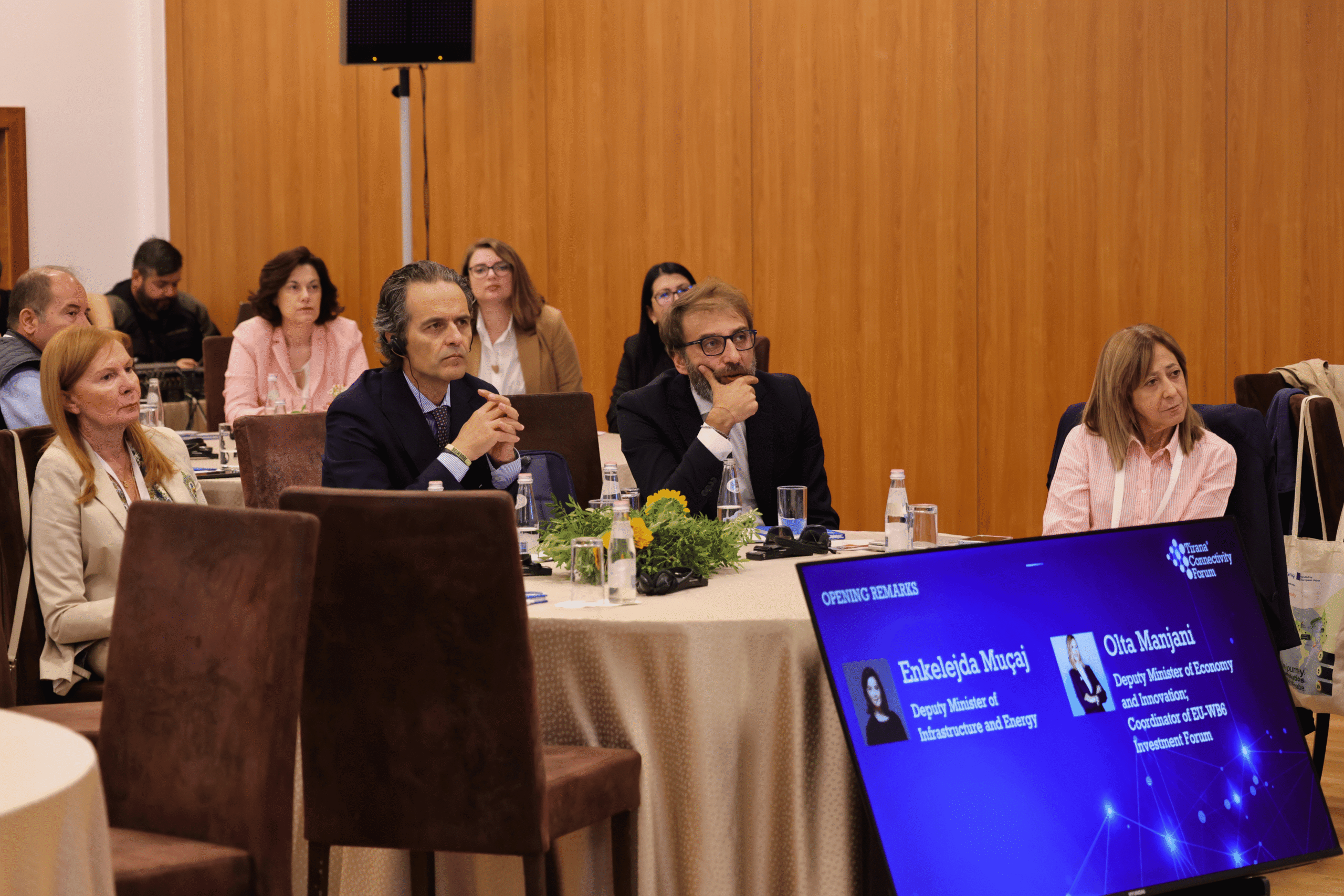
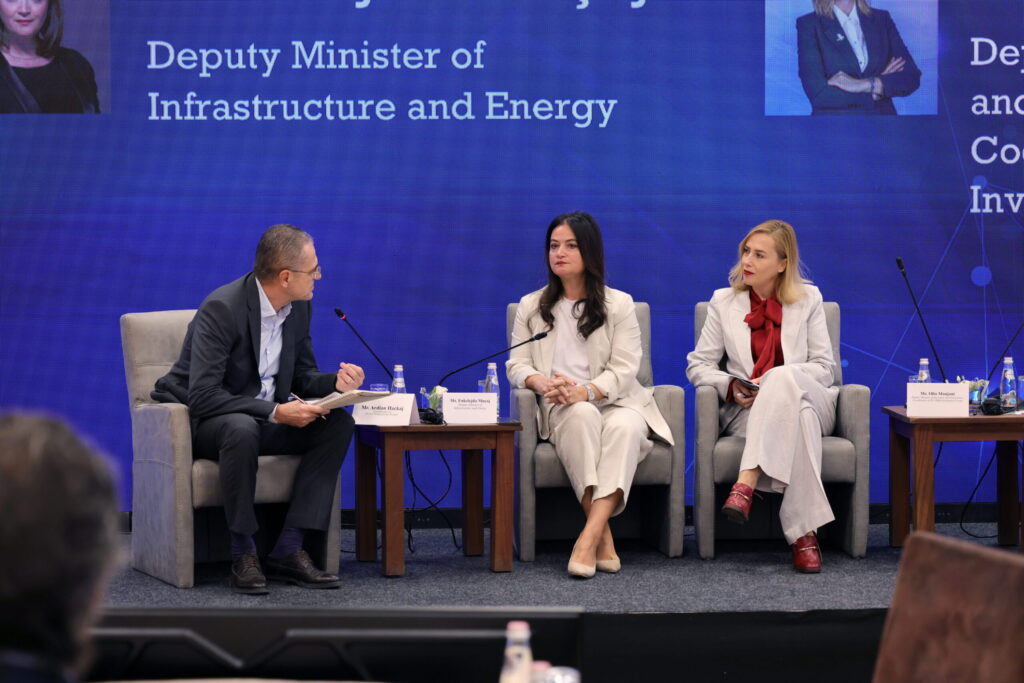
This was the central message at the opening of the second day of the Tirana Connectivity Forum 2026, where Deputy Minister of Infrastructure and Energy Enkelejda Mucaj and Deputy Minister of Economy and Innovation Olta Manjani outlined how infrastructure development and investment can advance Albania’s European integration and create a growth-supporting environment across the Western Balkans.
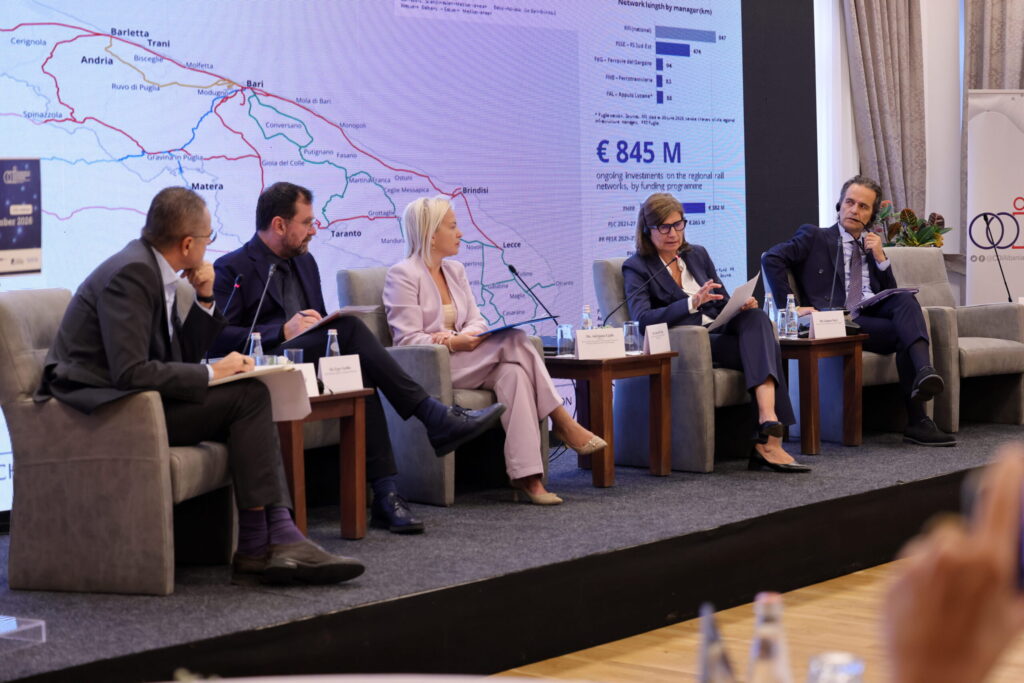
Their remarks set the stage for a day of discussions on the South Adriatic connectivity agenda, with a particular focus on railway development in Albania and Montenegro.
Rail and regional connectivity as EU accession priorities
Ms. Mucaj described connectivity as a defining element of Albania’s EU accession process, encompassing road, rail, air and maritime transport, alongside energy interconnections and digital transformation. She underlined the need for these systems to be planned, built and operated as an integrated whole embedded in EU framework, rather than as separate sectors.
She reported that Albania had fulfilled close to 80% of its commitments in the policy areas covered by the Ministry of Infrastructure and Energy, including Chapter 14 on transport and Chapter 21 on trans-European networks. She also said that respective interoperability standards were expected to be in place by the end of 2026, laying the groundwork for stronger cross-border rail cooperation with Montenegro, Kosovo and North Macedonia.
Railway development remains a government priority, with work under way on the Tirana–Durrës–Airport railway and the rehabilitation of the Vorë–Hani i Hotit line. Mucaj also highlighted Corridor VIII as a strategic priority, connecting Albania to wider regional routes towards North Macedonia, Bulgaria and the Black Sea. The linking of Port of Durrës with Prishtina’s dry port is another important development underlining the contribution of Albania’s ports to regional development.
To advance these projects, she called on private companies, contractors and international partners to engage early in Albania’s infrastructure development through participation in tenders, engagement in investment, operations and/or subcontracting. She also stressed that EU support should reflect the wider European benefits of closing connectivity gaps across the Western Balkans.
Investment that connects opportunities
Ms. Manjani argued that connectivity must be understood as an economic and investment agenda, not merely a programme of different physical works. Railways, ports, digital networks and energy links, she said, create real value only when they also connect businesses, investors, finance, skills and people across the region.
She presented the upcoming WB6–EU Investment Conference, “The New Frontier,” scheduled for 25–26 November 2026 in Tirana, as the practical platform for converting regional connectivity priorities into concrete partnerships and investments. The conference will bring together companies, commercial banks, international financial institutions and EU counterparts for sector-focused discussions and business-to-business matchmaking, including on railways, ports and other major infrastructure projects.
Manjani stressed that investments should generate value across the region rather than remain as isolated national projects. She pointed to the 10 memoranda of understanding signed for major infrastructure projects at the 2025 edition of the Investment Forum, noting that organisers and the European Commission are following up on their implementation. This year, the conference platform itself will serve as the main route for companies to present projects, identify partners and arrange meetings.
A dedicated Albania day will further connect SMEs and project promoters with commercial banks, international financial institutions and potential investors, reflecting the government’s aim to ensure that investment opportunities reach the wider business community.
A shared regional agenda rather than a national one
Both deputy ministers underlined the need for a coordinated regional approach to infrastructure development. While Manjani emphasised the Conference’s role in positioning the Western Balkans as a destination for investment that generates local and regional opportunities, Mucaj called for Albania and its neighbours to work with Italy, Greece and Bulgaria on a shared connectivity agenda rather than pursue fragmented national projects.
The overarching message was that connectivity must go beyond infrastructure itself: it must strengthen regional cooperation, attract investment and translate Albania’s EU accession ambitions into tangible economic opportunities for businesses and citizens across the Western Balkans. Ms. Manjani invited rail actors to profit from the 2025 EU – WB6 Investment Forum to explore new opportunities especially with regard to Corridor VIII.