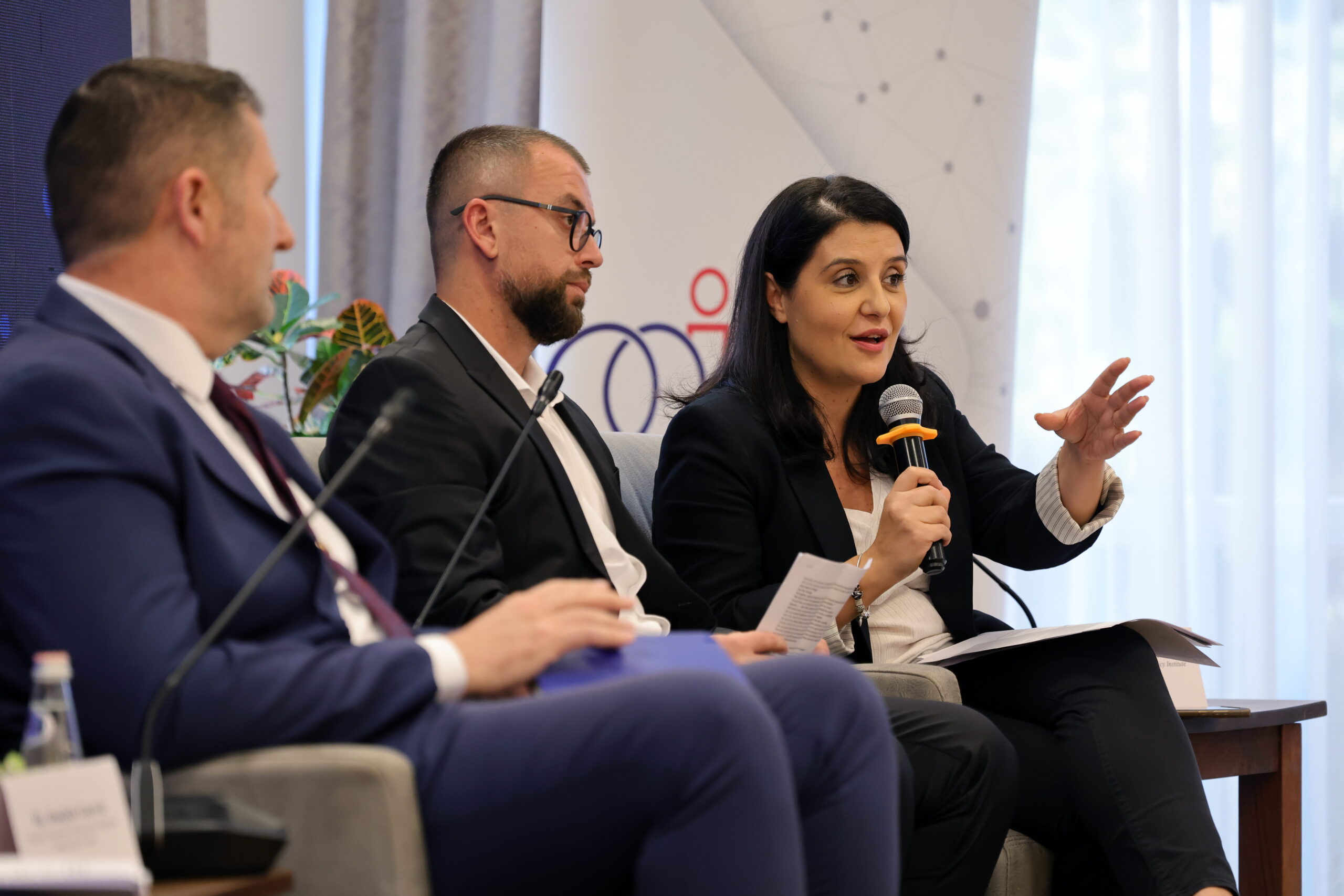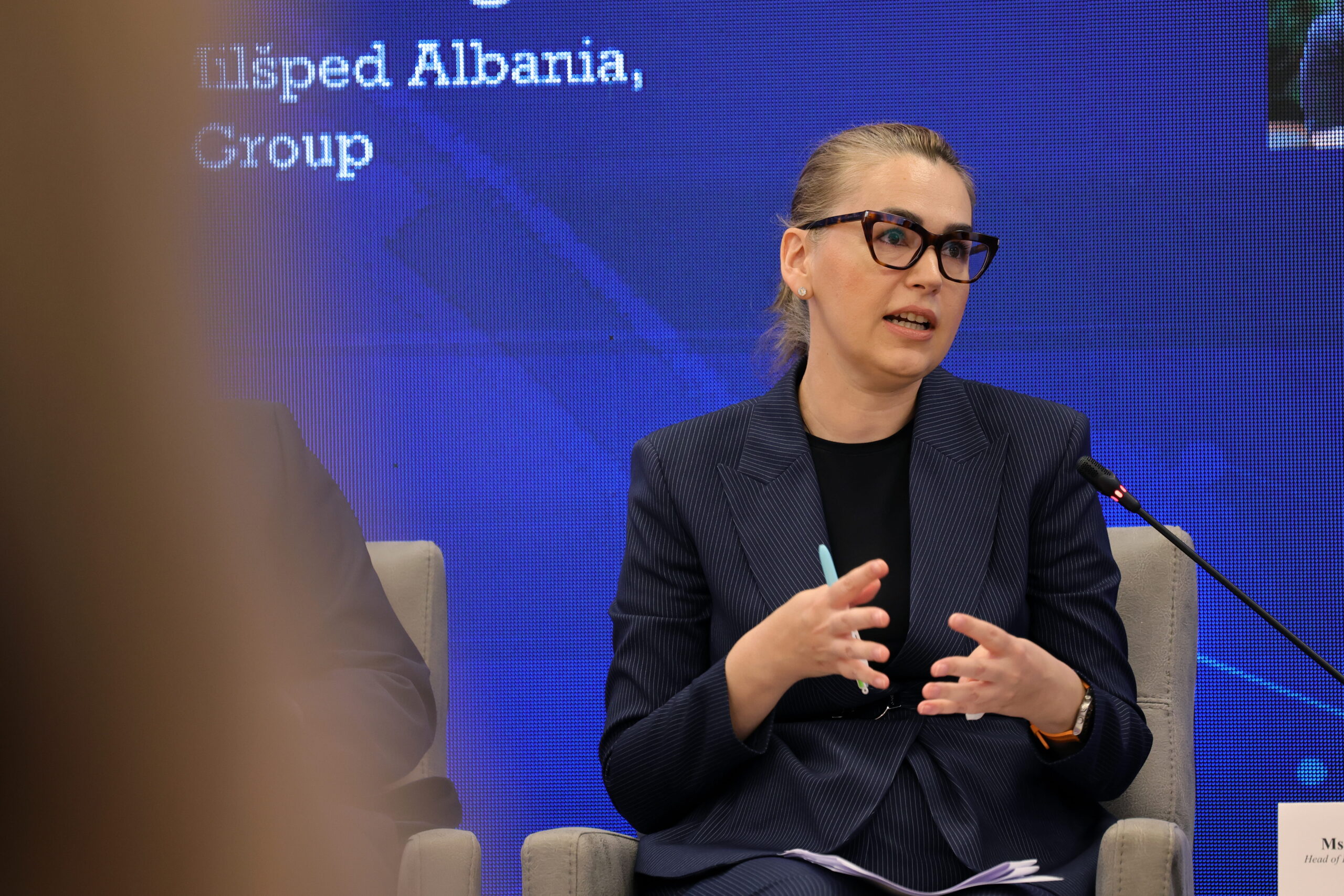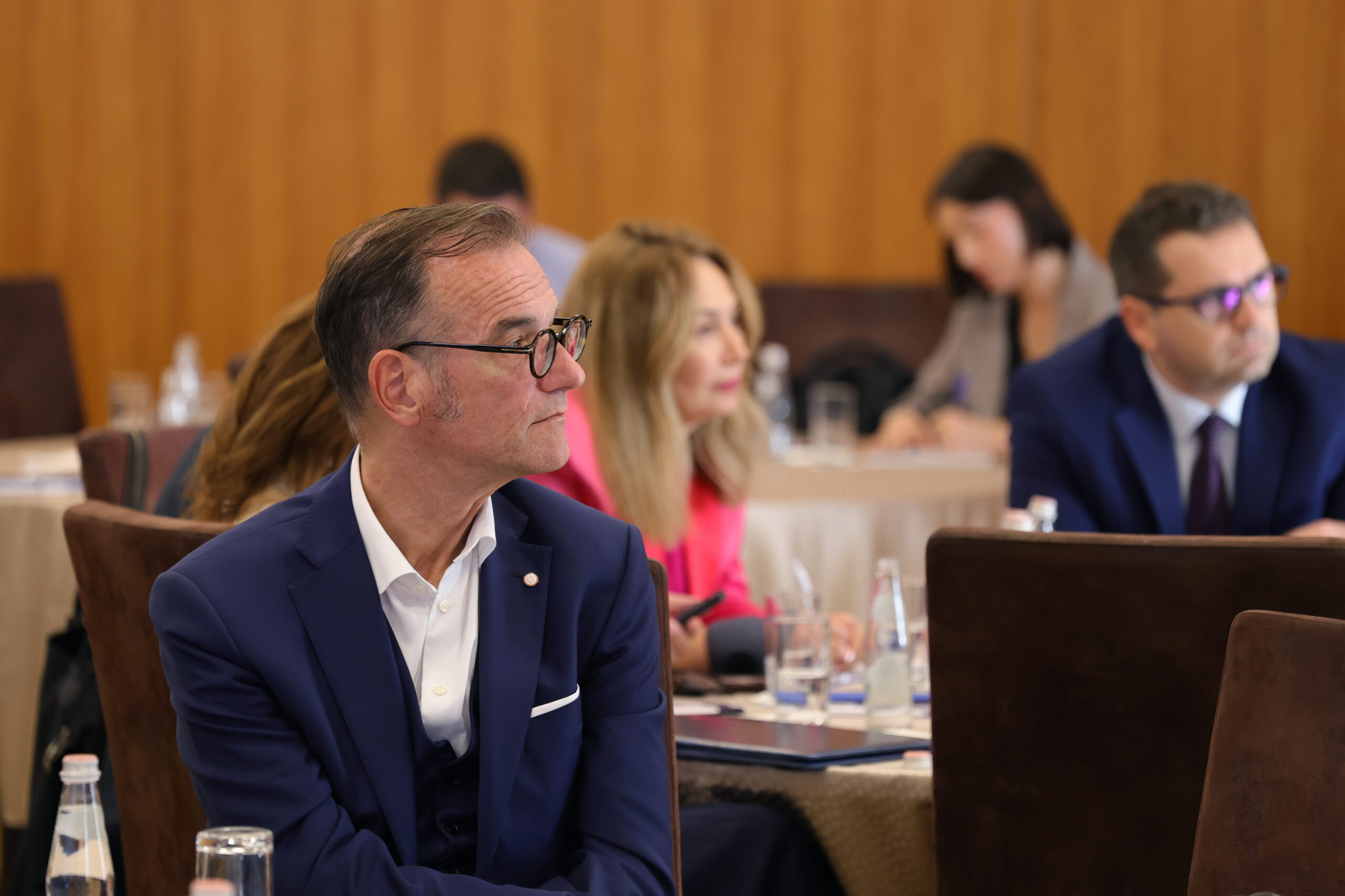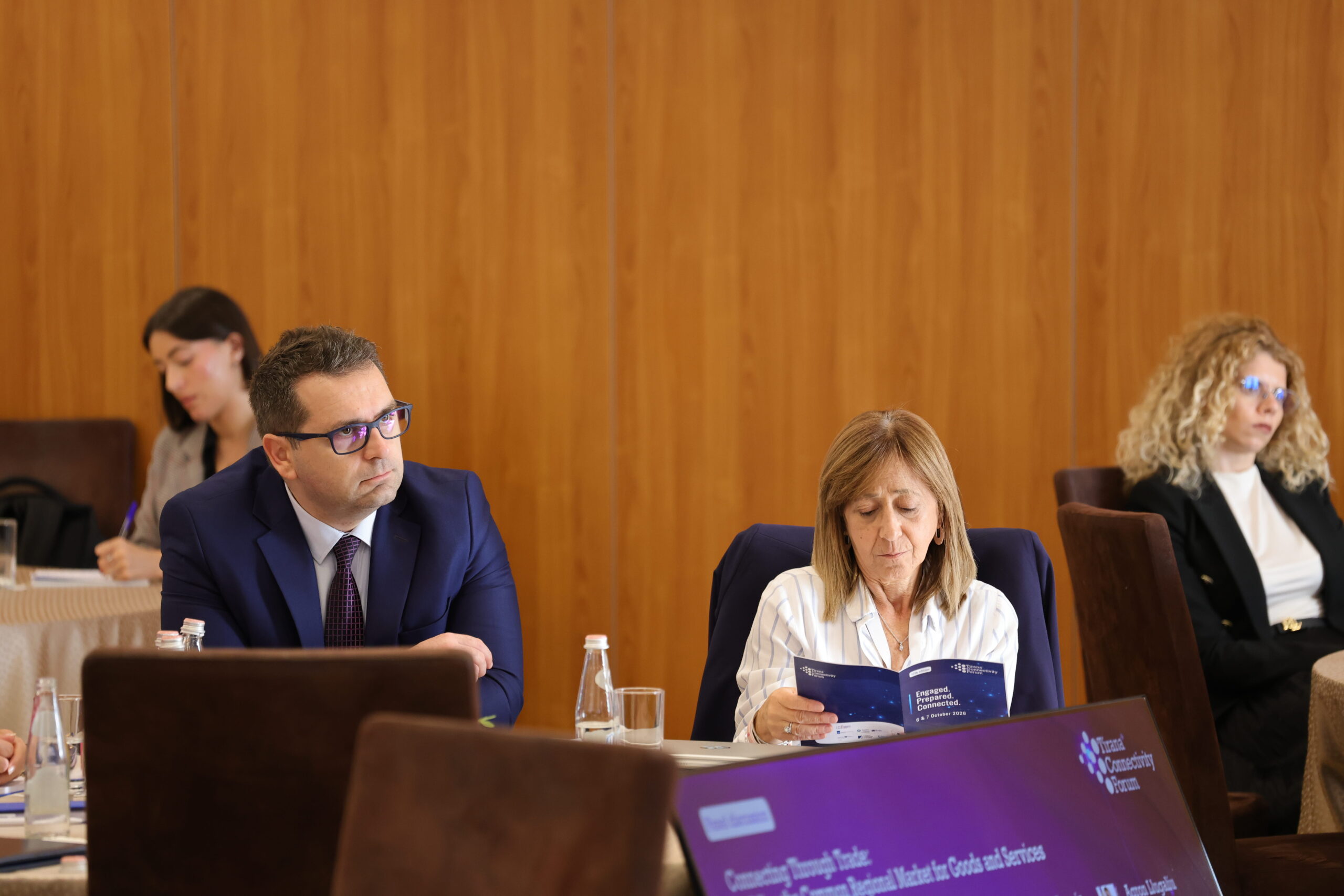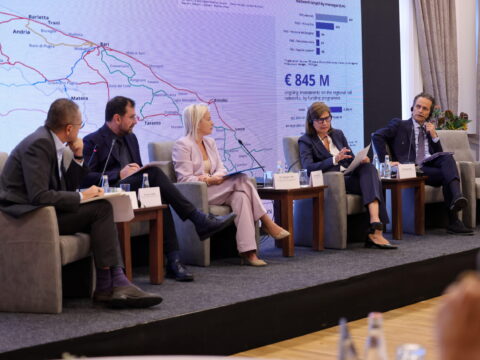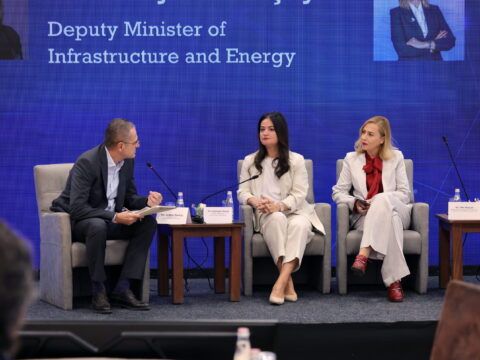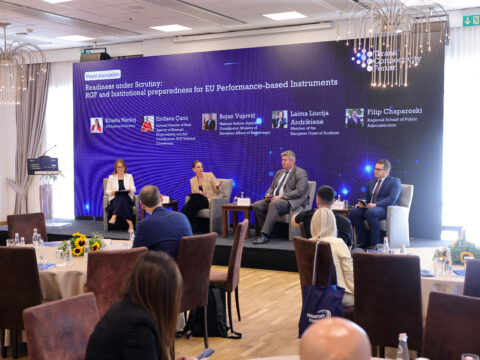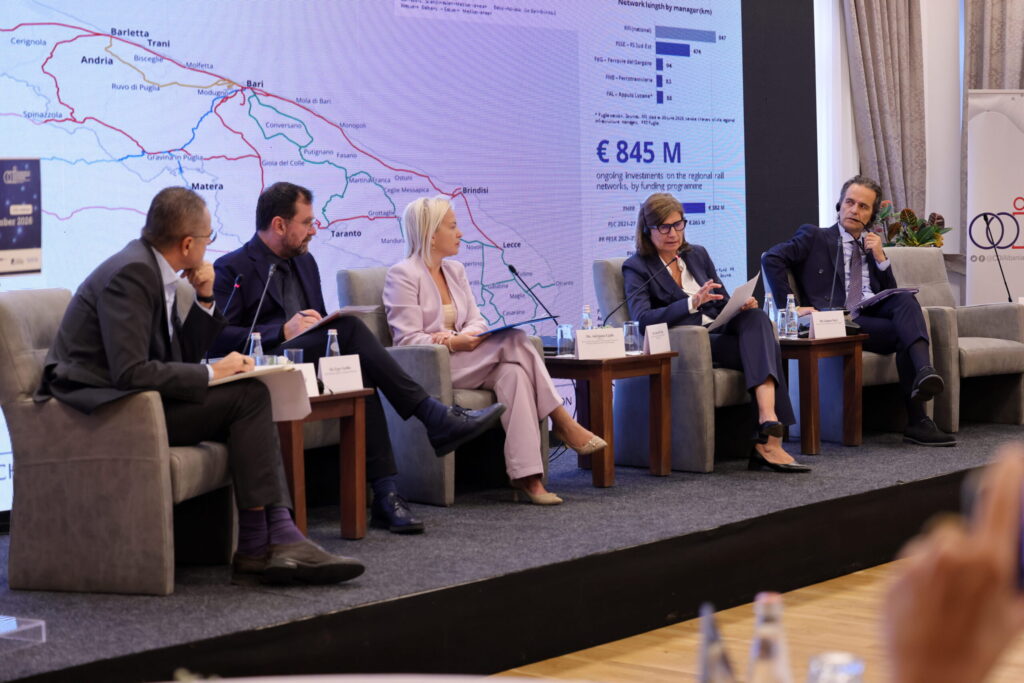


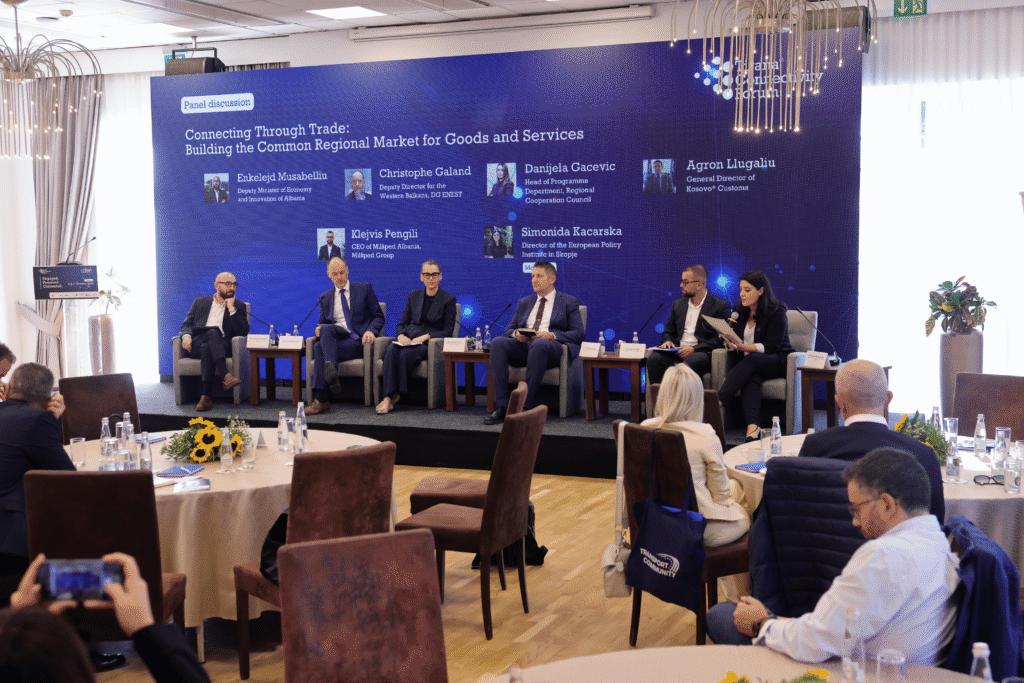
Tirana, 6 October 2026 | Faster border crossings, simpler procedures and lower trade costs must become the everyday reality of doing business across the Western Balkans. This was the main call at the panel discussion “Connecting Through Trade: Building the Common Regional Market for Goods and Services,” co-organised by the CEFTA Secretariat and CDI as part of the 12th Tirana Connectivity Forum.
Bringing together government representatives, the European Commission, regional organisations and the private sector, the discussion focused on how to turn regional commitments and EU-aligned rules into practical improvements for businesses and citizens.
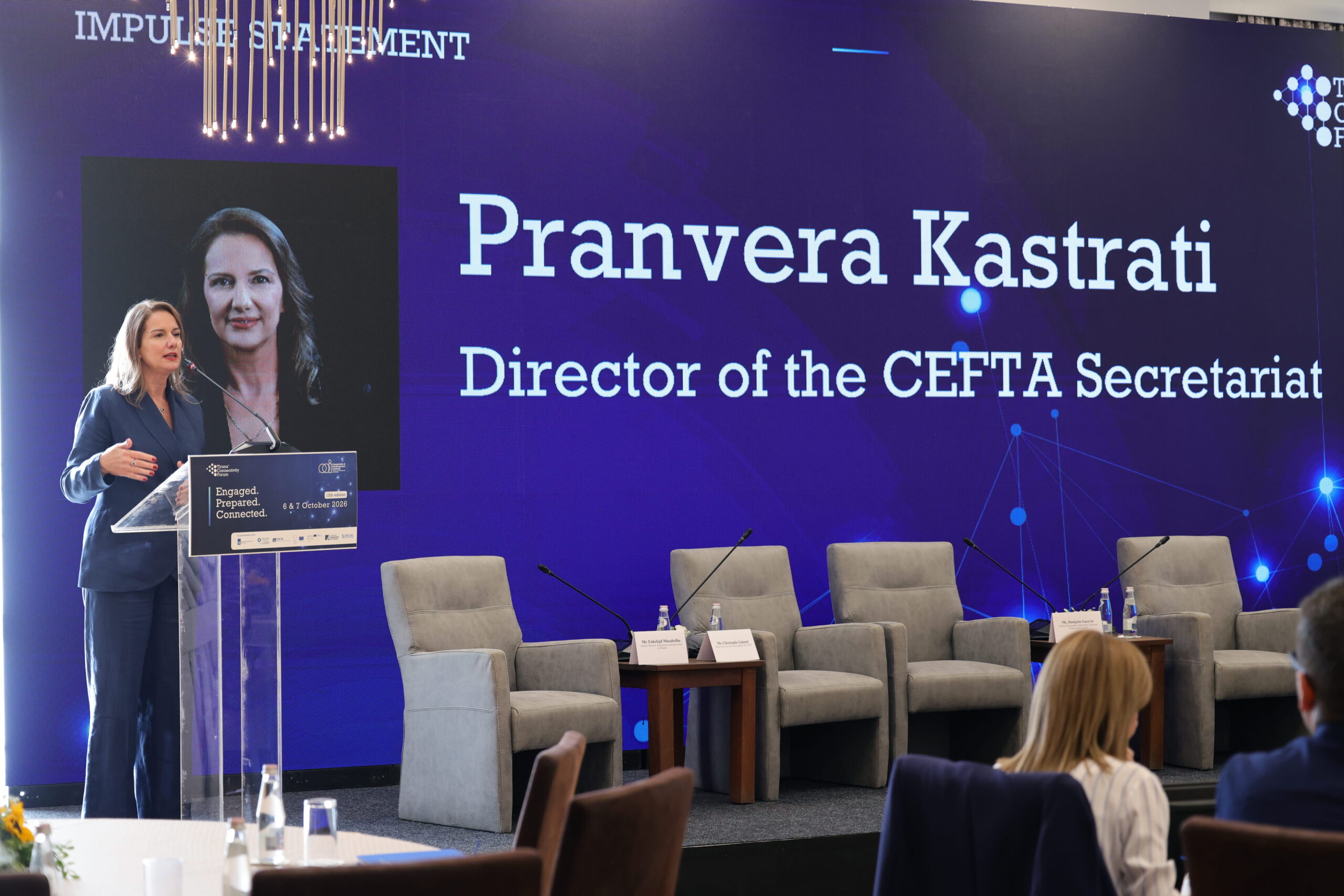
Opening the session, CEFTA Secretariat Director, Pranvera Kastrati, emphasised that regional connectivity goes beyond physical infrastructure and depends equally on the rules, procedures and trust that enable the free movement of goods, services and people. While investment in roads, railways and energy remains essential, the Common Regional Market (CRM) must also address the practical barriers businesses and citizens face in their daily activities. She stressed that CEFTA’s work should remain responsive to their needs, with regional cooperation translating into simpler procedures, more predictable trade and tangible benefits across the Western Balkans.
For businesses, integration is measured at the border
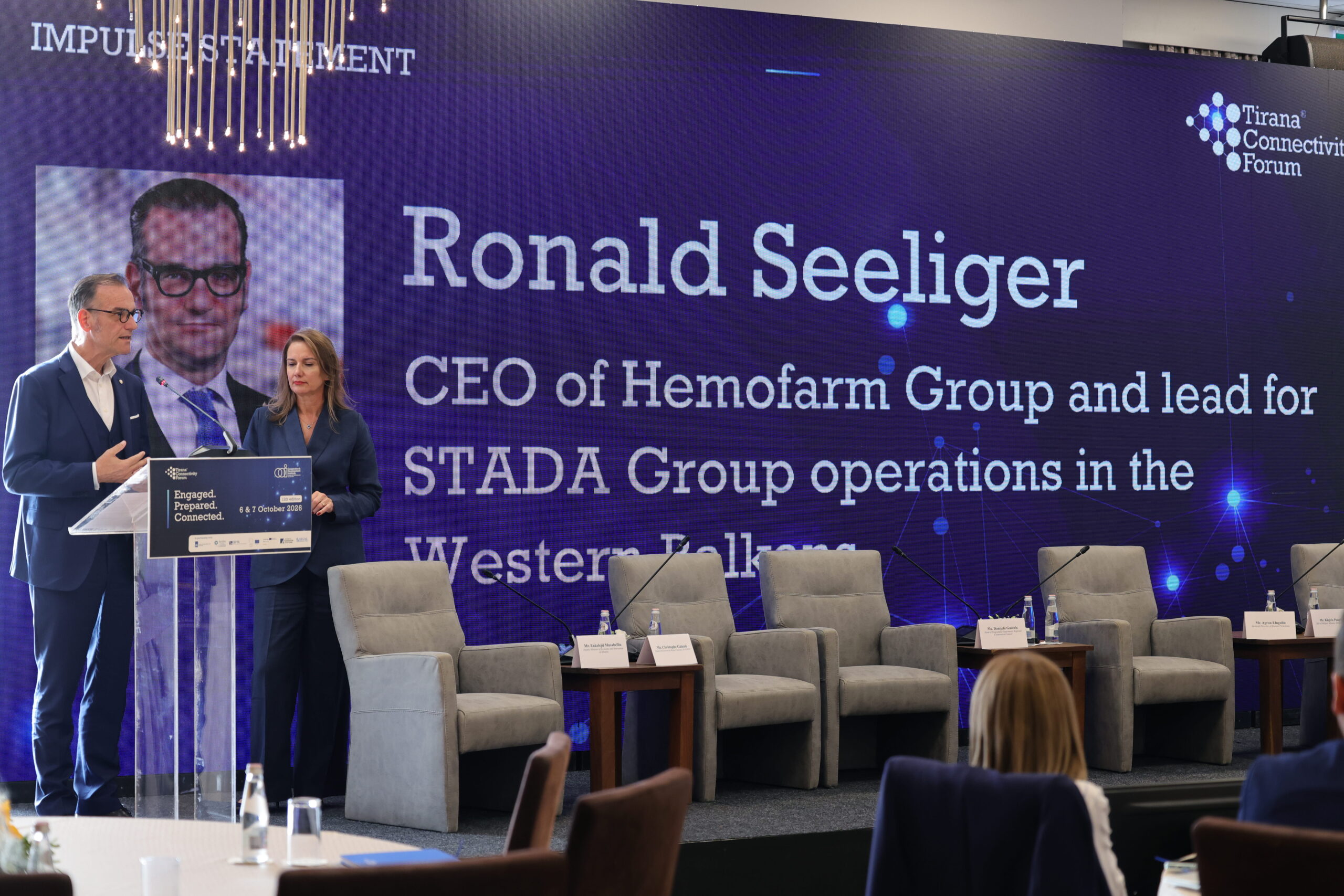
Ronald Seeliger, CEO of Hemofarm Group and lead for STADA Group operations in the Western Balkans, urged policymakers to judge regional integration by whether businesses feel its effects in their bottom line. Drawing on his experience in the pharmaceutical sector, he said medicines may need to be registered six times or more across the region, adding to administrative burdens and sometimes contributing to shortages that affect patients. He called for clear indicators to track the cost of doing business, border waiting times, transparency and investment conditions. Without tangible progress, he warned, companies may reconsider their regional presence, with consequences for jobs, investment and product availability.
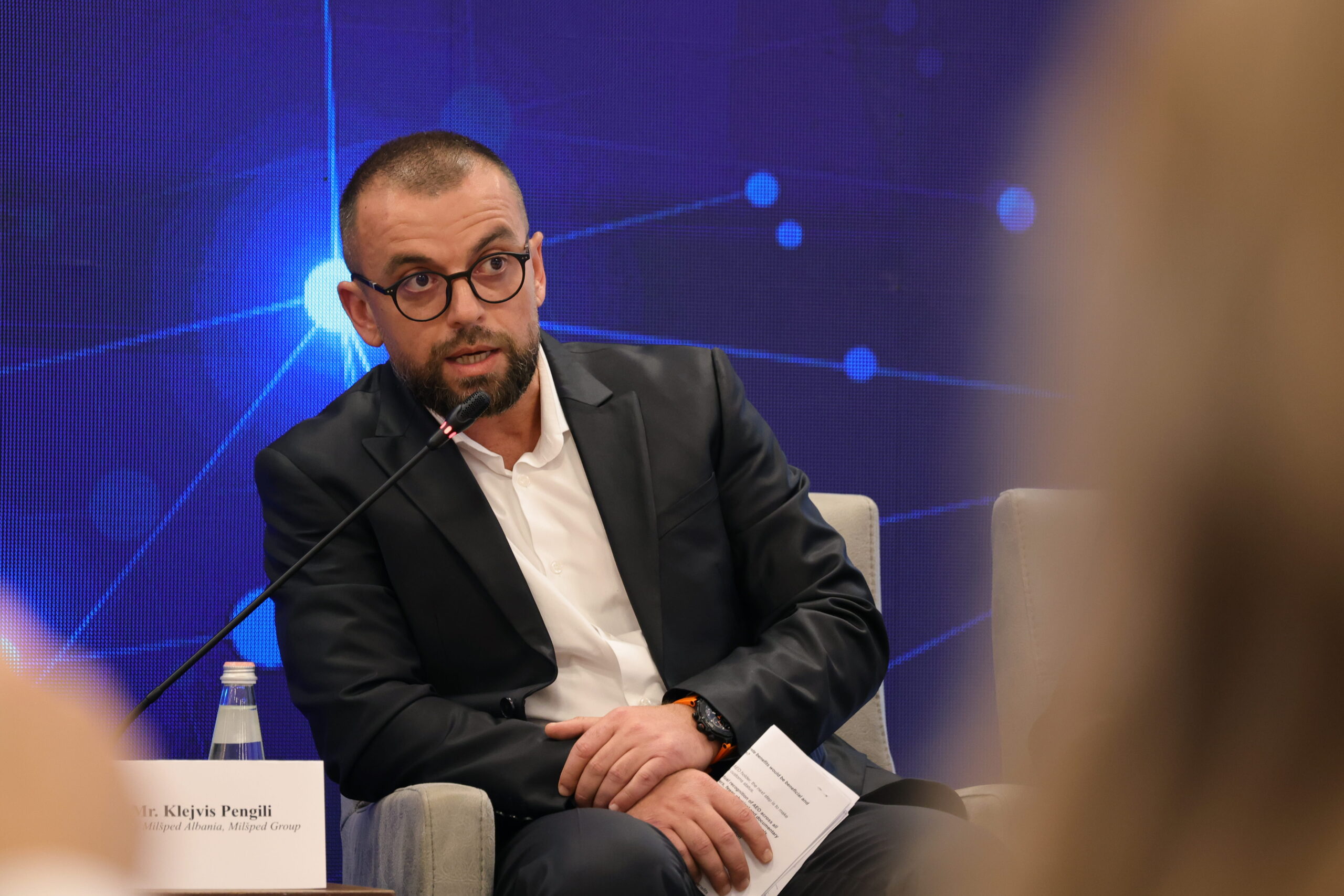
Klejvis Pengili, CEO of Milšped Albania, echoed the need for predictable documentation, consistent procedures and clear requirements across markets. He called for “one single point of trust” for traders, including harmonised Harmonized System codes. Pengili also highlighted Albania’s recently established single point of contact for business enquiries, which he said was helping companies save time and money, alongside investment in customs technology and bonded warehouses. He encouraged businesses to engage more actively in consultations, noting that only around 20% had attended a recent Ministry’s call on new customs rules.
Agron Llugaliu, Director General of Kosovo Customs, presented examples of cooperation with Albania, including customs clearance for Kosovo-bound trade at the Port of Durrës since October 2022 and joint border crossing arrangements involving Albania and North Macedonia. He also pointed to the “one entry, one control” approach for passenger traffic as an example of practical coordination. Llugaliu reported that Kosovo’s pre-arrival declaration system had reduced waiting times from 10 hours and 30 minutes to three hours. He also referred to a World Bank study indicating that bringing average waiting times in the Western Balkans four hours closer to the OECD average could increase regional GDP by 1.5–3%. However, progress at one border can be undermined by delays on the other side when neighboring administrations apply different procedures or operating hours. “The lesson, he stressed, is that governments must harmonise not only regulations but also their practical implementation.”
Panelists identified several priorities for making cross-border trade more efficient: digitalisation, including electronic signatures and paperless procedures; stronger customs cooperation and common risk-management practices; mutual recognition of documents and industrial-product test results; and greater recognition of Authorised Economic Operator programmes. They also stressed that businesses must be consulted when rules are designed and implemented.
CRM as a stepping stone towards the EU Single Market
Regional cooperation was also discussed as a practical way to prepare the Western Balkans for the EU Single Market.
Albania’s Deputy Minister of Economy and Innovation, Enkelejd Musabelliu, described regional integration and EU accession as complementary processes, arguing that EU-aligned legislation creates opportunities only when institutions and businesses are equipped to put it into practice. Musabelliu noted that Albania had largely aligned its company law with EU rules. He also presented the Ministry’s initiative to develop an AI-based platform that would allow businesses to enter their NACE activity code and identify the EU requirements relevant to their operations.
Christophe Galand, Deputy Director for the Western Balkans at DG ENEST, stressed that the CRM remains important given the region’s geography and interconnected economies, where a lack of harmonisation can create significant barriers to trade. While it is not a precondition for EU accession, regional cooperation can deliver practical benefits even as countries advance towards membership at different speeds. He highlighted the gap between technical progress on common standards and mutual recognition and the political decisions needed to implement them, noting that accepting another party’s certificate can be perceived as a political act. With the CRM’s potential still far from fully realised, Galand called for continued efforts and new approaches to overcome existing obstacles and move regional integration forward.
Danijela Gačević, Head of Programme Department at the Regional Cooperation Council (RCC), highlighted the importance of monitoring implementation and measuring the impact of the CRM Action Plan 2025–2028. She cited an assessment that full implementation of the plan’s measures could increase regional GDP by 10%. The RCC is working with regional partners on a monitoring tool to track progress, clarify responsibilities and make the results of integration more visible. Gačević described the CRM as a stepping stone towards the EU Single Market and stressed that implementation matters “for the sake of credibility.”
The discussion highlighted a key message: for the Common Regional Market to deliver on its promise, governments and regional partners must make implementation measurable, clarify responsibilities and ensure that businesses have a meaningful role in shaping reforms. Ultimately, the success of regional integration will be judged not by commitments on paper, but by whether it makes cross-border trade simpler, faster and more predictable for businesses and citizens.