
Tirana, 7 October 2026 | The next stage of railway connectivity in the Western Balkans depends on more than building infrastructure. Projects must speed up their progress from planning to delivery, national networks must operate across borders, and businesses must be able to turn investment in rail into better transport services, economic opportunities and finally in their own bottom line.
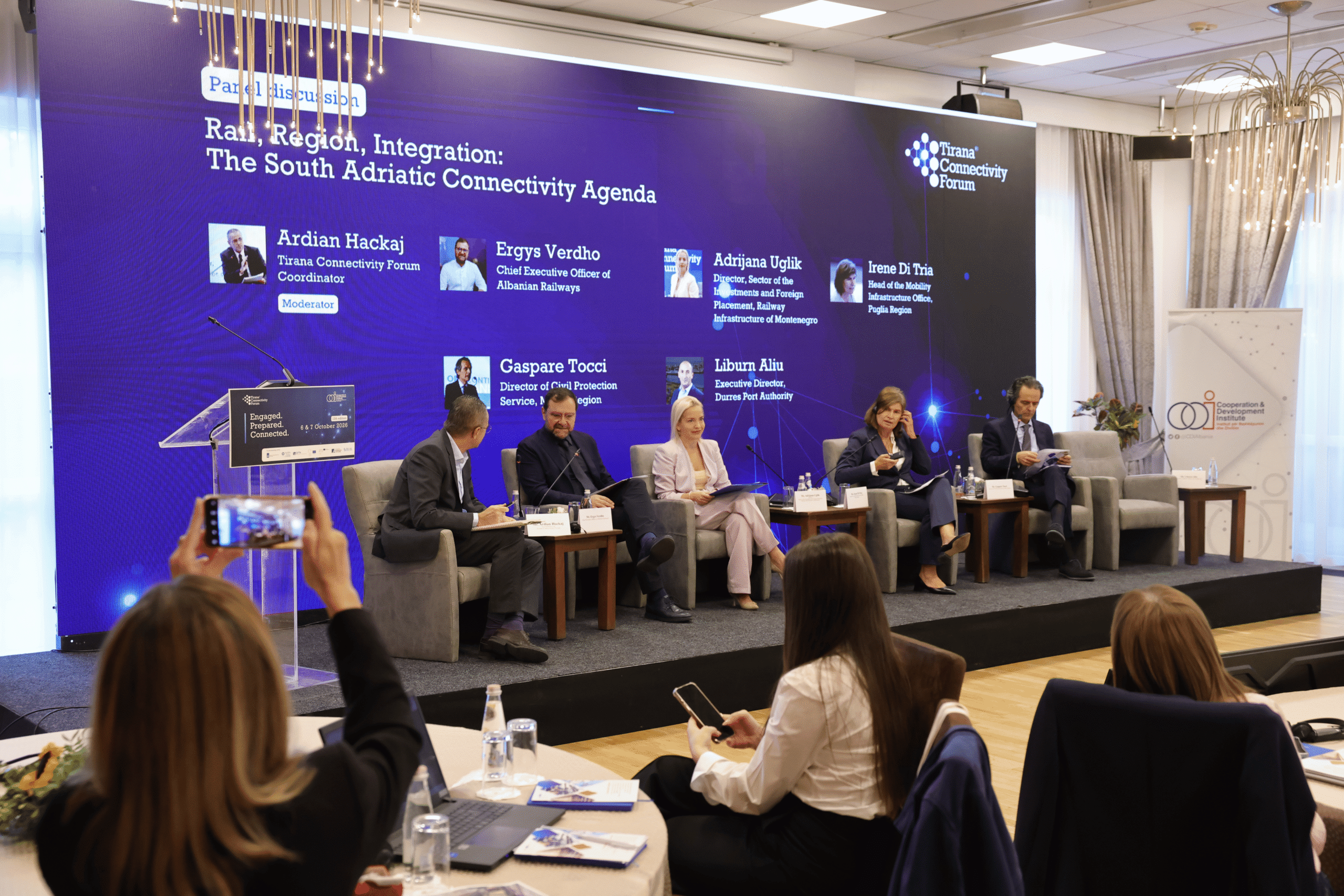
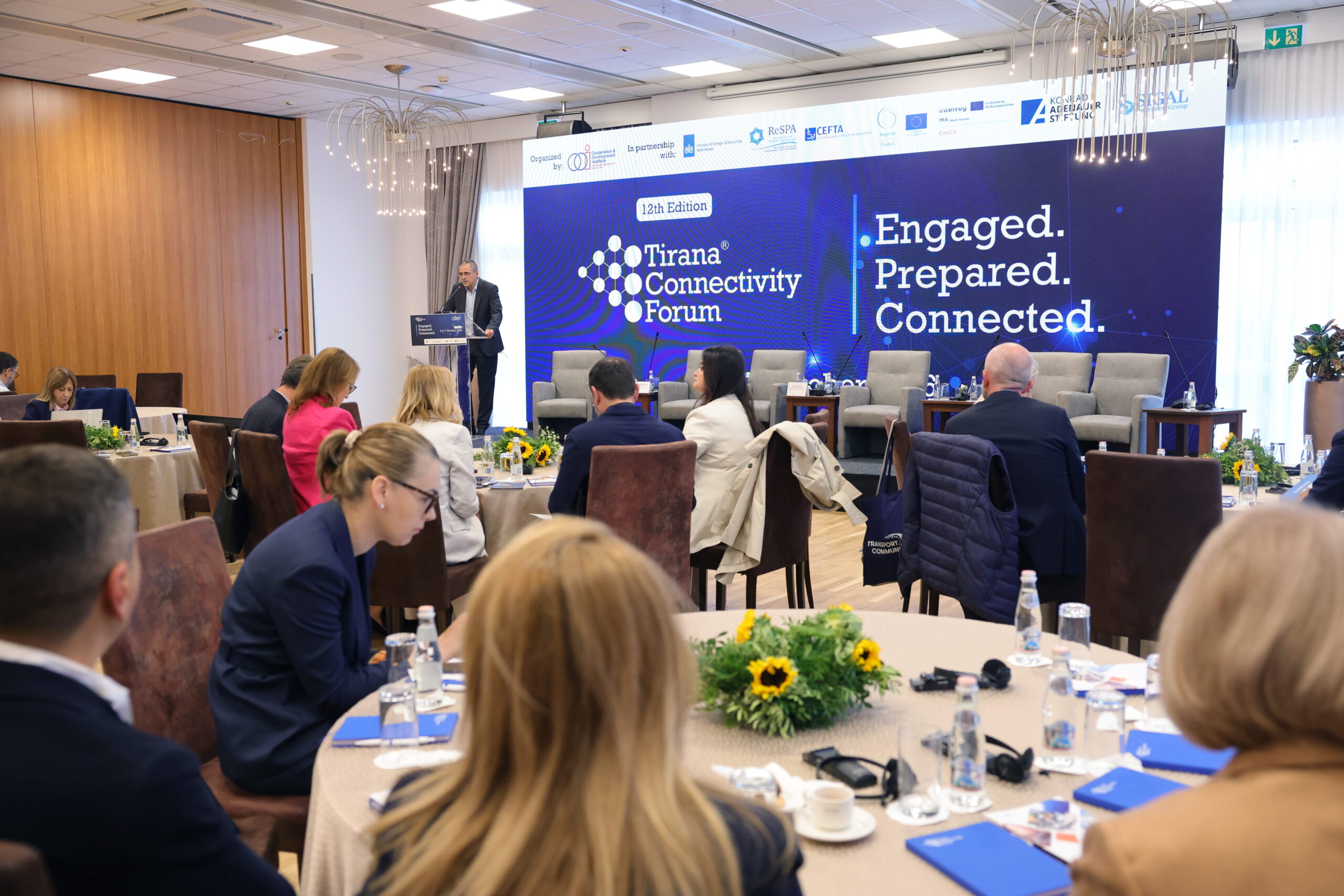
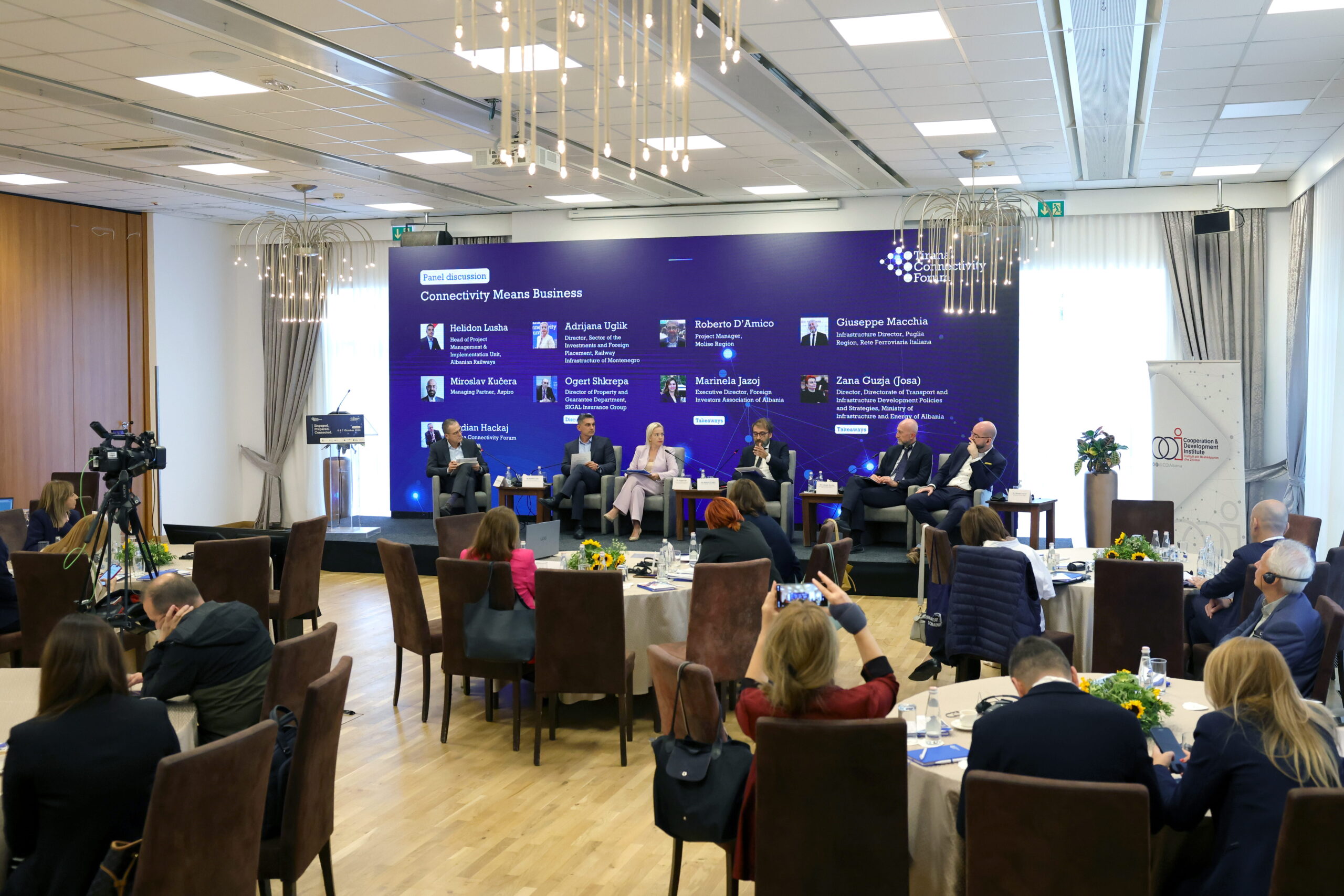
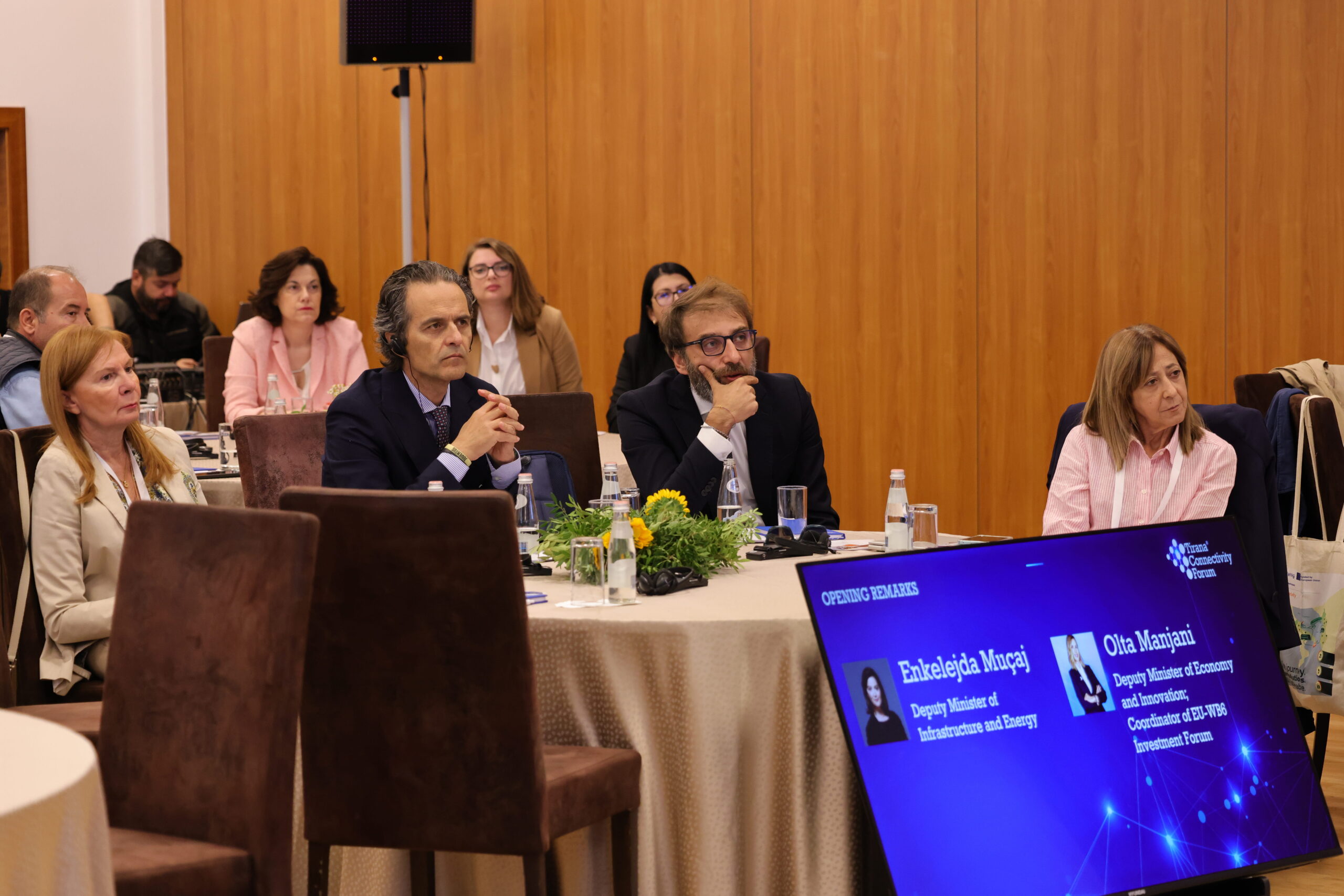
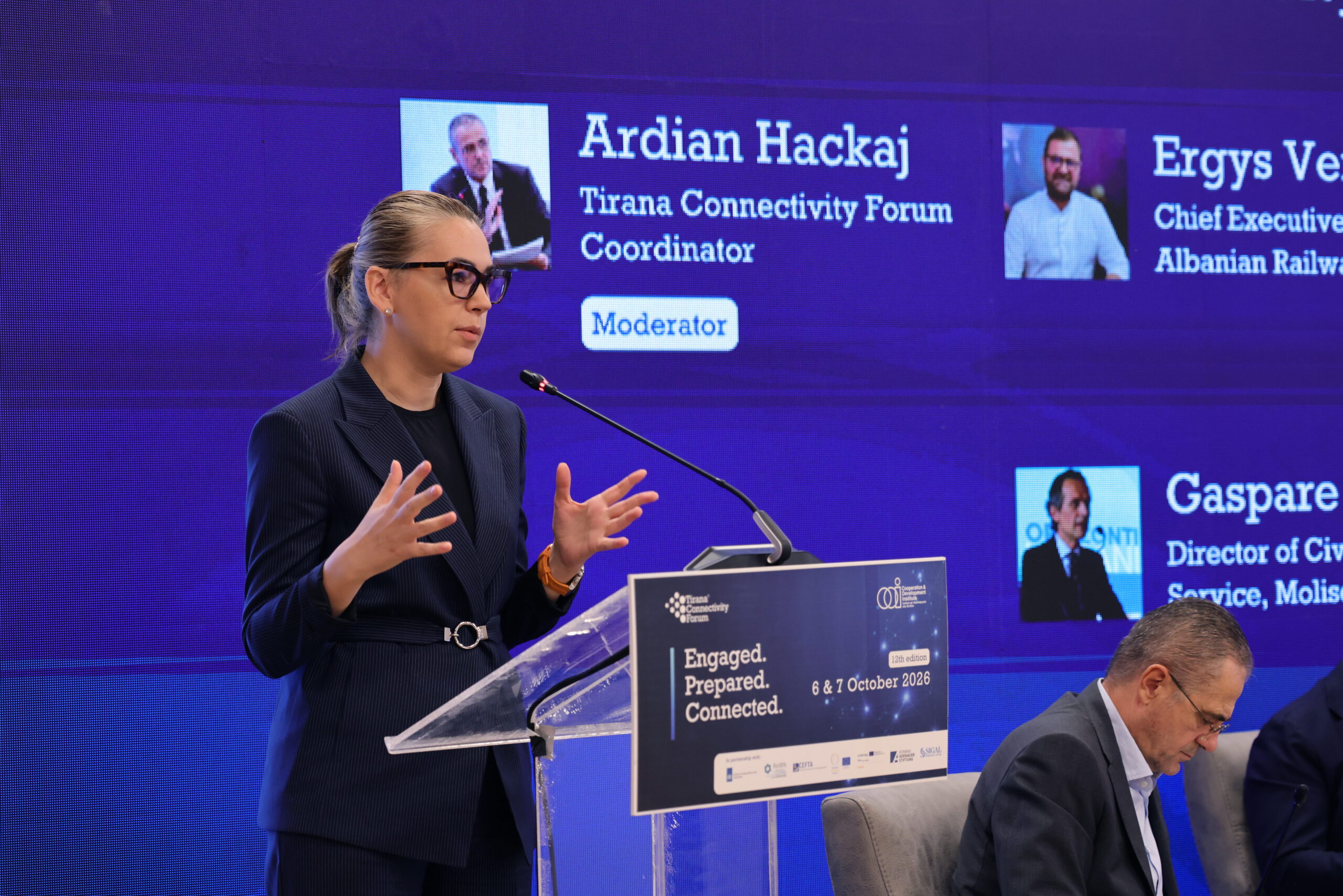
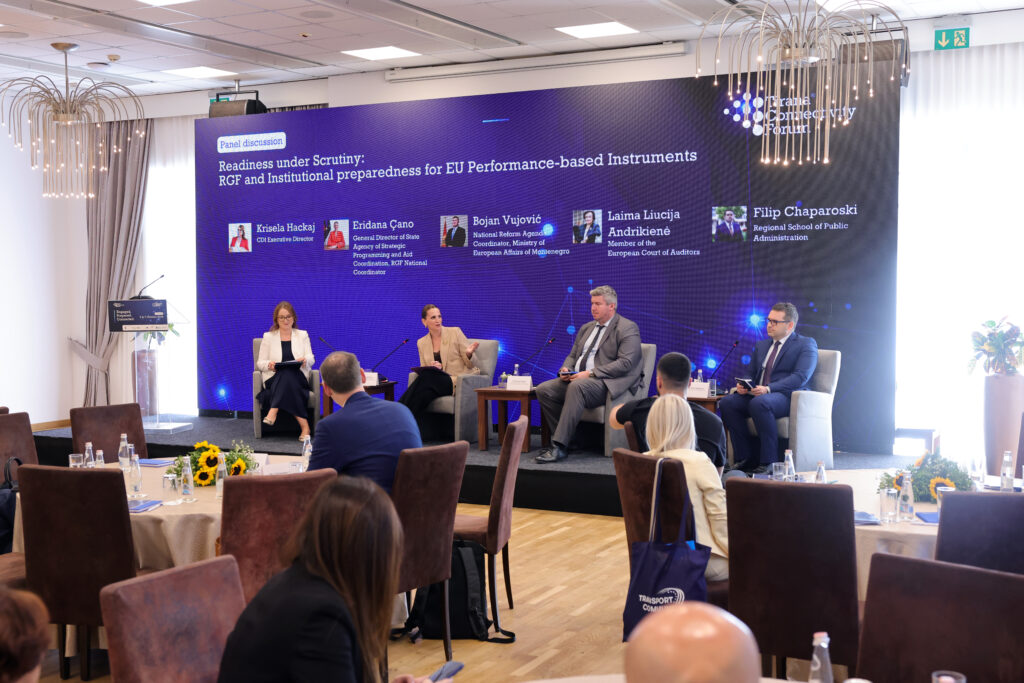
This was the focus of a panel on the second day of the Tirana Connectivity Forum 2026, which brought together railway authorities from Albania and Montenegro, Italian regions, EU cooperation programmes, international partners and private-sector representatives.
From project pipelines to delivery
Albania’s railways are being totally rebuilt. With more than 25 projects under way, covering lines, stations, electrification, signalling, telecommunications and operations, Chief Executive Ergys Verdho described the rail infrastructure programme as the backbone that will connect the country, as well as the Port of Durrës with the cross-border routes.
The first results are close. On the Tirana–Durrës–Airport line, civil works, station buildings, signalling and telecommunications are due to be completed by December 2026, or early 2027. Albanian Railways is already talking to private operators, because running trains, not only building them, is the next challenge: Verdho acknowledged that Albania has little recent operating experience and wants to learn from EU partners. Passenger services readiness is targeted for late 2027 or the first quarter of 2028.
Helidon Lusha, Head of the Project Management and Implementation Unit at Albanian Railways, showed how these projects fit into a wider TEN-T pipeline that makes Albania a gateway to the South East Europe rail network: core links from Durës towards Montenegro and North Macedonia, a connection to Vlorë and a new link from Shkodër to Pristina. The next big rail line is the Vorë–Hani i Hotit section towards Montenegro, a design-and-build package that includes signalling, telecommunications and electrification as well as civil works. Its procurement is nearly complete, with the contract expected to be closed this year and works starting in early 2027, financed by the EBRD, the EIB and an EU grant through the Western Balkans Investment Framework. Corridor 8 is moving too: the first phase, Durrës–Rrogozhinë, is in tender with a civil-works contract targeted for the fourth quarter of 2026, while Rrogozhinë–Pogradec segment is in detailed design.
For Montenegro, the priority is to develop railway connections as part of a wider regional network rather than as isolated national assets. Adrijana Uglik, Director, Sector of the Investments and Foreign Placement, Railway Infrastructure of Montenegro (ZICG) identified three strategic directions of ZICG: the Bar–Podgorica–Serbia axis, the Podgorica–Tuzi connection with Albania, and the longer-term Podgorica–Nikšić–Bosnia and Herzegovina link. “The common objective is not three isolated lines, but a more connected network linking the Adriatic with the regional and European markets,” she said.
Montenegro has provisionally closed Chapter 21 on trans-European networks in March 2026, but implementation and monitoring continue. In that logic the national investment plans, EU requirements and cross-border operations must reinforce one another. Uglik also presented Montenegro’s pipeline as a market signal: projects are managed to preparation, procurement or implementation stages at the same time, so opportunities for designers, consultants, supervisors, contractors and system suppliers do not start only when construction begins. “Financing alone does not create business opportunities,” she said, “projects must be mature, procurement bankable and the promoter capable of implementation.”
Connecting national networks into a European corridor
Contributors and panelists stressed the need to align infrastructure with EU standards, signalling and other operational standards across country borders. New lines alone will not deliver seamless connectivity if technical systems remain incompatible or links to ports, terminals and other transport modes are weak.
Giuseppe Macchia (full title), speaking on behalf of Rete Ferroviaria Italiana (RFI), stressed that an European corridor cannot be created simply by linking national networks: infrastructure managers, institutions and operators must align their investments. Following the 2024 revision of the TEN-T network, the Western Balkans–Eastern Mediterranean corridor now extends to Italy – the Adriatic becomes a connecting link rather than a space separating two shores. RFI’s current priorities are completing the network missing links, removing cross-border bottlenecks, modernising networks, improving interoperability and connecting ports, terminals and airports, with a gradual move towards further improvement of common technical and operational standards. “Even a modern and efficient network loses much of its value if it reaches a border and encounters technical, operational or administrative barriers,” he said. RFI offered its experience in network management, interoperability, digitalisation and capacity management to build stronger partnerships with infrastructure managers in the Western Balkans.
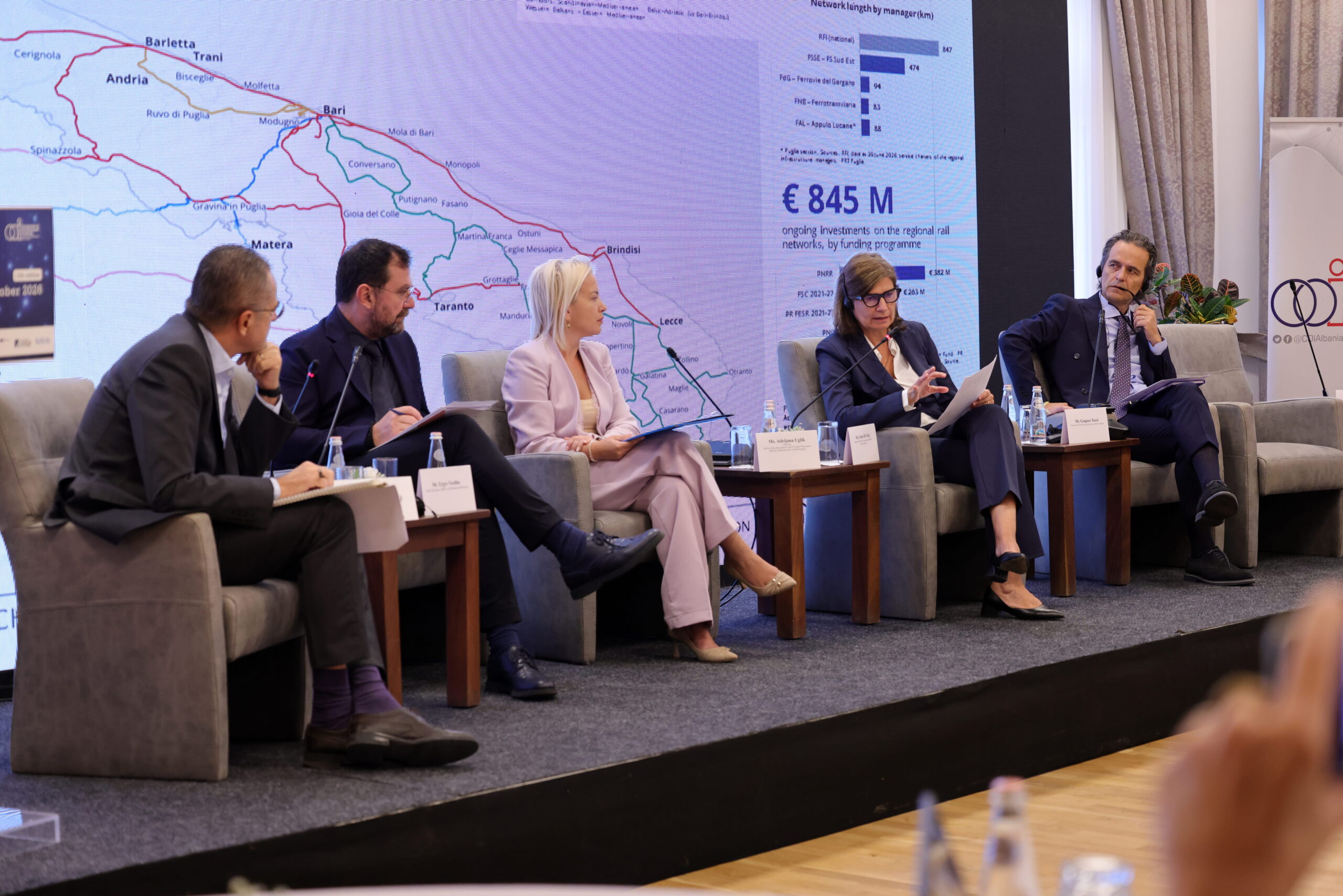
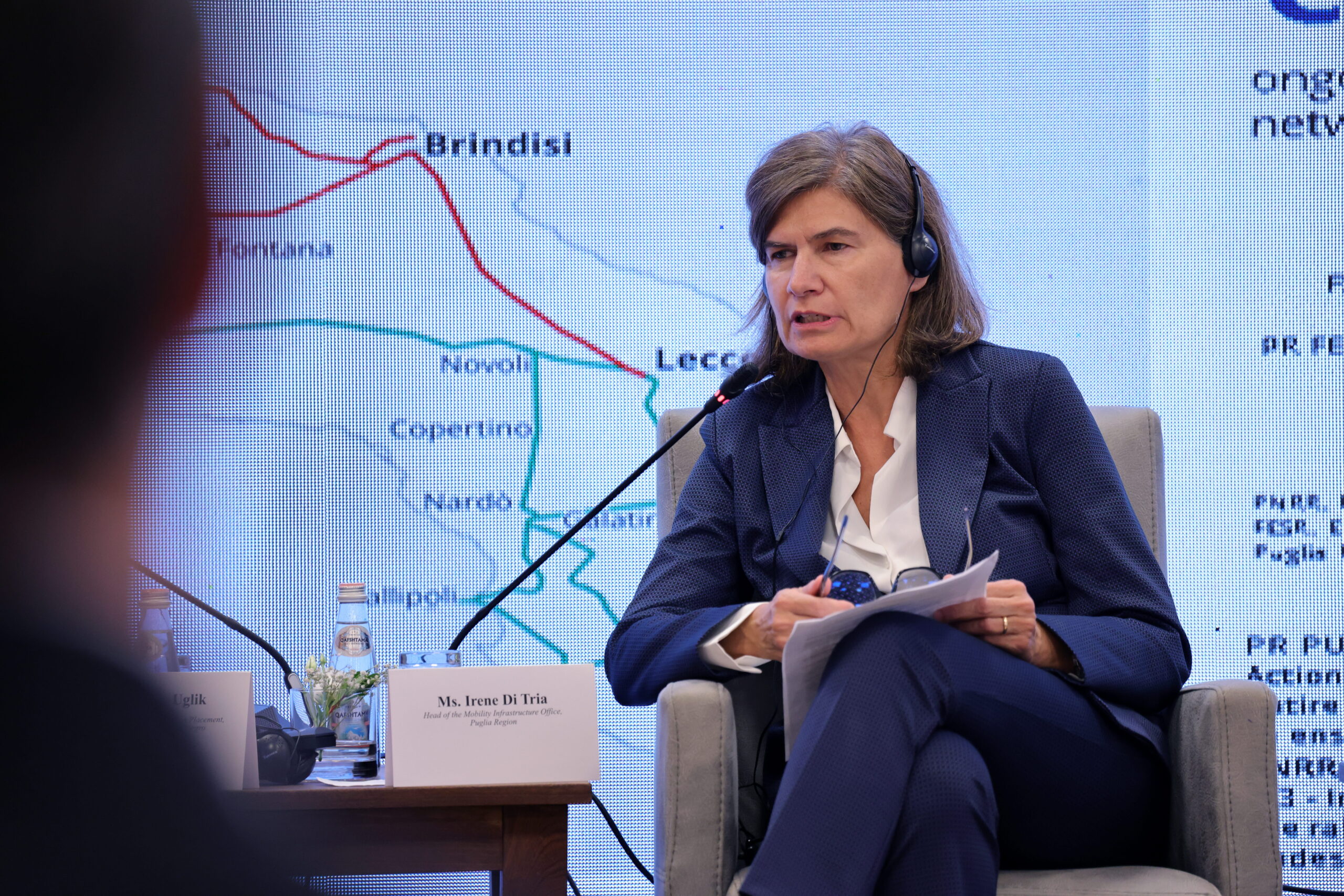
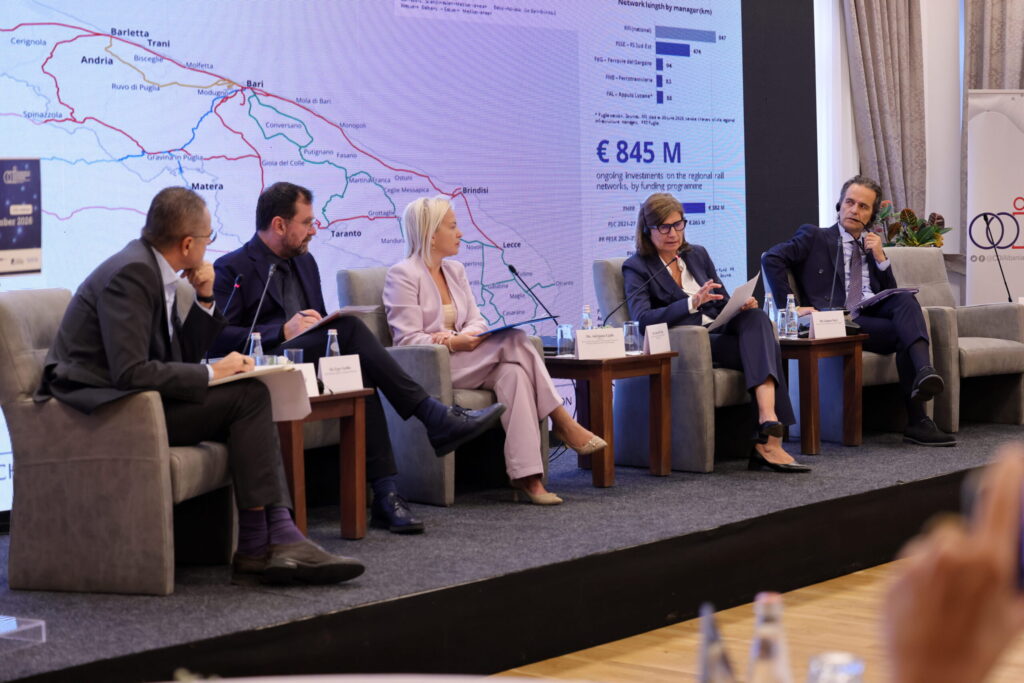
Italy’s regional experience offers lessons for rail network modernization. Irene Di Tria, Director of the Mobility Infrastructure Office of the Puglia Region, presented investments aimed at bringing regional railways up to national and TEN-T standards. Under the 2021–2027 programming period and Italy’s National Recovery and Resilience Plan, Puglia has been investing €845 million in infrastructure upgrades, signalling and safety systems, level-crossing removal and intermodal hubs.
Panellists agreed that railway investment should be planned around functioning corridors that link ports, logistics services and neighboring markets. Better-connected networks can support freight, tourism and trade, and improve access to European markets.
European cooperation must prepare rail actors for successful participation in rail-support programs
Turning regional priorities into deliverable projects requires coordinated planning and financing.
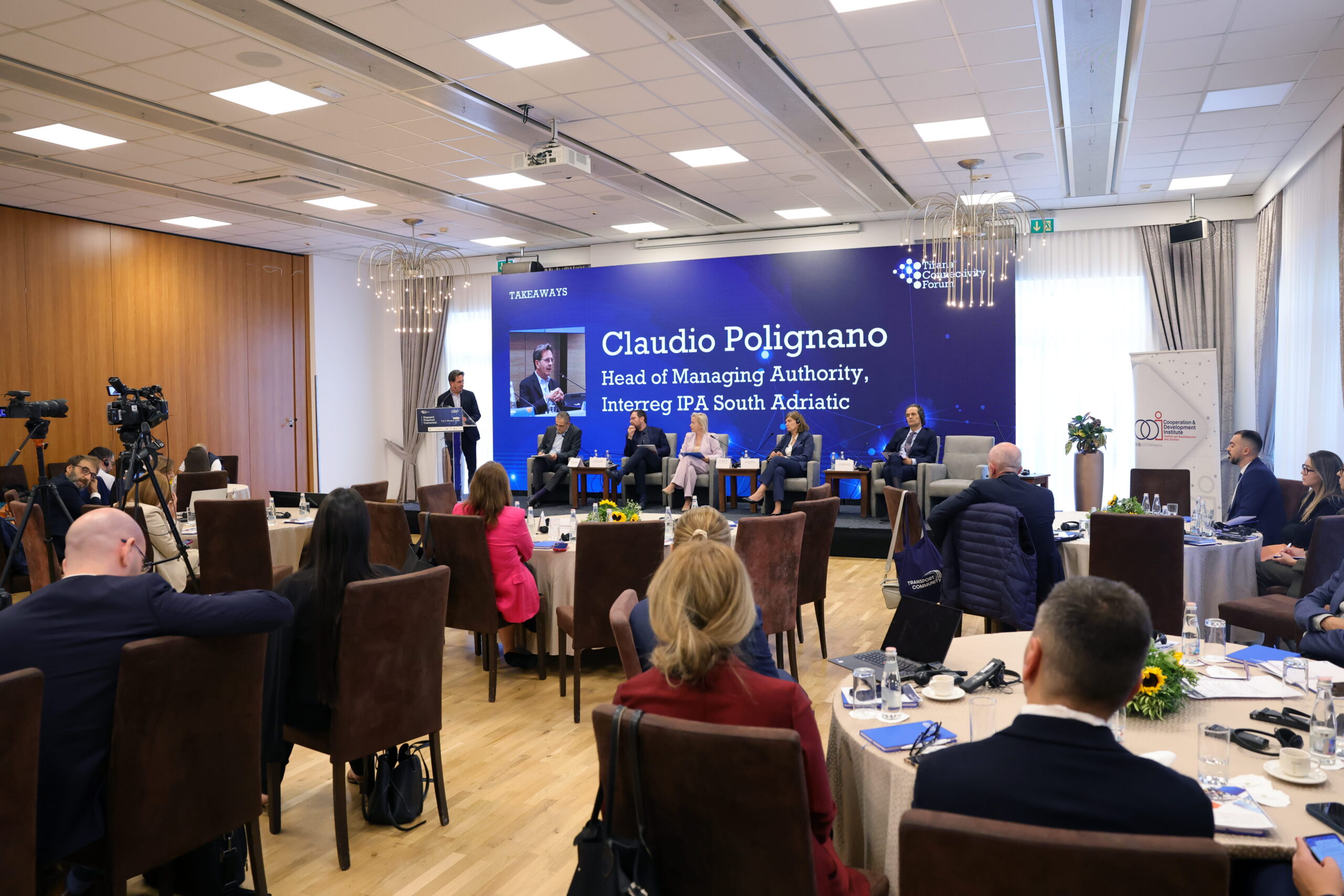
Claudio Polignano, Head of the Managing Authority of Interreg IPA South Adriatic, explained that while the programme cannot finance major railway infrastructure directly, it can address the practical barriers that stop infrastructure working across borders: harmonizing procedures, connecting institutions and operators, tackling bottlenecks and testing joint solutions. Polignano called for a post-2027 South Adriatic Connectivity Agenda to be built around integrated territorial connectivity, multimodal corridors, maritime links, the green transition, digital procedures, cybersecurity, border management and human capital. “Physical infrastructure alone does not guarantee effective cross-border mobility,” he said. European cooperation adds value by making infrastructure work better together and preparing the ground for larger financing through instruments such as the IPA Growth Plan, the Western Balkans Investment Framework and the Connecting Europe Facility.
Roberto D’Amico, project manager at the Molise Region, said the real question is how to turn connectivity priorities into projects that attract European funding. The whole endeavor starts with planning together he argued and should be based on a gap analysis, rather than inventing projects to fit a call for proposals. Interreg, as in the Co4Co project linking Italy, Albania and Montenegro, does not finance railway works but builds the ground for joint investment. Joint mature projects need a combination of instruments, from EU Interreg to Connecting Europe Facility (CEF)-distributed infrastructure funds, the Connecting Europe Facility, the Western Balkans Investment Framework and the Growth Plan, or national budgets because no single programme finances everything. He called for a common South Adriatic pipeline of projects, and on the need to also involve the private sector from the needs-analysis stage and treating resilience as an added value.
Daniela Gaćević, Head of Programme Department, Regional Cooperation Council (RCC) said that regional organisations need to remain involved in infrastructure planning, alongside efforts on skills, professional recognition, digital services, investment readiness and predictable regulation. She presented the RCC’s Book of Opportunities, a pipeline of regional projects to be promoted at the EU–Western Balkans 6 Investment Forum, and noted that investors need stability, security and predictability.
Procurement, risk and resilience shape delivery
Even when financing is available, implementation can be held back by weak project preparation, unrealistic procurement conditions and limited coordination between public authorities and the market.
Miroslav Kučera of Aspiro, a Bratislava-based company that advises on procurement and implementation of projects financed by international financial institutions, named three recurring problems: un-synchronized timeframes between planning and procurement, which leave cost and technology assumptions outdated; mismatched expectations between the public and private sides; and risk aversion that leads to over-constrained contracts, with heavy securities, tight deadlines and high penalties that push prices up. He welcomed the EBRD’s requirement in place since 1 September, for market consultations before tenders, and urged authorities to publish procurement plans at the level of individual contracts, as the World Bank does, so the market can flag problems early, for example that bundling civil works with signalling may raise security concerns or limit financing. He illustrated this approach with a recent consultation process for Montenegro’s passenger rolling stock that showed that refurbishment would cost 80% of new cars rather than the 50% expected. He recommended for contracts that can be adjusted more flexibly during implementation.
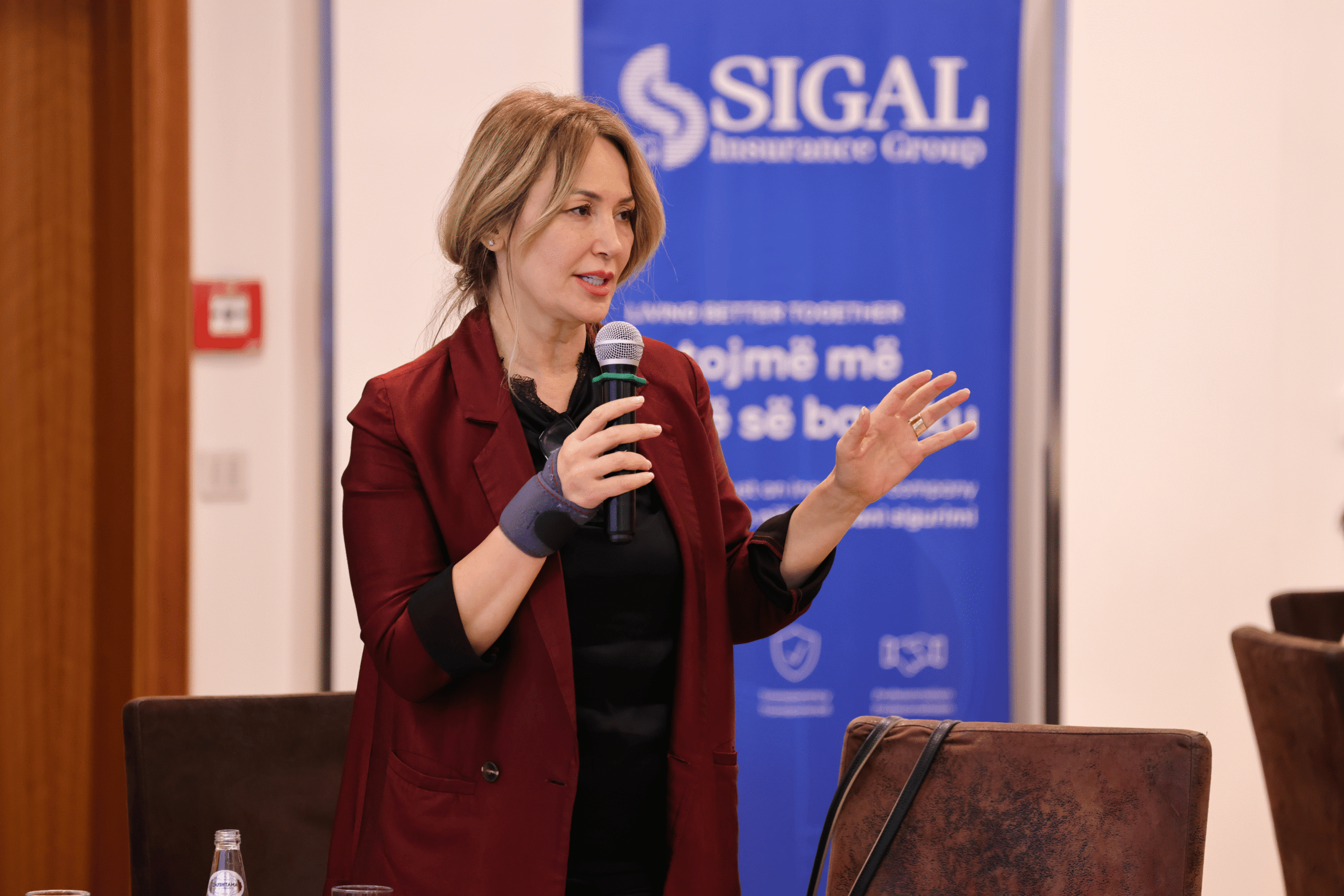
Ogert Shkrepa, Director of Property and Guarantee Department at SIGAL Insurance Group, representing the insurance sector, said Albanian insurers are already prepared to support large projects and have insured projects worth up to €1.5 billion, backed by reinsurers including Munich Re, Swiss Re and Hannover Re. Under Albanian law, projects must be insured with or through an Albanian insurer. Insurers can offer precious advice in all stages of PCM: from design through procurement, construction and operation, he said, covering bonds, construction and delay in start-up risks and, for an electrified railway, cyber risk. Early risk assessment helps lenders and contractors, and claims paid within 30 days avoid project delays.
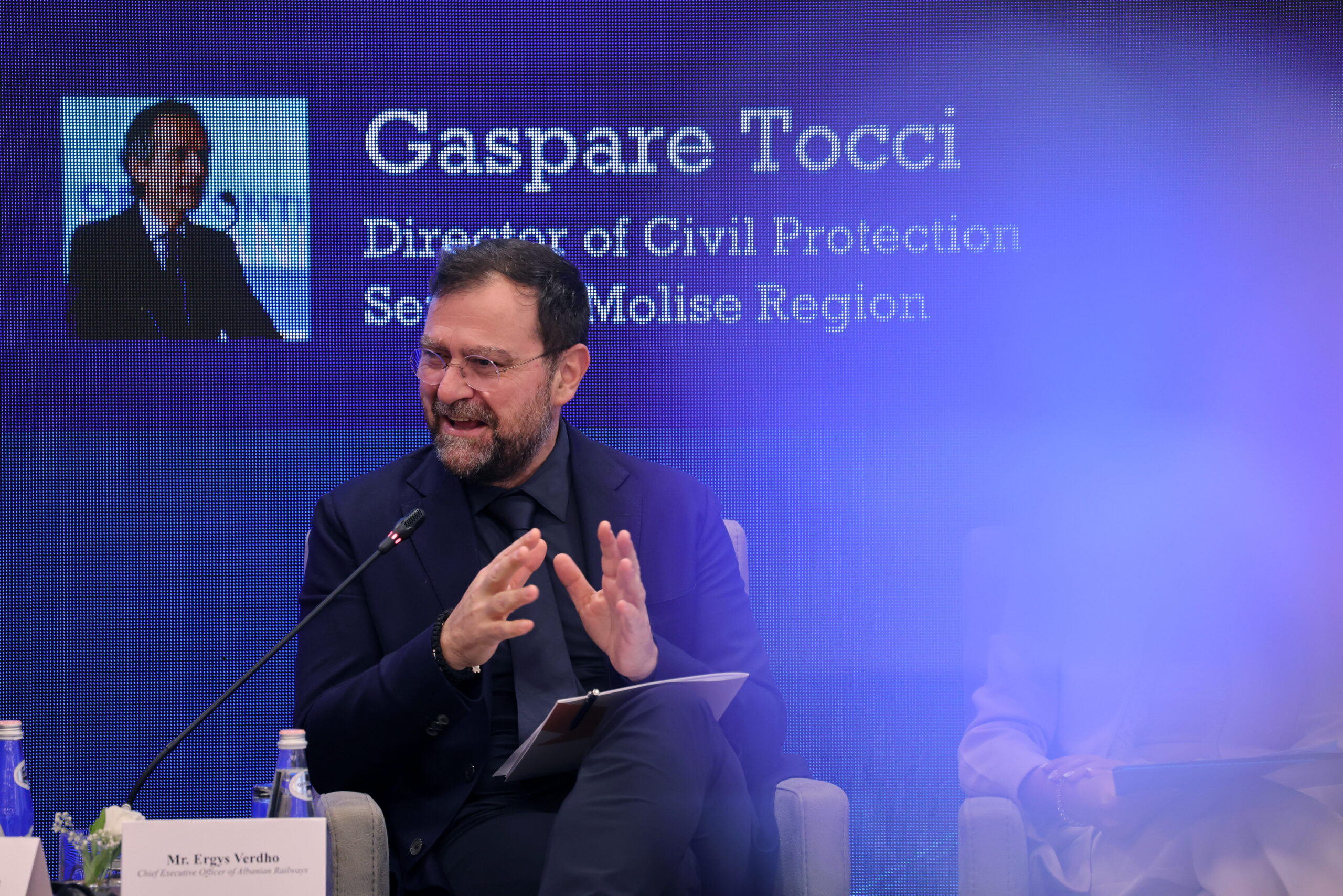
Resilience, panelists noted, is becoming systemically important to the reliability of transport links. Gaspare Tocci, Director of the Civil Protection Service of the Molise Region, described how flooding and a landslide in March 2026 damaged road and railway connections in lower Molise and interrupted the Adriatic high-speed corridor. Interreg-funded monitoring tools, satellite data, sensors and civil-protection platforms, he said, helped the region anticipate risks and coordinate the emergency response. Tocci argued that resilience should sit alongside efficiency in the key performance indicators used to plan and assess infrastructure, so that a network can take over the load when one link fails.
Investment and reform must advance together
For businesses, an integrated railway network brings both new opportunities and new requirements.
Marinela Jazoj, Executive Director of the Foreign Investors Association of Albania, said connectivity depends on an entire business ecosystem, including railway operators, engineering firms, consultants and technology providers. The investment pipeline and the reform pipeline, she underlined, must advance together: infrastructure cannot deliver its full benefits without capable institutions, interoperable systems and businesses prepared to operate within an integrated European network.
Zana Guzja, Director of Transport and Infrastructure Development Policies and Strategies at Albania’s Ministry of Infrastructure and Energy, reinforced the importance of regional coordination, of mature project preparation, of blended financing and private-sector participation. Predictable rules and well-structured risk arrangements, she said, are vital to attract companies and move investments from planning to implementation. She added that Chapter 21 is not only about legislation, since the 2024 TEN-T regulation is already fully transposed, but about investment in transport infrastructure, and that its closure will mainly serve the private sector and citizens.
The discussions at TCF26 reinforced a common conclusion: railway connectivity will deliver results only when infrastructure investment, European cooperation, institutional reform and private-sector engagement advance together. For Albania, Montenegro and Italy, the task ahead is to turn individual projects into a connected, resilient and inter-operable regional network that supports trade, investment and the Western Balkans’ path towards EU membership.