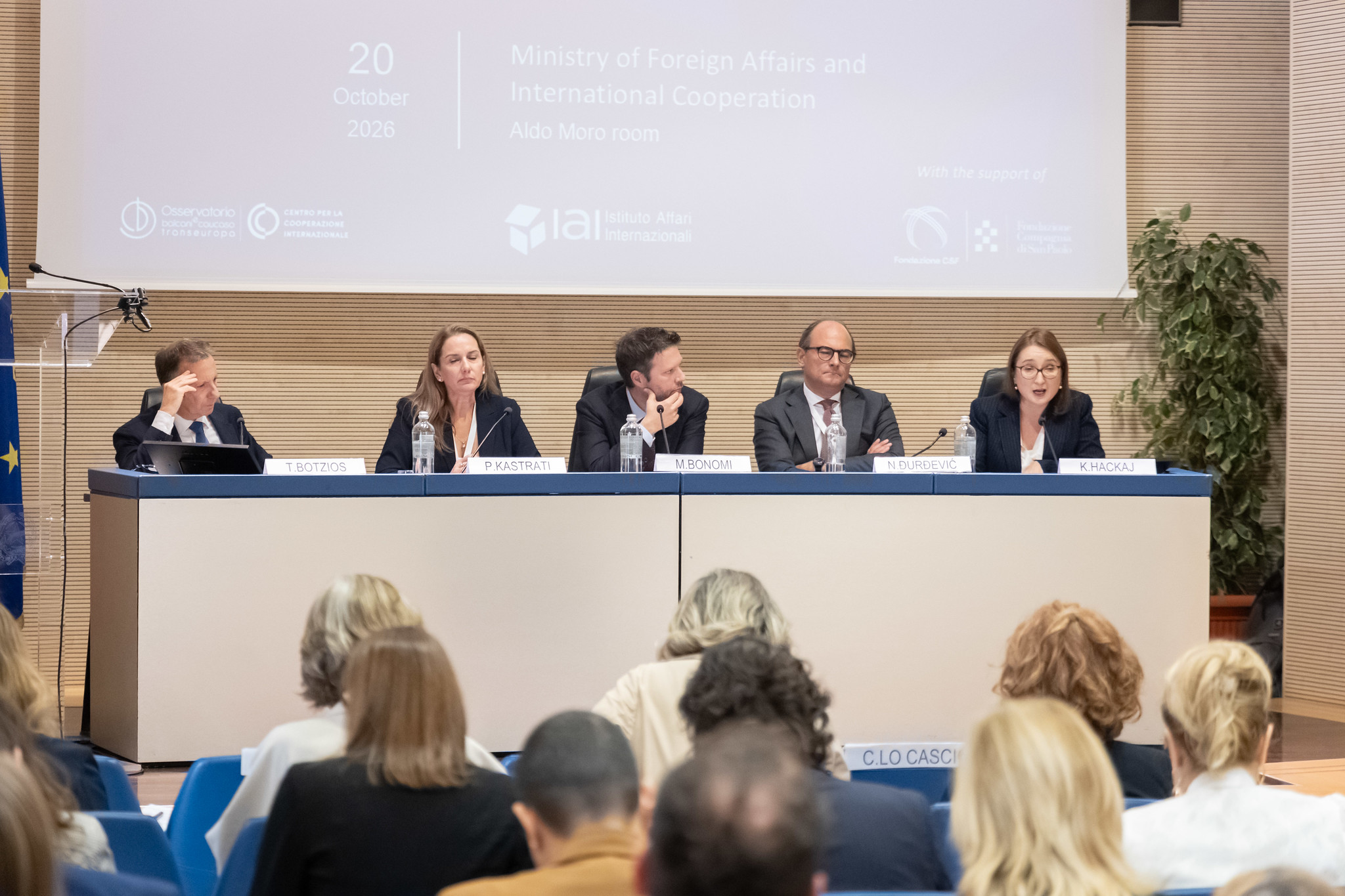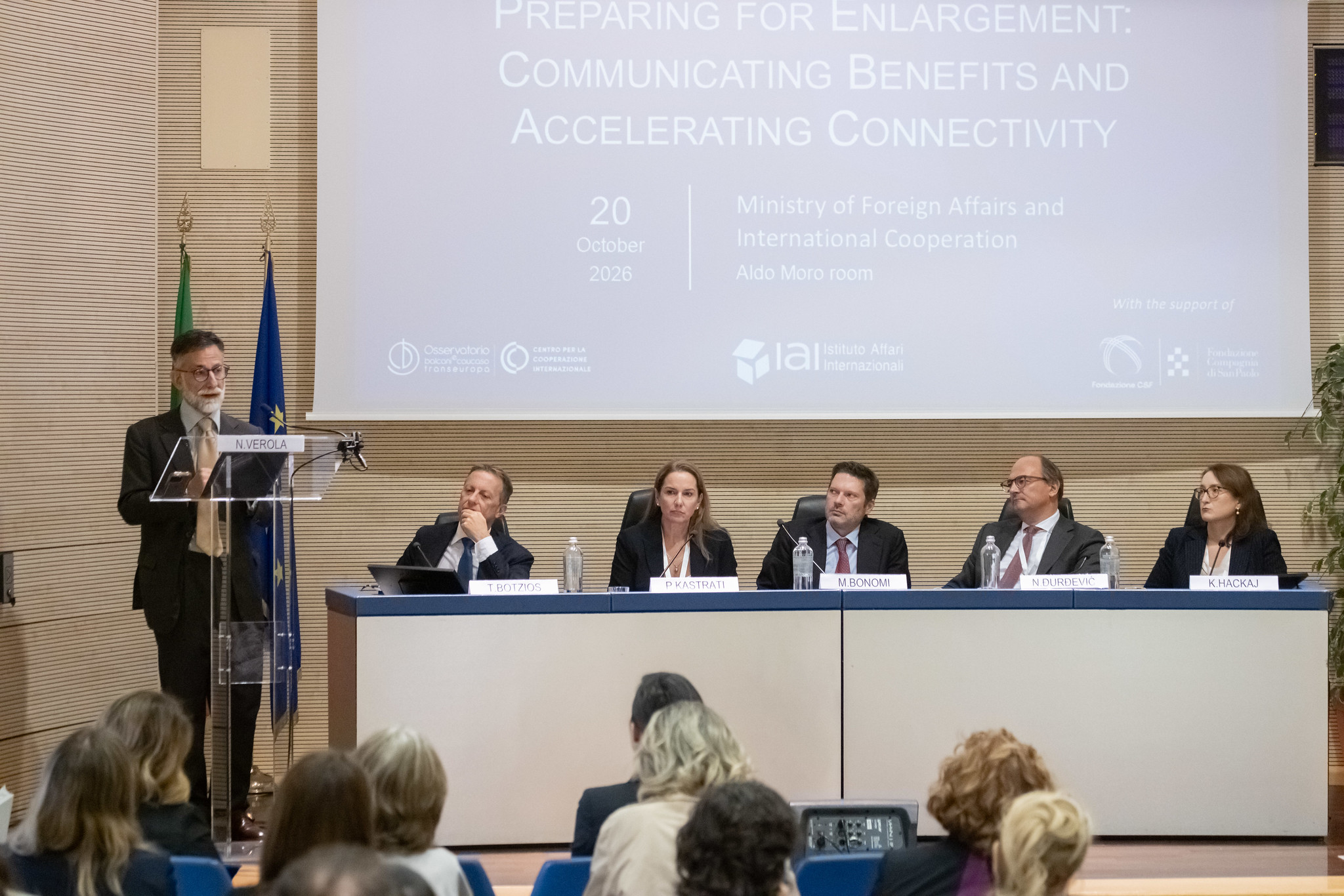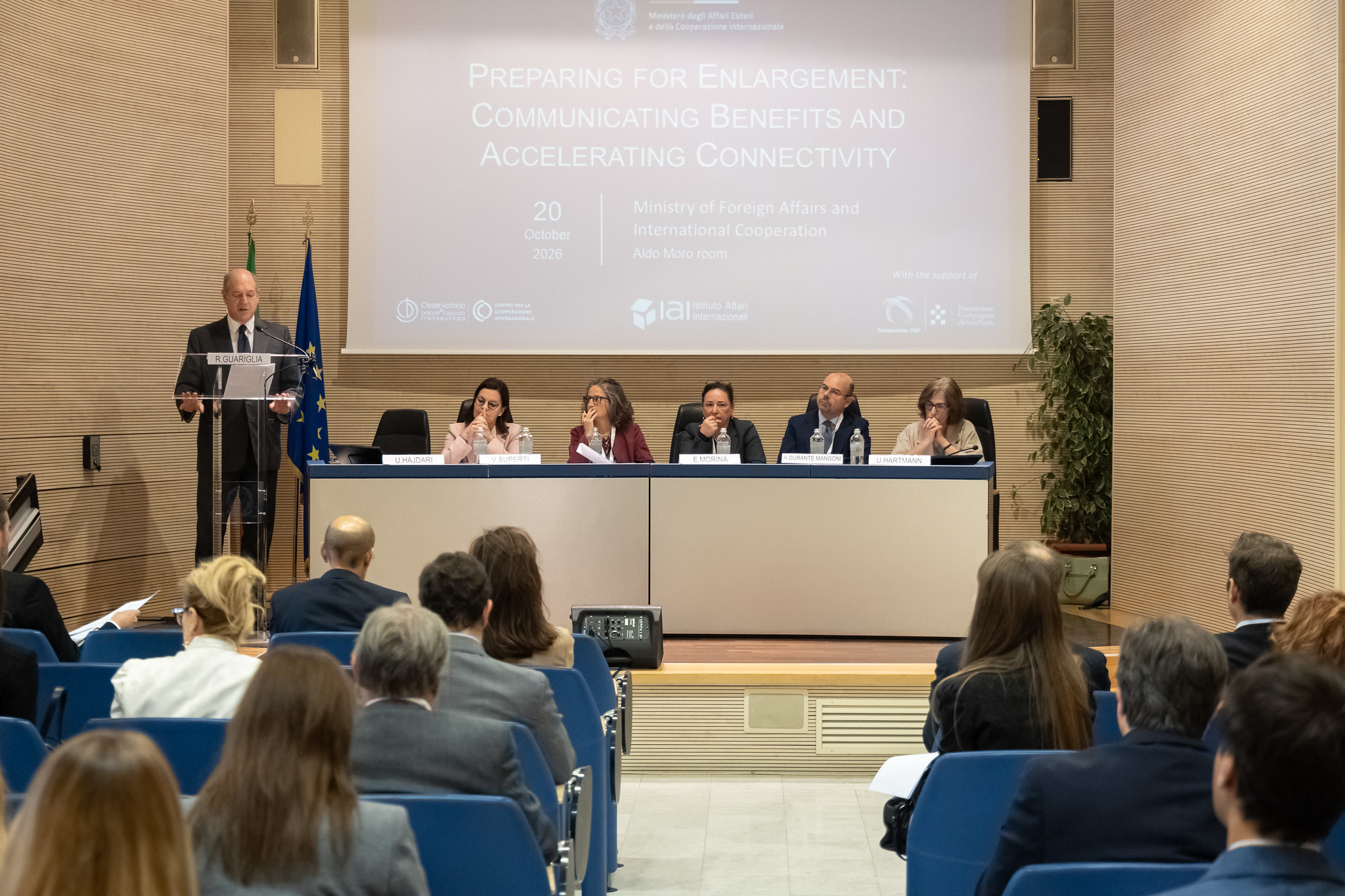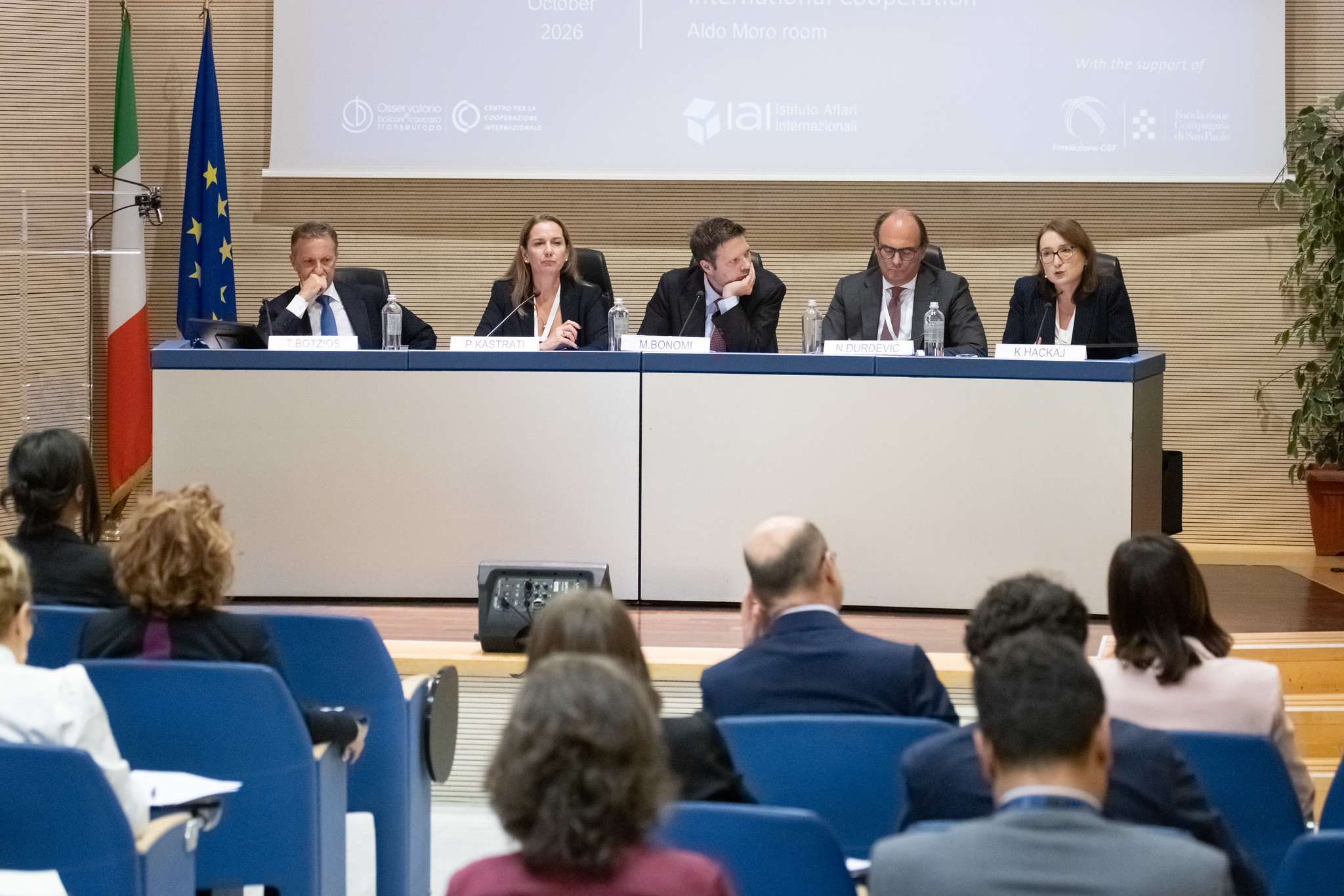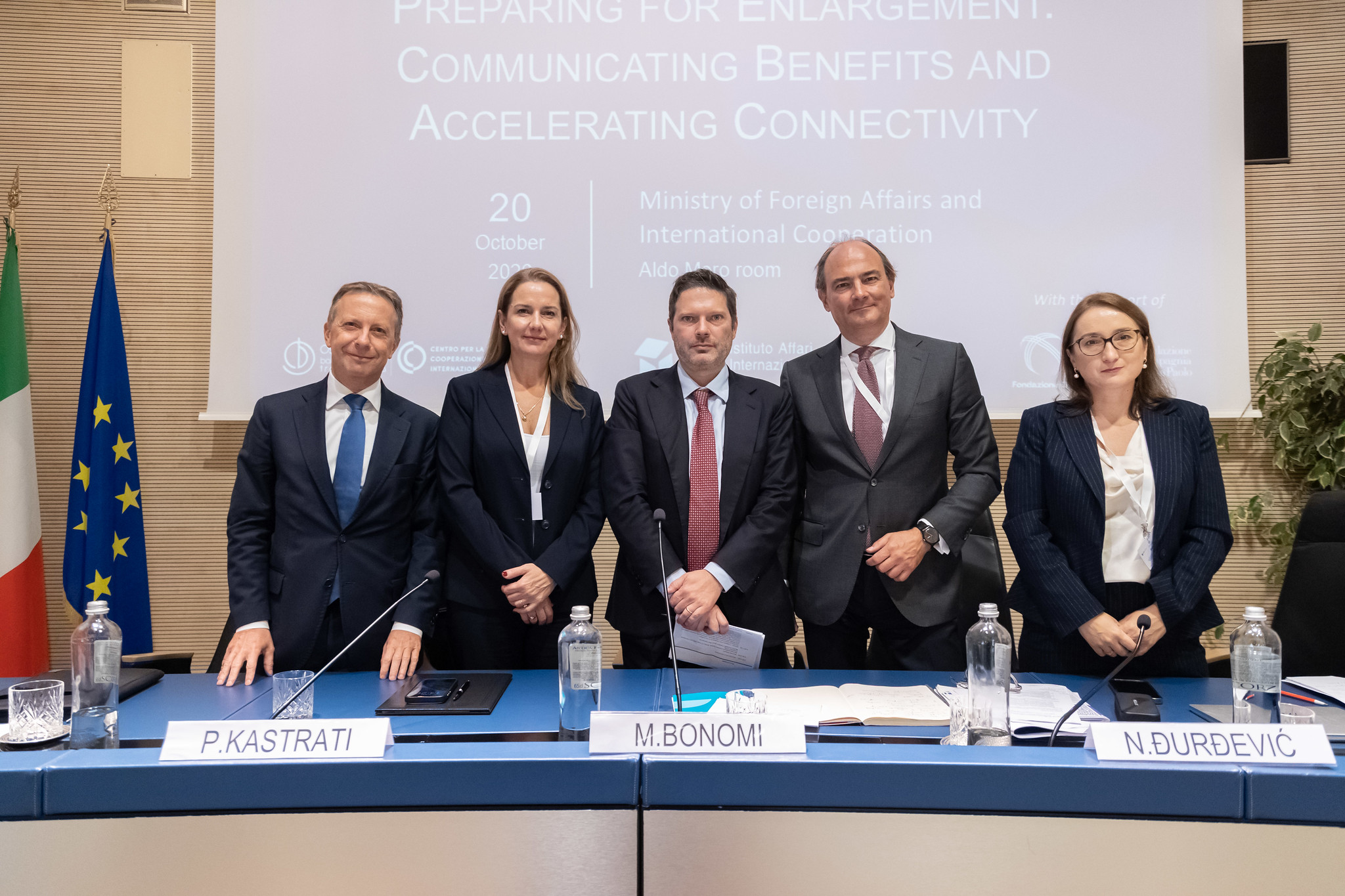

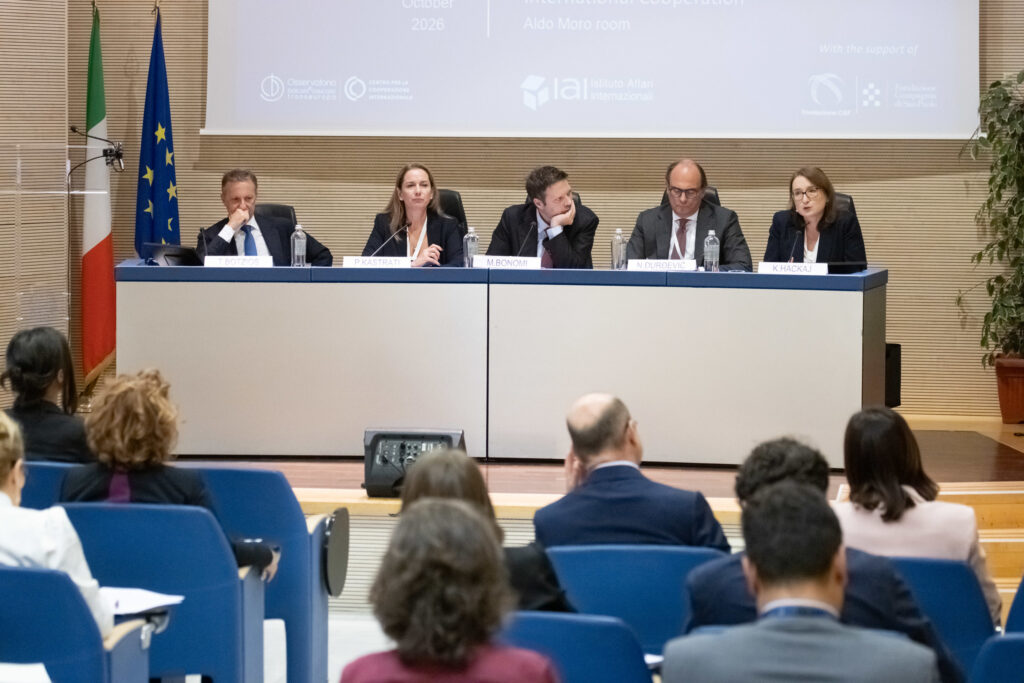
Rome, 20 October 2026 | At the conference “Preparing for Enlargement: Communicating Benefits and Accelerating Connectivity” – organised by Istituto Affari Internazionali (IAI) in cooperation with the Italian Ministry of Foreign Affairs and International Cooperation – CDI’s Executive Director Krisela Hackaj highlighted the importance for the Western Balkans of the next EU budget to shape the financial and policy framework for accession and determine resources for delivering on reforms, investment, regional connectivity and gradual integration into the Single Market and other EU policies.
Drawing from CDI’s proposal “Accession before Membership” and monitoring insights from the Reform and Growth Facility’s implementation, Ms. Hackaj underscored these key messages:
First, connectivity investment needs to be matched by a stronger financing framework. The region requires a higher grant intensity, reflecting the socio-economic convergence gap.
Second, approved investments must translate into timely, sustainable projects with measurable economic benefits. Infrastructure should be assessed not only by its contribution to physical connectivity, but also by its capacity to generate local economic activity, jobs and lasting value for the WB economies.
Third, access to the Single Market cannot deliver convergence on its own. Firms and regions also need infrastructure, skills, investment and productive capacity to compete and grow. Without cohesion-type support to address the structural gaps, deeper integration could expose less-developed Western Balkans economies to competition without giving them sufficient means to adjust. This is why CDI argues that earlier Single Market access and access to cohesion-oriented support should be treated as complementary dimensions of enlargement.
Finally, the next MFF should be designed with Enlargement in mind across the EU budget, not only through Global Europe, but also through the National and Regional Partnership Plans (NRPPs) and policies supporting competitiveness, research and innovation, skills and industrial development. The Italian EUSAIR Presidency offers a timely opportunity to enlargement-proof selected EU internal policies. The Strategy can help strengthening coordination between investments on both sides of the EU’s external borders by identifying cross-border projects and link them, from the programming stage, with the National and Regional Partnership Plans of neighboring EU member states.
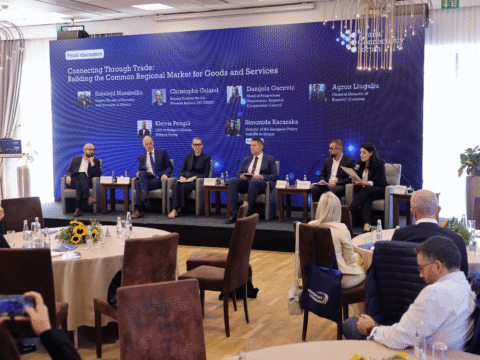
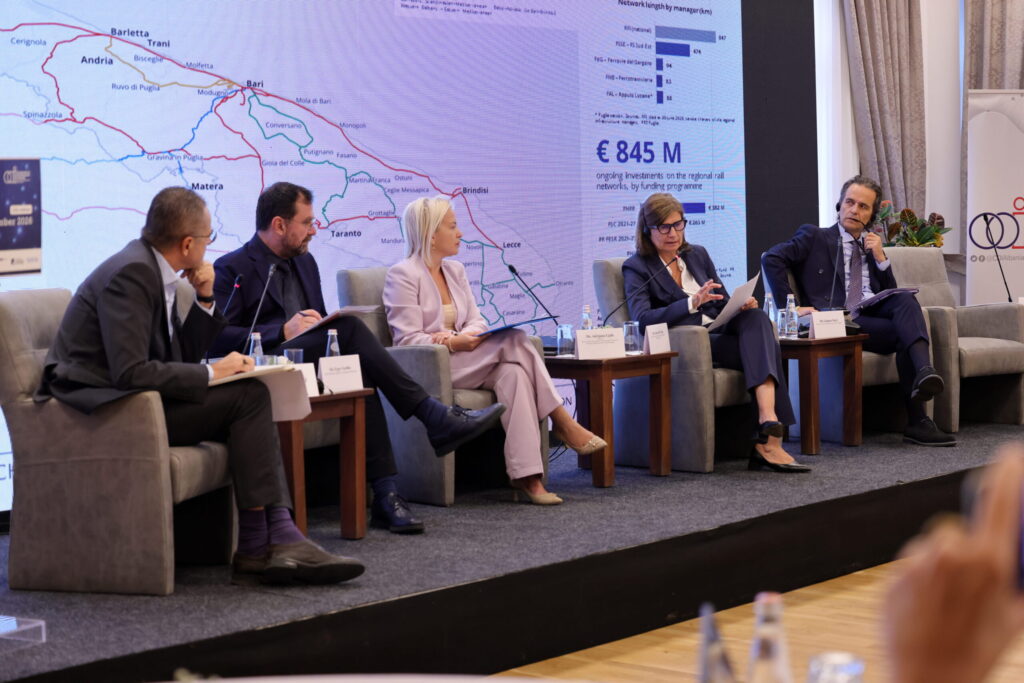
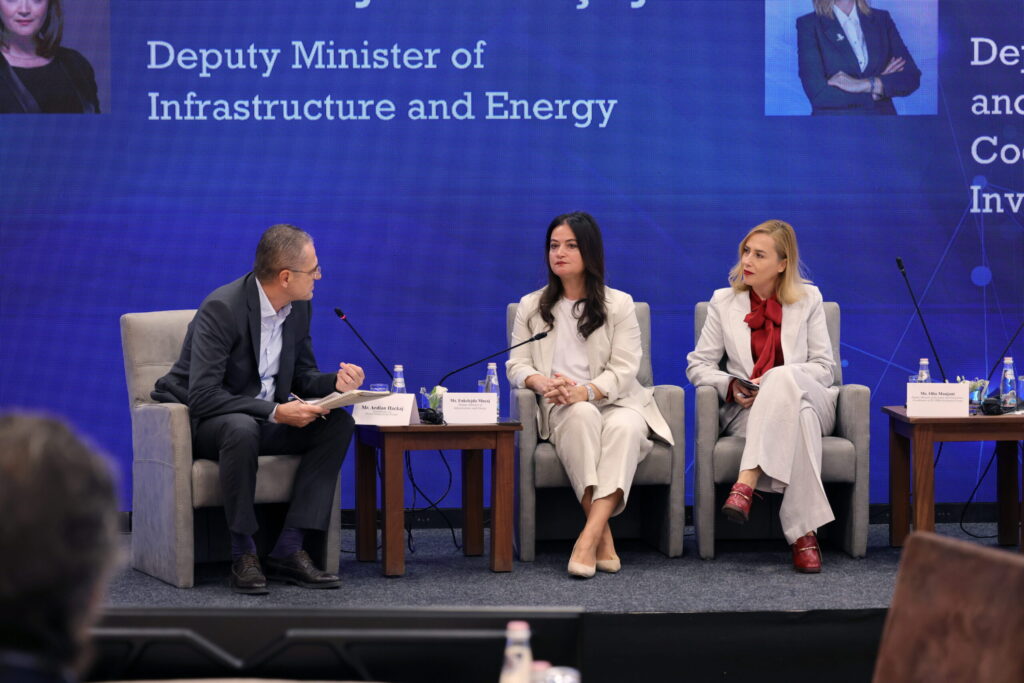
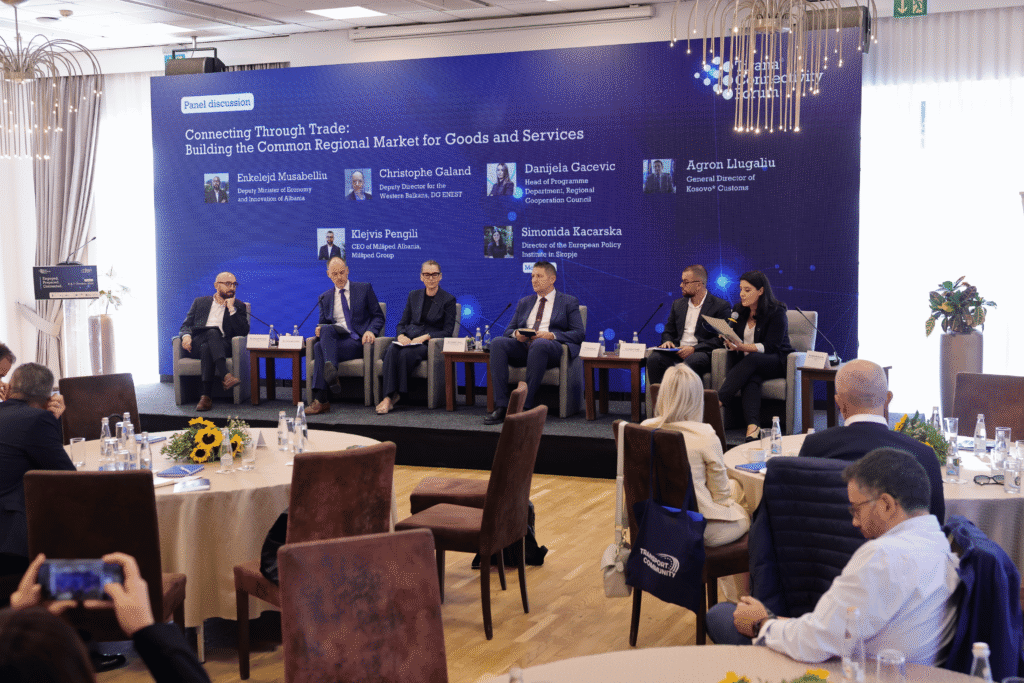
The panel “Accelerating Connectivity to support Integration” was joined by the distinguished professionals panelists offering valuable perspectives on the Conference topics: Thomas Botzios, Director for the Adriatic and the Western Balkans, Italian Ministry of Foreign Affairs and International Cooperation; Pranvera Kastrati, Director of the Central European Free Trade Agreement (CEFTA) Secretariat, Nenad Đurđević, Advisor to the President, Chamber of Commerce and Industry of Serbia, Matteo Bonomi, Head of Europe Programme, Istituto Affari Internazionali and Nicola Verola, Director General for Europe and International Trade Policy, Italian Ministry of Foreign Affairs and International Cooperation.